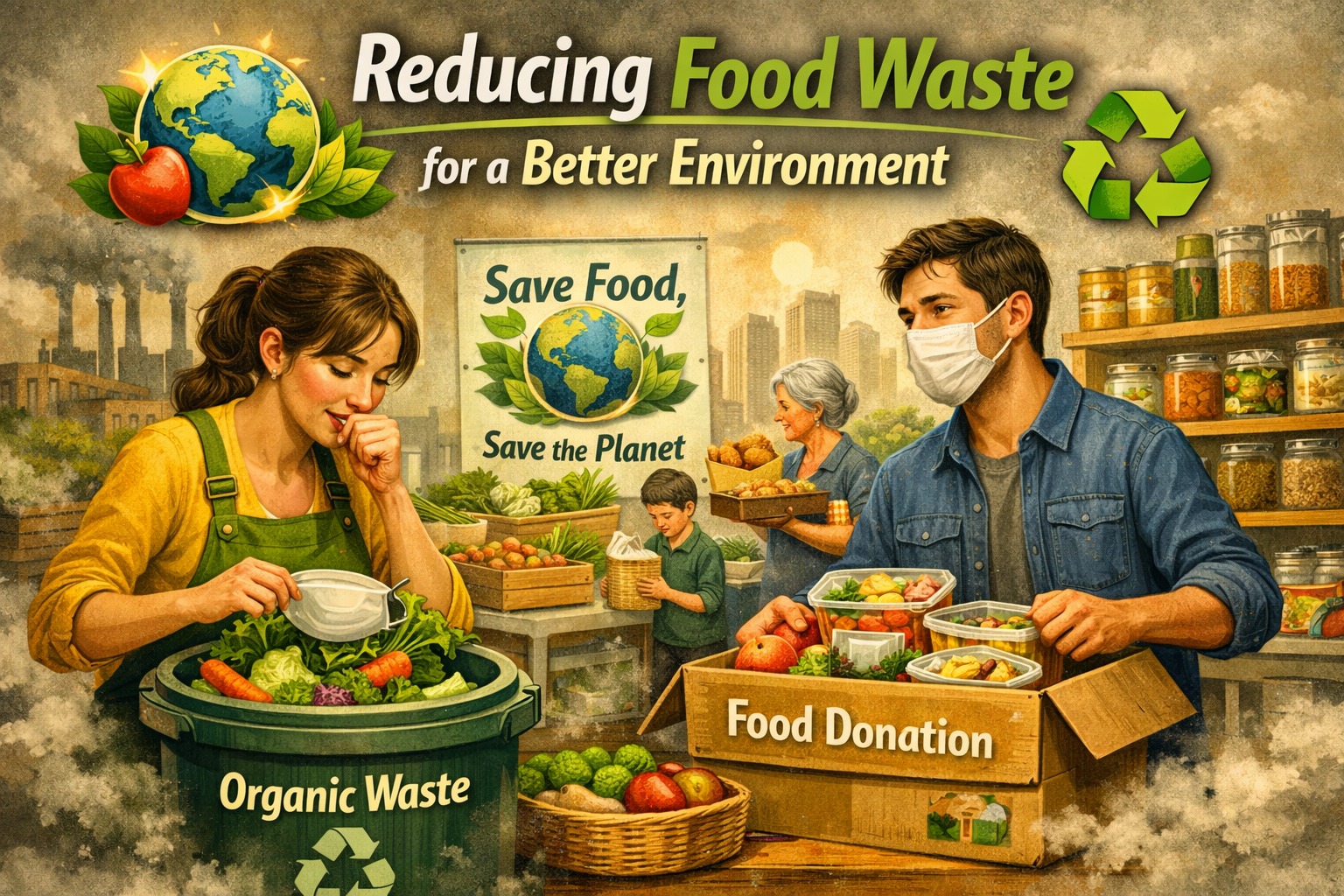
Food waste has become one of the most pressing environmental issues worldwide. Every year, millions of tons of edible food end up in landfills, contributing to greenhouse gas emissions and wasting valuable resources. Reducing food waste is not only beneficial for the environment but also helps households save money and build more sustainable habits. Understanding the causes and solutions can inspire individuals and communities to make meaningful changes.
WHY FOOD WASTE MATTERS
Food waste affects far more than just our kitchens. When food is thrown away, all the resources used to produce it—water, energy, land, and labor—are wasted as well. Decomposing food in landfills produces methane, a greenhouse gas that is significantly more harmful than carbon dioxide.
By cutting down on food waste, we can:
* Reduce greenhouse gas emissions
* Save natural resources
* Lower household expenses
* Improve global food security
Reducing food waste is a simple yet powerful step toward protecting the planet.
MAIN CAUSES OF FOOD WASTE
Understanding why food waste happens is the first step toward preventing it. Several common factors contribute to this global problem.
1. Overbuying and Poor Planning
Many households purchase more food than they can consume. Without proper planning, groceries often spoil before they are used.
2. Confusion About Expiration Labels
Labels such as “best before” and “use by” can be misleading. Many people throw away food that is still safe to eat because they misunderstand these dates.
3. Improper Storage
Incorrect storage methods can cause food to spoil faster. Fruits, vegetables, and leftovers need the right conditions to stay fresh longer.
4. Large Portion Sizes
Cooking or serving more than needed often results in leftovers that go uneaten and eventually end up in the trash.
SIMPLE WAYS TO REDUCE FOOD WASTE AT HOME
Making small changes in daily habits can significantly cut food waste. Here are practical steps anyone can follow.
1. PLAN YOUR MEALS
Create a weekly meal plan before shopping. This helps you buy only what you need and reduces the chance of unused ingredients.
2.STORE FOOD PROPERLY
Learn how to store different foods correctly. For example, keeping herbs in water like flowers or storing grains in airtight containers can extend their shelf life.
3. USE LEFTOVERS CREATIVELY
Leftovers can be transformed into new dishes such as soups, stir-fries, or sandwiches. Creativity in the kitchen prevents perfectly good food from being wasted.
4. FREEZE EXCESS FOOD
Freezing food is an effective way to preserve meals, fruits, and vegetables for later use.
THE ROLE OF RESTAURANTS AND BUSINESSES
Businesses play a major role in reducing food waste. Restaurants and food retailers can:
* Donate unsold food to charities
* Improve inventory management
* Offer smaller portion options
* Educate customers about food waste
Collaboration between consumers and businesses can create a powerful impact.
ENVIRONMENTAL BENEFITS OF REDUCING FOOD WASTE
Reducing food waste directly supports environmental sustainability. Less waste means fewer landfills, lower methane emissions, and more efficient use of resources. When individuals make mindful food choices, the collective impact can significantly slow environmental damage.
BUILDING A SUSTAINABLE FUTURE TOGETHER
Reducing food waste is a shared responsibility. Small daily actions, such as planning meals and using leftovers, can lead to significant environmental benefits. By becoming more conscious of our consumption habits, we contribute to a healthier planet and a more sustainable future for generations to come.
About the Author
Gusti Ayu Tita P
Author — STEKOM University
An active author focused on academic issues, educational technology, and human resource development in the campus environment.