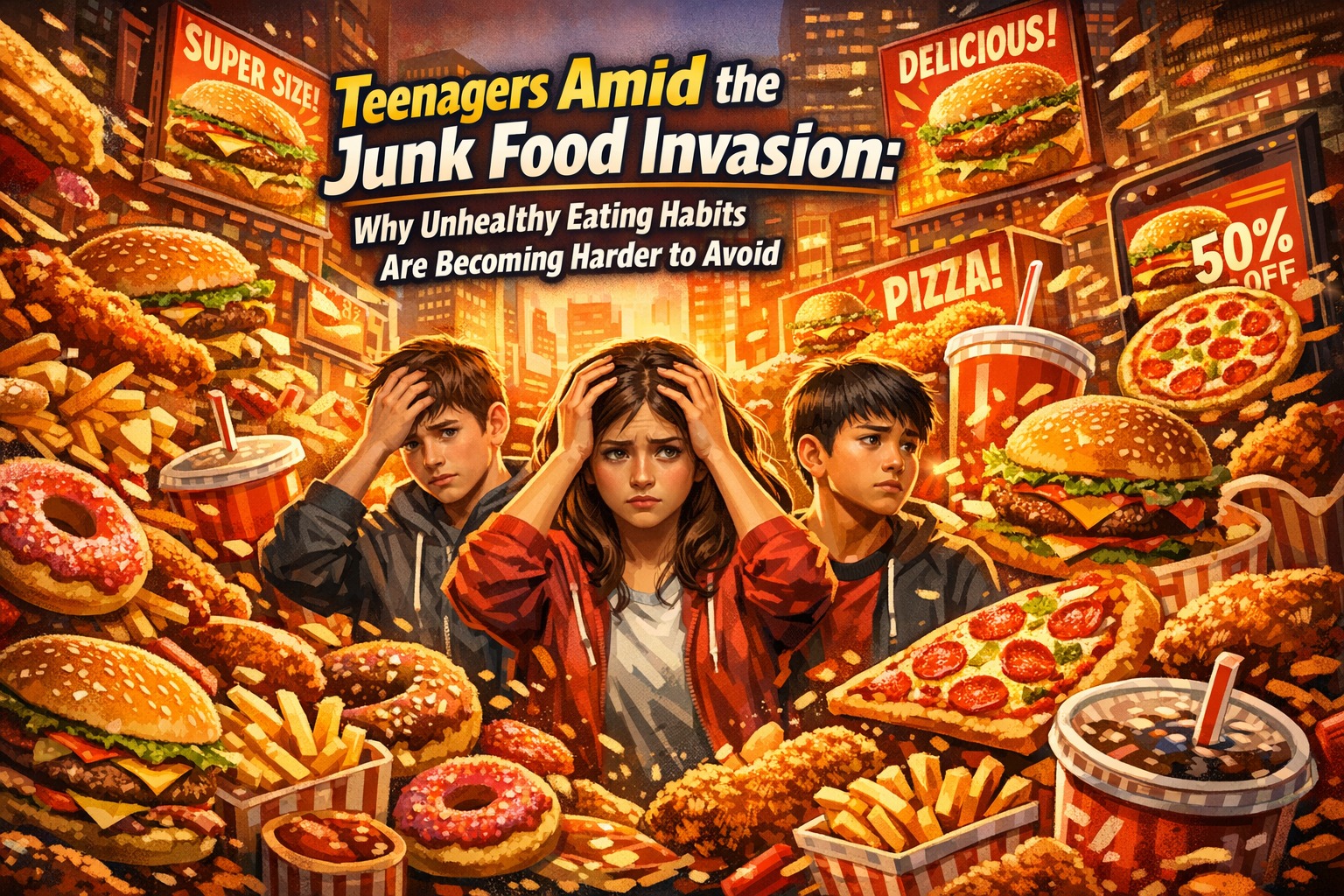
Teenagers’ eating habits today face major challenges. Amid school responsibilities, digital activities, and social influences, junk food appears as a quick, cheap, and tempting option. Foods high in sugar, salt, and fat are easily found around schools, shopping centers, and food delivery apps. As a result, many teenagers unknowingly make them a regular part of their diet. This raises an important question: why are unhealthy eating habits becoming harder to avoid, and what are the consequences for the future of younger generations?
THE WIDESPREAD PRESENCE OF JUNK FOOD IN TEENAGERS’ ENVIRONMENTS
Junk food is no longer just a snack; it has become part of a lifestyle. Massive advertising on social media, attractive packaging, and a “trendy” image make these foods seem more appealing than healthier options. Moreover, their wide availability and fast preparation fit perfectly with teenagers’ instant-paced lifestyles.
The surrounding environment also plays a significant role. School canteens, nearby food stalls, and hangout spots often provide fast food options. When healthy choices are limited or perceived as less appealing, junk food becomes a practical solution that is difficult to resist.
PSYCHOLOGICAL AND SOCIAL FACTORS THAT INFLUENCE EATING HABITS
Adolescence is a phase of identity formation. The desire to be accepted within peer groups leads many teenagers to follow their friends’ habits, including food choices. Hanging out while eating fast food is often seen as a symbol of togetherness and modernity.
In addition, stress from academic demands or social pressure can push teenagers toward instant comfort. Foods high in sugar and fat provide temporary pleasure, even though their long-term effects are harmful to health.
THE ROLE OF TECHNOLOGY AND A FAST-PACED LIFESTYLE
Technological advancements bring both convenience and challenges. Food delivery apps allow teenagers to order junk food anytime without leaving home. When done unconsciously, this habit can shape an unhealthy eating pattern.
A sedentary lifestyle caused by excessive screen time further worsens the situation. Lack of physical activity makes excess calorie intake from junk food even more risky for overall health.
LONG-TERM IMPACTS ON TEENAGERS’ HEALTH
Excessive junk food consumption affects both physical and mental health. In the short term, teenagers may experience fatigue, difficulty concentrating, and mood changes. In the long term, the risk of health problems such as obesity, metabolic disorders, and decreased physical fitness increases.
Moreover, eating habits formed during adolescence tend to persist into adulthood. If not controlled early, unhealthy eating patterns can negatively affect quality of life and productivity in the future.
EFFORTS TO BUILD HEALTHIER EATING HABITS
Facing the junk food invasion requires collective efforts from various parties. Simple and relevant nutrition education needs to be strengthened in schools and families. Teenagers should be encouraged to understand the long-term benefits of a balanced diet, rather than being given restrictions alone.
Parents and educators can set examples by providing healthy food options that are appealing and easily accessible. Meanwhile, teenagers themselves need to develop greater awareness in choosing food—starting from reading nutrition labels to limiting the frequency of junk food consumption.
EARLY AWARENESS FOR A BETTER FUTURE
Junk food may be difficult to avoid, but it is not impossible to control. With awareness, education, and environmental support, teenagers can build healthier eating habits. Small steps taken today will have a significant impact on their health and quality of life in the future.
Changing eating habits is not about perfection, but about making wiser and more sustainable choices.
Keywords:
About the Author
Gusti Ayu Tita
Author — STEKOM University
An active author focused on academic issues, educational technology, and human resource development in the campus environment.