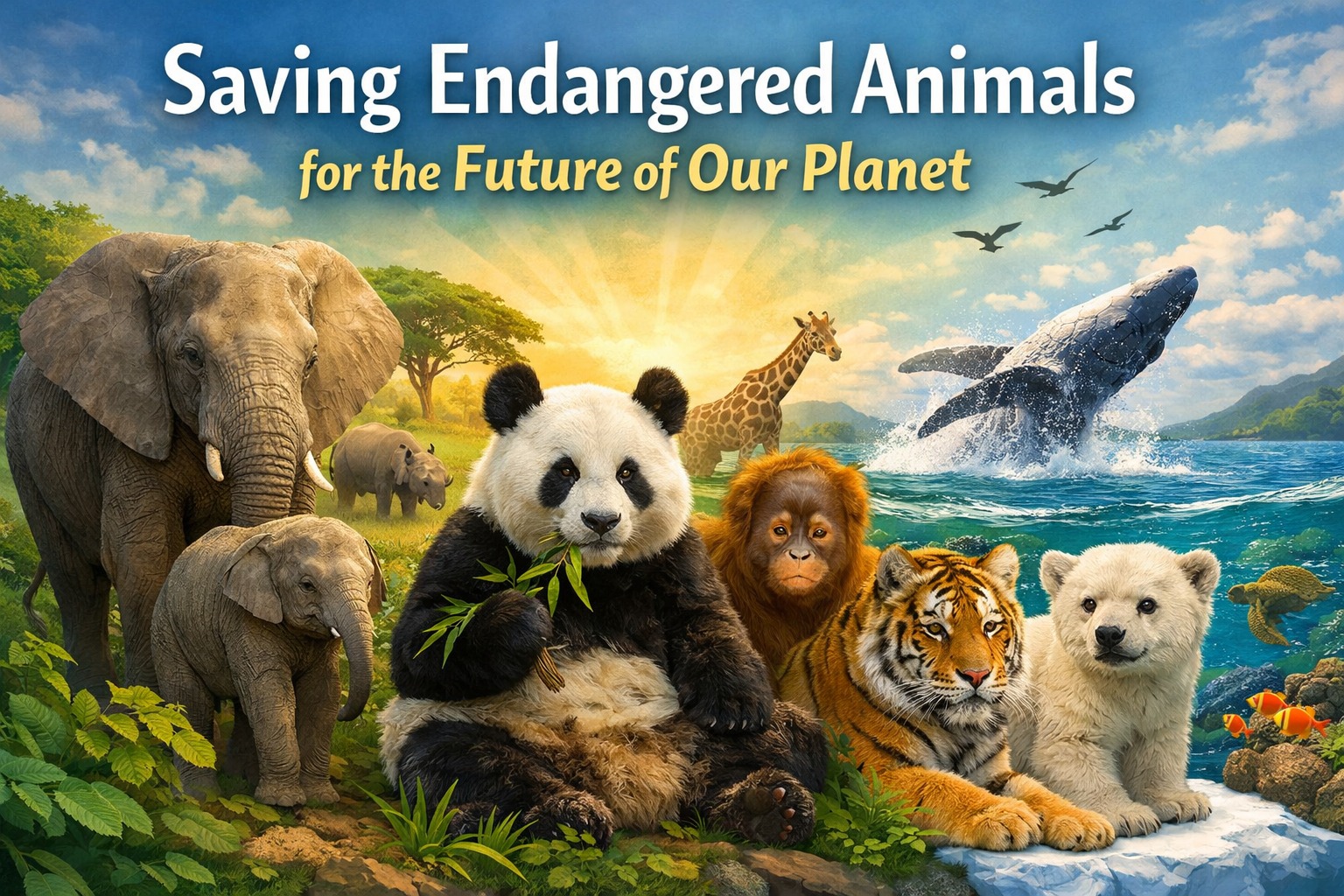
The Earth is home to millions of animal species that play an important role in maintaining the balance of nature. However, many of these animals are now facing extinction due to human activities, climate change, habitat destruction, and illegal hunting. Protecting endangered animals is not only about saving wildlife, but also about preserving the future of our planet and the survival of future generations.
WHY ENDANGERED ANIMALS MATTER
Every species in the ecosystem has a unique role. Some animals help spread seeds, others control pest populations, while marine animals help maintain healthy oceans. When one species disappears, the balance of the ecosystem can be disrupted. This can lead to serious environmental problems that eventually affect human life as well.
For example, bees and butterflies are important pollinators that support food production. Large predators such as tigers and wolves help control prey populations. Without these animals, ecosystems can become unstable and biodiversity may decline rapidly.
MAIN CAUSES OF ANIMAL EXTINCTION
There are several major factors causing animals to become endangered today:
HABITAT DESTRUCTION
Forests, wetlands, and oceans are being damaged by deforestation, mining, urban development, and pollution. Animals lose their homes and struggle to survive in shrinking habitats.
ILLEGAL HUNTING AND POACHING
Many animals are hunted for their skin, horns, meat, or body parts. Illegal wildlife trade continues to threaten species such as elephants, rhinos, and pangolins.
CLIMATE CHANGE
Rising temperatures, melting ice, and changing weather patterns affect animal migration, breeding, and food sources. Polar bears, sea turtles, and many marine species are especially vulnerable.
POLLUTION
Plastic waste, chemical spills, and air pollution harm animals both on land and in the ocean. Many sea animals mistake plastic for food, which can lead to injury or death.
ANIMALS THAT NEED PROTECTION
Many incredible species are currently endangered and require urgent protection efforts.
TIGERS
Tigers are losing their forest habitats because of illegal logging and land conversion. Conservation programs and anti-poaching laws are essential to protect the remaining wild tiger population.
ORANGUTANS
Orangutans are threatened by deforestation and palm oil plantation expansion. These intelligent primates are important for maintaining tropical forest ecosystems.
SEA TURTLES
Sea turtles face dangers from plastic pollution, fishing nets, and coastal development. Protecting nesting beaches can help increase their population.
RHINOS
Rhinos are often hunted for their horns, which are illegally traded in some countries. Strict wildlife protection laws are necessary to prevent extinction.
HOW HUMANS CAN HELP
Protecting endangered animals requires cooperation from governments, organizations, and individuals. Everyone can contribute in simple but meaningful ways.
SUPPORT CONSERVATION ORGANIZATIONS
Many organizations work to rescue animals, restore habitats, and educate communities. Donations and volunteer work can make a significant difference.
REDUCE PLASTIC USE
Using reusable products and recycling waste can help reduce pollution that harms wildlife and marine ecosystems.
CHOOSE SUSTAINABLE PRODUCTS
Consumers should avoid products linked to deforestation or illegal wildlife trade. Supporting eco-friendly companies encourages sustainable practices.
EDUCATE OTHERS
Sharing information about endangered animals can increase public awareness and inspire more people to protect nature.
THE FUTURE DEPENDS ON OUR ACTIONS
Saving endangered animals is a responsibility shared by all humanity. Wildlife is an important part of Earth’s natural heritage, and losing these species would harm ecosystems and future generations. By protecting habitats, reducing pollution, and supporting conservation efforts, people can help create a safer future for animals and humans alike.
The survival of endangered species depends on the choices we make today. If we act responsibly and care for the environment, future generations will still have the opportunity to see these magnificent animals living freely in the wild.
About the Author
Gusti Ayu Tita
Author — STEKOM University
An active author focused on academic issues, educational technology, and human resource development in the campus environment.