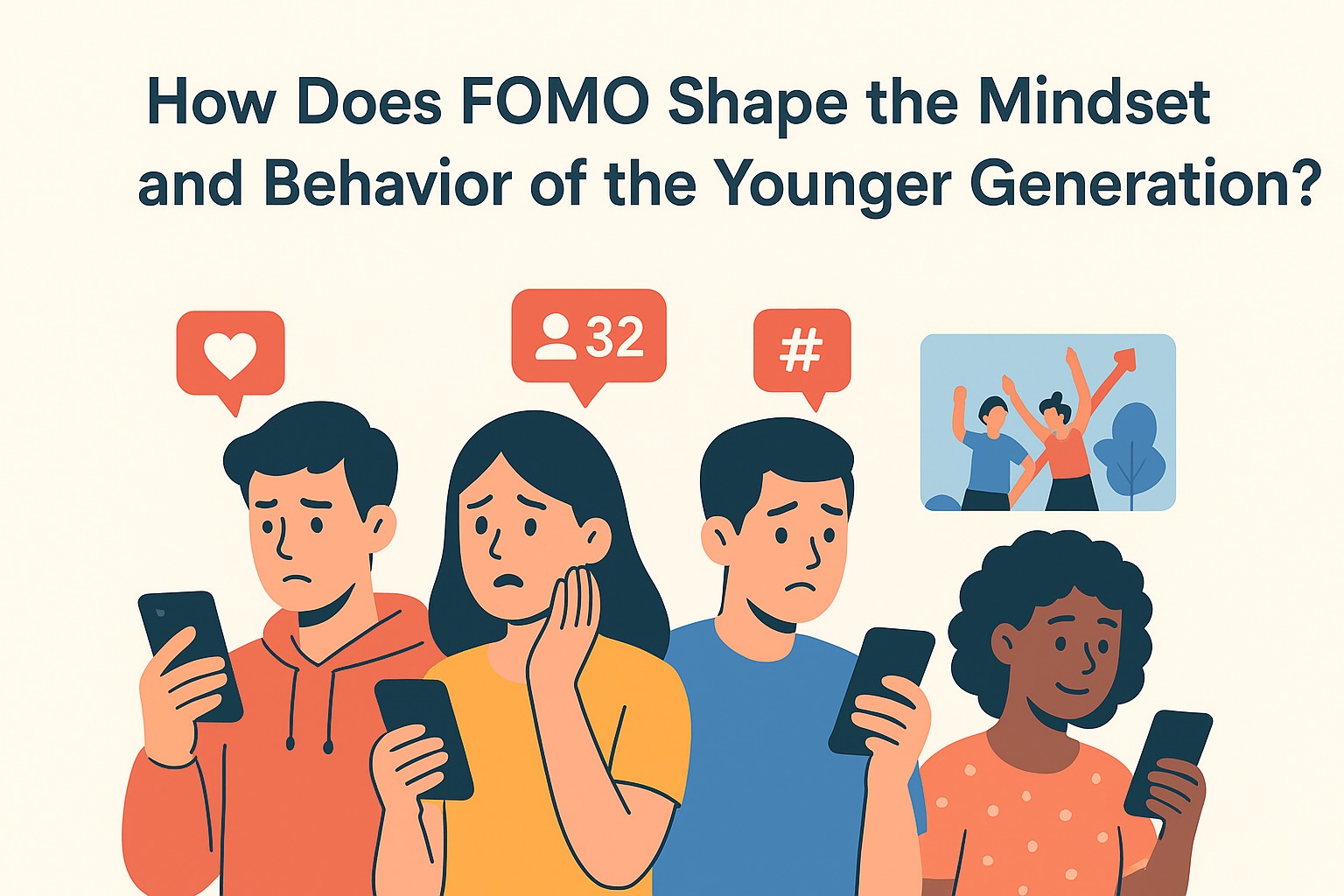
In today’s digital era, *Fear of Missing Out* (FOMO) has become increasingly common, especially among the generation that lives closely with social media. The fear of missing trends, information, or experiences influences how people think and feel. But how significant is FOMO’s impact on the mental health of today’s generation?
WHAT IS FOMO AND WHY DOES IT HAPPEN EASILY?
FOMO is the anxious feeling that others are having more enjoyable or meaningful experiences. With instant access to others’ lives, FOMO becomes easy to trigger.
It appears especially when:
- Seeing peers’ achievements
- Viewing travel or event posts
- Feeling less productive than others
If unchecked, it can become a heavy mental burden.
THE IMPACT OF FOMO ON MENTAL HEALTH
FOMO can affect various aspects of mental well-being:
1. ncreased Anxiety and Overthinking
People may feel restless when others seem more successful or happier.
2. Lowered Self-Esteem
Constant comparison makes individuals feel inadequate.
3. Sleep and Focus Problems
Habitually checking updates disrupts rest and concentration.
4. Unnoticed Emotional Pressure
Overconsuming content creates pressure to appear active and productive.
WHY TODAY’S GENERATION IS MORE SENSITIVE TO FOMO
Reasons include:
- Social media culture showcasing life “highlights”
- Viral standards of success
- Extremely fast information access
- Desire for online validation
These combined factors make FOMO hard to avoid.
STEPS TO REDUCE THE IMPACT OF FOMO
Some strategies include:
- Reducing social media consumption
- Avoiding accounts that trigger excessive comparison
- Focusing on personal growth
- Engaging in offline activities
- Recognizing that social media is not real life
CONCLUSION
FOMO is a major psychological challenge in the digital era. It can influence self-esteem, sleep quality, focus, and emotional well-being. Awareness and healthy digital habits are key to minimizing its negative effects.
About the Author
Gusti Ayu Tita
Author — STEKOM University
An active author focused on academic issues, educational technology, and human resource development in the campus environment.