
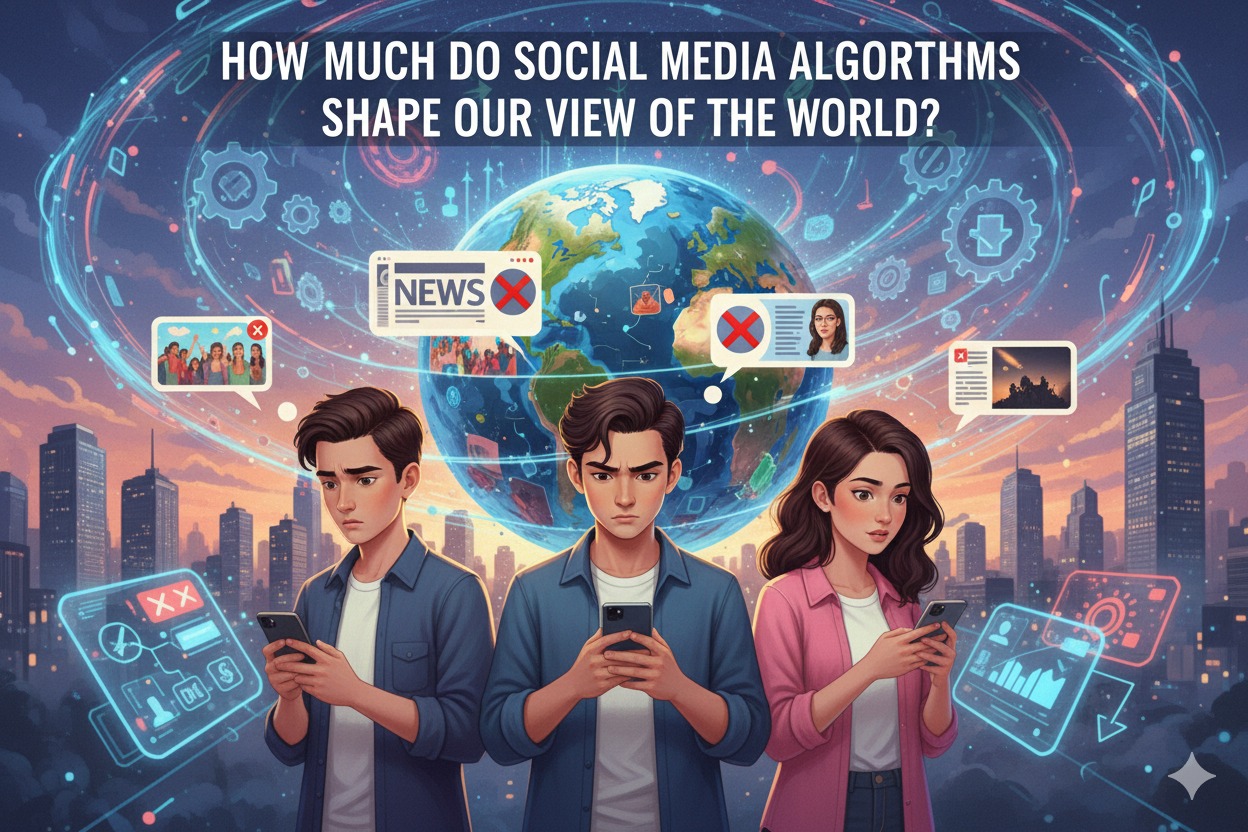
How Social Media Algorithms Shape the Way We See the World
In today’s digital era, almost every human activity is connected to social media. From the moment we wake up until we go back to sleep, we are constantly exposed to content curated by social media algorithms. But how powerful are these algorithms in shaping the way we perceive the world?
What Are Social Media Algorithms?
Social media algorithms are automated systems that determine which content appears on a user’s feed. Platforms such as Instagram, TikTok, YouTube, and X (Twitter) use algorithms to personalize the user experience.
The goal is simple: to increase engagement. The longer users stay on their screens, the more opportunities platforms have to generate advertising revenue. However, behind this convenience, algorithms function as “information filters.” They show us what we like and hide content that does not match our preferences. This phenomenon is known as the filter bubble—a digital bubble that limits our exposure to diverse perspectives.
How Do Algorithms Influence the Way We Think?
When algorithms continuously present content that aligns with our interests or beliefs, we may unconsciously start to think that everyone else sees the world the same way. For example, someone who frequently watches conspiracy-related videos will be shown more of the same content, reinforcing those beliefs over time.
This phenomenon affects not only individual opinions but also collective thinking. Political debates, social issues, and cultural trends are increasingly shaped by algorithm-driven narratives, rather than by objective reality.
The Social Impact of Information Bubbles
One of the most significant consequences of social media algorithms is social polarization. People tend to cluster around others who share similar views, while opposing opinions are often dismissed as wrong or even dangerous. As a result, healthy and open discussions become increasingly rare.
Algorithms also have a strong impact on mental health. Constant exposure to carefully curated images of “perfect lives” can lead to anxiety, envy, and dissatisfaction. These feelings arise from algorithmic selection that highlights only the best moments of others’ lives.
Can We Break Free from Algorithmic Influence?
Although algorithms are powerful, users still have control. We can start by:
* Realizing that not everything we see reflects reality.
* Following diverse sources of information to broaden our perspectives.
* Resetting preferences or search histories to avoid repetitive content.
* Taking digital breaks to protect mental health and maintain critical thinking.
With awareness and self-control, we can use social media **as a tool**, rather than becoming victims of its system.
Conclusion
Social media algorithms are not enemies; they are reflections of our digital habits. However, when we stare into that reflection for too long without critical thinking, it can reshape the way we view the world. Understanding how algorithms work and recognizing their impact is essential to maintaining independent thought in an ever-moving stream of information.
About the Author
Gusti Ayu Tita
Author — STEKOM University
An active author focused on academic issues, educational technology, and human resource development in the campus environment.



