
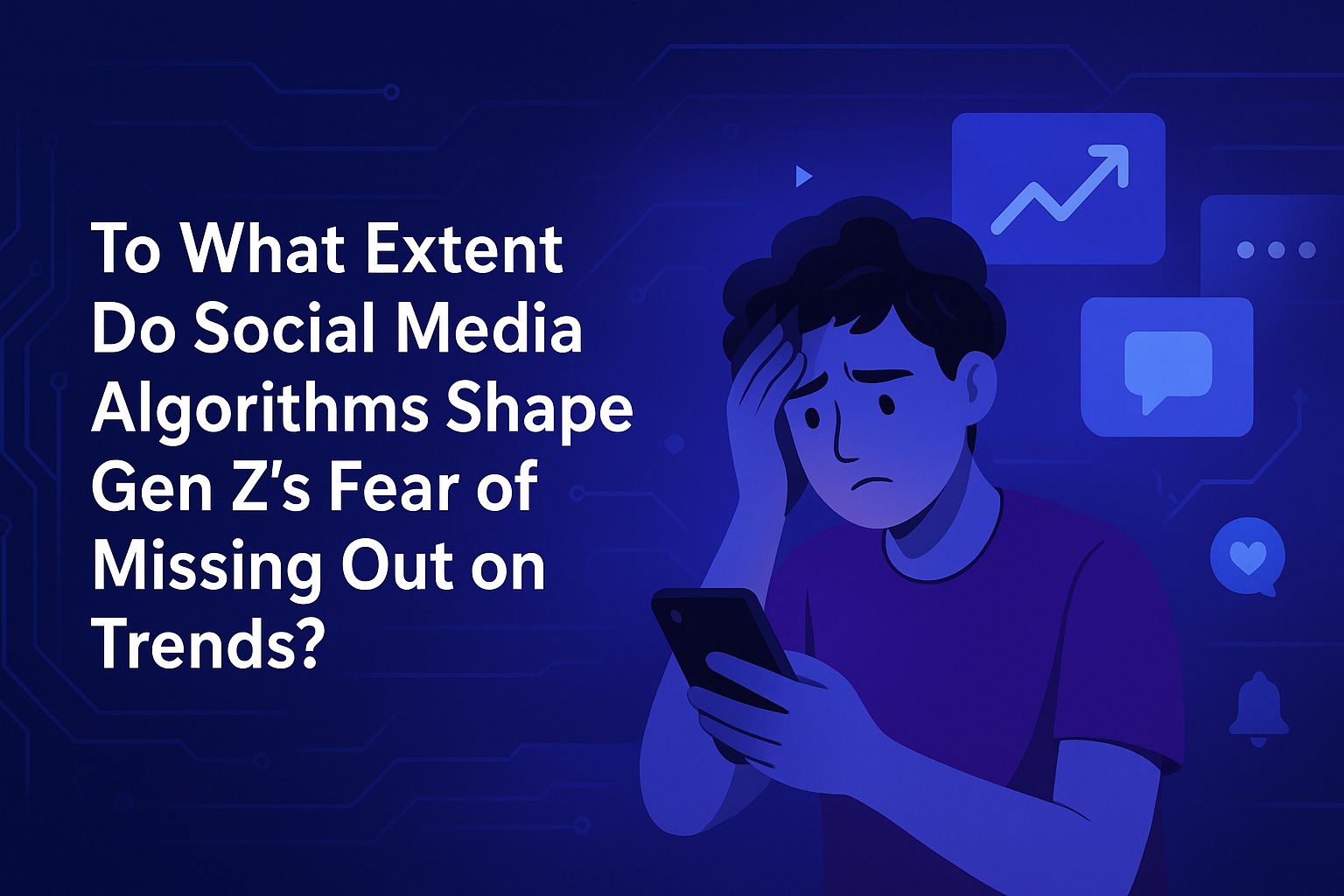
Generation Z lives in a fast-moving digital ecosystem where new trends emerge almost daily—from fashion and entertainment to viral challenges. Behind this excitement lies a growing phenomenon: *Fear of Missing Out* (FOMO). Many do not realize that one of the biggest contributors to this fear is social media algorithms.
This article explores how algorithms influence Gen Z’s mindset and fuel hidden social anxiety.
WHAT ARE SOCIAL MEDIA ALGORITHMS?
Algorithms determine what content appears on users’ feeds. The selection is based on user behavior: what they like, watch, share, or follow.
Since algorithms aim to keep users engaged, they often highlight trending and popular content. As a result, Gen Z encounters new trends almost daily, creating pressure to keep up.
HOW ALGORITHMS STRENGTHEN FOMO IN GEN Z
Algorithms don’t just show trends—they amplify the illusion that “everyone” is participating in them.
Effects include:
- Trends appearing larger than they are due to repeated exposure
- Increased pressure to participate, especially when influencers or peers engage
- Heightened social anxiety, as not joining trends feels like falling behind
In reality, not everyone participates—but algorithms make it seem that way.
THE ROLE OF INFLUENCERS AND VIRALITY
Influencers often follow trends because algorithms boost their visibility. When influencers appear always updated, Gen Z feels the need to keep up.
This leads to:
- Trends feeling obligatory
- Fear of being left out
- Feeling that life is dull if not following the latest viral content
Here, algorithms heavily shape the fear of missing out.
PSYCHOLOGICAL EFFECTS EMERGING FROM FOMO
Gen Z may experience:
- Insecurity, feeling less interesting or slower to adapt
- Stress, from constantly trying to keep up
- Identity confusion, prioritizing trends over personal style and values
Algorithms steer users toward external expectations instead of personal needs.
HOW GEN Z CAN MANAGE THEIR RELATIONSHIP WITH ALGORITHMS
Possible steps:
1. Limit screen time
2. Follow accounts that provide positive or meaningful content
3. Choose trends based on personal interest
4. Learn how algorithms work to reduce emotional influence
5. Prioritize real-life experiences
CONCLUSION
Social media algorithms shape not only content but also mindset and behavior. By amplifying trends, they heighten the fear of missing out. With digital awareness and healthier consumption, Gen Z can maintain mental well-being and preserve their authentic identity.
About the Author
Gusti Ayu Tita
Author — STEKOM University
An active author focused on academic issues, educational technology, and human resource development in the campus environment.



