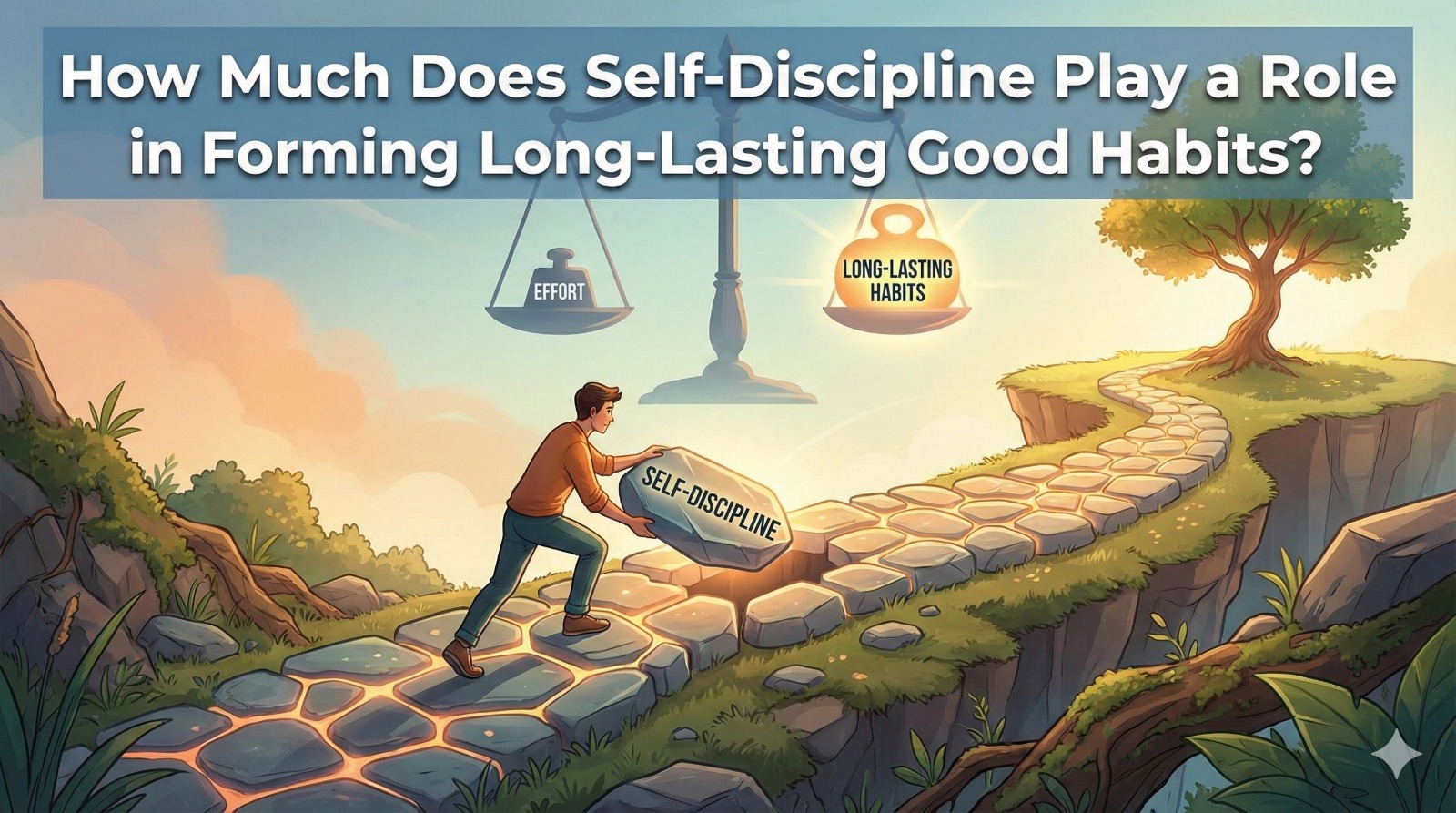
Building good habits often sounds simple, but maintaining them in the long run is a very different challenge. Many people start with enthusiasm, yet that excitement slowly fades as laziness, busyness, and distractions begin to appear. This is where self-discipline plays an essential role. But how much does self-discipline actually influence the success of a habit?
THE MEANING OF SELF-DISCIPLINE IN HABIT FORMATION
Self-discipline is the ability to control actions, emotions, and decisions so they remain aligned with long-term goals. If motivation is the initial spark, then self-discipline is the engine that keeps habits running even when circumstances are not ideal.
Without discipline, a person can easily give up when facing small obstacles—fatigue, boredom, or changing schedules. On the other hand, with self-discipline, one will stay committed even when conditions are not favorable.
WHY SELF-DISCIPLINE MAKES HABITS LAST LONGER
Self-discipline contributes to habit formation in several key ways:
1. Helps Maintain Consistency
Discipline keeps you performing small actions every day. These repeated small routines eventually turn into permanent habits.
2. Not Dependent on Mood
Motivation rises and falls, but discipline helps you stay consistent even when you are unmotivated or not in the mood.
3. Reduces Procrastination
Strong discipline suppresses the urge to delay. You take action faster because your mind is trained to follow structured routines.
4. Strengthens Mental Resilience During Challenges
Old habits often resist when change begins. Self-discipline acts as a defense so you don't fall back into previous patterns.
HOW TO IMPROVE SELF-DISCIPLINE FOR POSITIVE HABITS
Self-discipline isn’t instant—it's built gradually through practice:
1. Start With Small Goals
Realistic steps are easier to maintain. For example, start by reading 5 minutes a day before increasing to 20 minutes.
2. Create a Supportive Environment
Reduce distractions and build surroundings that support your habit. For example, keep your phone away while studying.
3. Do Weekly Evaluations
Track progress and challenges. Evaluation helps you adjust strategies and maintain discipline.
4. Reward Yourself
Small rewards boost motivation and make the habit-building process more enjoyable, strengthening discipline along the way.
CONCLUSION
Self-discipline is the core foundation that determines whether a good habit can last. Without discipline, habits fade quickly. But with commitment, consistent small steps, and regular evaluation, positive habits can attach firmly to daily life.
Discipline is not about forcing yourself—it is about understanding your personal goals and directing them into real actions every single day.
About the Author
Gusti Ayu Tita
Author — STEKOM University
An active author focused on academic issues, educational technology, and human resource development in the campus environment.