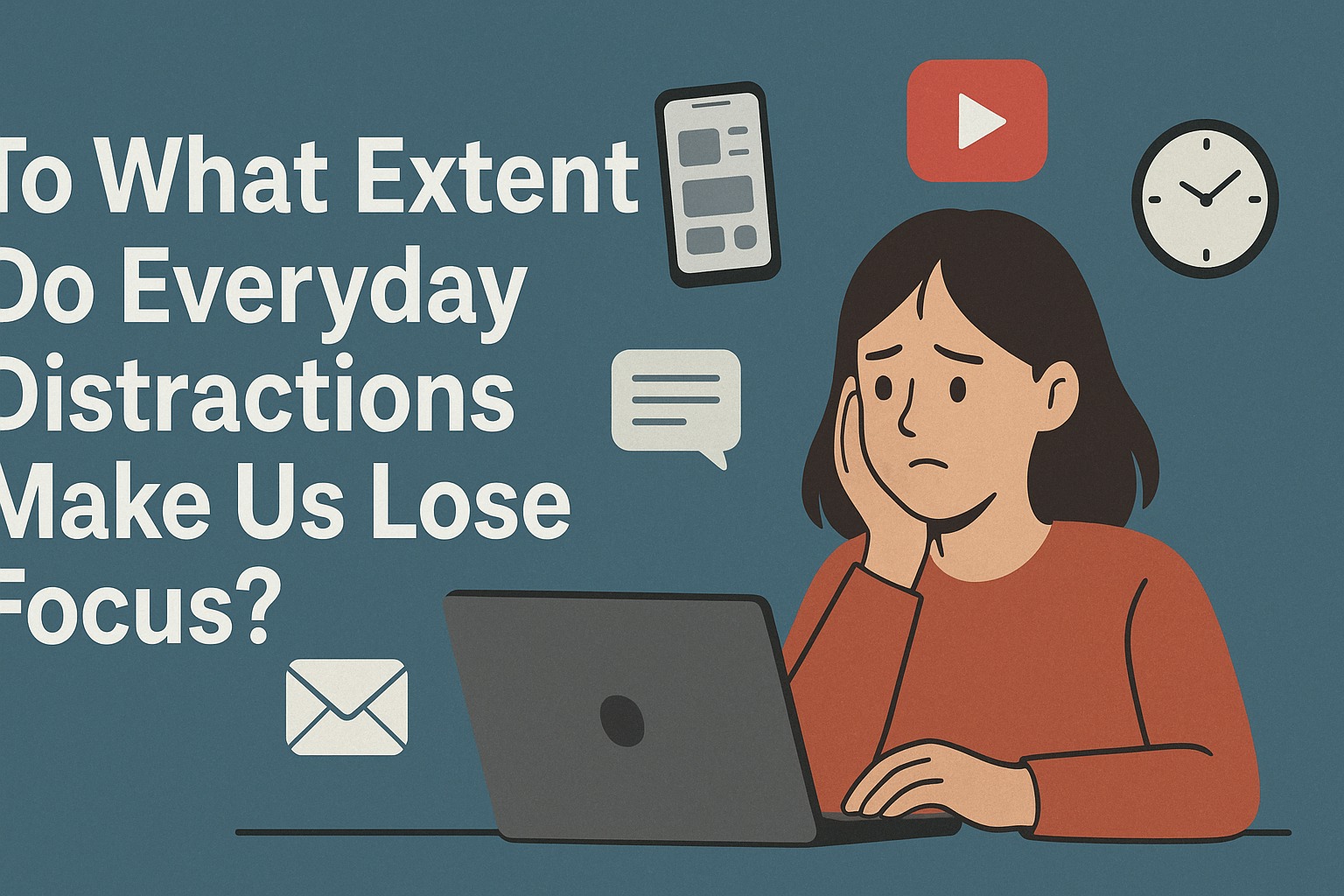
Small interruptions in our daily routines often seem insignificant. However, if ignored, these simple distractions can quietly drain time, energy, and concentration. In a digital era filled with constant notifications and information, staying focused has become a challenge of its own. So, how much do daily distractions really affect our ability to remain focused?
DIGITAL DISTRACTIONS THAT STEAL ATTENTION
Message notifications, social media, and entertainment apps are the most common causes of lost focus. Every time attention shifts, the brain needs time to return to full working mode—and these tiny interruptions can happen dozens of times a day.
Even a 5-second distraction can decrease productivity because the brain must re-focus. When this happens repeatedly, simple tasks start to feel heavier and take longer to complete.
THE MYTH OF EFFECTIVE MULTITASKING
Many people believe multitasking helps get things done faster. In reality, doing multiple activities at once forces the brain to work harder and actually slows progress.
The human brain is not designed to switch focus constantly. When trying to do two things at the same time, the quality of work decreases and completion time increases. In contrast, single-tasking is far more effective for maintaining strong concentration flow.
AN ENVIRONMENT THAT DOESN’T SUPPORT FOCUS
Noise, cluttered workspaces, or overly busy surroundings can disrupt mental stability. Your physical environment affects comfort and calmness while working.
A distraction-free environment helps the brain work more steadily, while a chaotic one quickly exhausts the mind. Organizing a clean and comfortable workspace can be a small step with big benefits.
MENTAL AND PHYSICAL FATIGUE
Distractions don’t only come from outside; they also come from within. Lack of sleep, stress, and emotional fatigue can drastically reduce concentration levels.
When the body and mind lack energy, attention becomes easily fragmented. Getting enough rest and managing stress well are key to maintaining stable focus throughout the day.
THE “SEEMINGLY SMALL” HABIT OF PROCRASTINATION
Putting off a task for five minutes, checking your phone “for a moment,” or switching to another activity might seem harmless. However, these small habits prolong tasks and disrupt focus flow.
The more we delay, the harder it becomes to start again. Over time, productivity drops and the quality of work declines.
CONCLUSION
Daily distractions—whether from the environment, technology, or our own internal state—have a significant impact on our ability to focus. Small interruptions that seem trivial can reduce effectiveness, slow down tasks, and drain mental energy. By understanding the sources of distraction and learning to manage them, we can improve our focus and daily productivity.
About the Author
Gusti Ayu Tita
Author — STEKOM University
An active author focused on academic issues, educational technology, and human resource development in the campus environment.