To What Extent Is Today’s Education Able to Prepare Students for Future Employment?
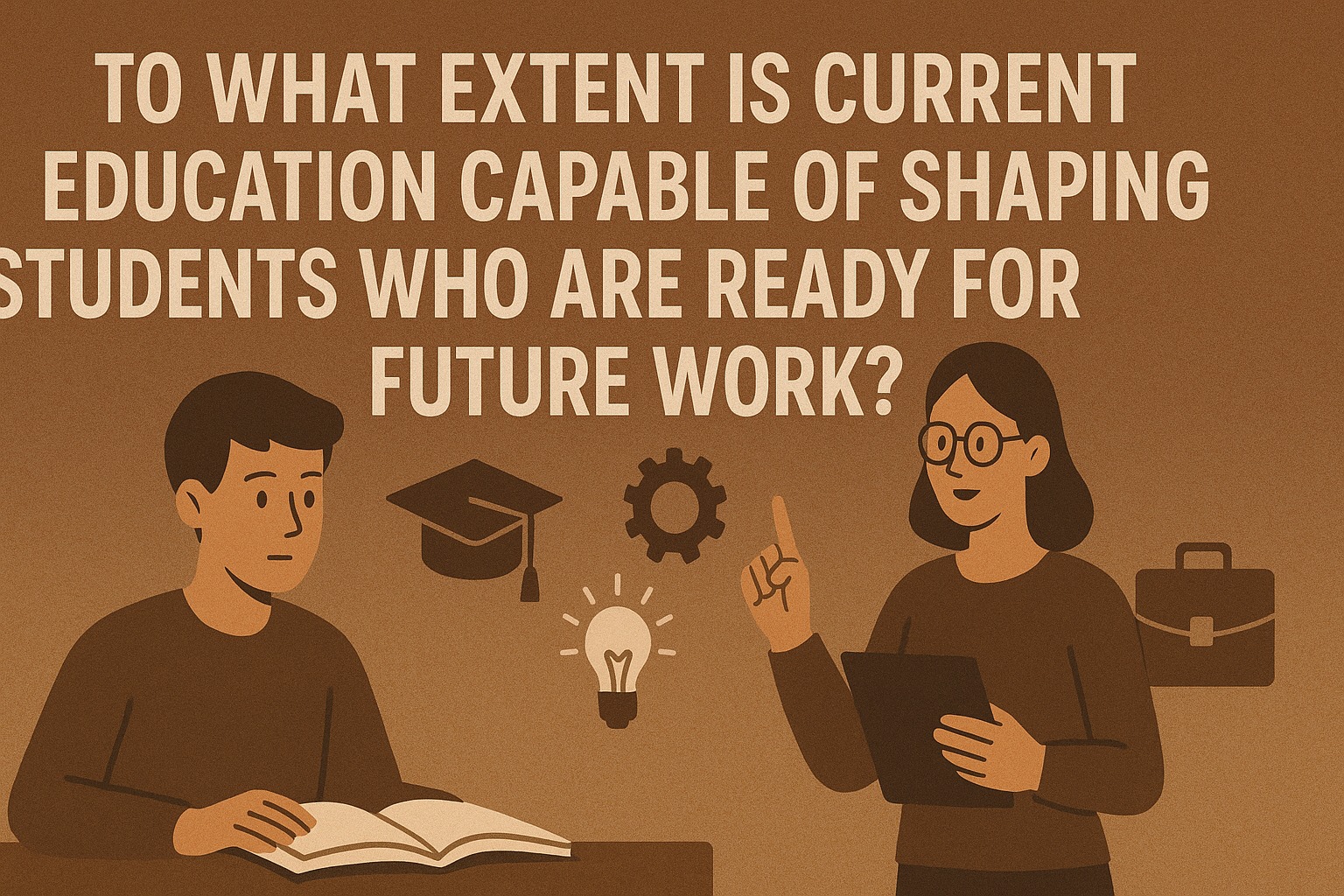
The world of work is changing rapidly. New technologies continue to emerge, work patterns evolve, and industry demands become increasingly diverse. This raises a crucial question: is today’s education system capable of preparing students to become a workforce ready to face the future?
This article discusses how far modern education supports students’ readiness and what improvements are needed for them to compete globally.
Future Workforce Challenges
To understand educational readiness, we must look at the major challenges students will face:
a. Technological development and automation
Artificial intelligence and robotics are transforming traditional jobs and requiring new skill sets.
b. Increasing global competition
Indonesian students must compete with graduates from other countries.
c. Shifting skill demands
Academic intelligence alone is no longer enough—soft skills, digital literacy, and creativity are highly required.
How Well Does Today’s Education Equip Students?
a. Competency-based curriculum
Some schools now implement curricula that emphasize critical thinking, collaboration, and problem-solving.
b. Project-Based Learning
This method encourages students to be active, creative, and able to solve real-world problems.
c. Technology integration in learning
Laptops, the internet, learning apps, and digital platforms help increase students’ technological literacy.
d. Vocational and practical skills
Subjects such as informatics, entrepreneurship, and design help strengthen students’ practical abilities.
However, despite progress, implementation remains uneven across schools.
Weaknesses of the Current Education System
a. Overemphasis on theory
Many lessons still focus on memorization rather than practical application.
b. Uneven digital skills
Not all students have adequate technological access, creating gaps in digital literacy.
c. Limited school–industry collaboration
Few schools offer internships, industrial visits, or market-oriented curricula.
d. Underdeveloped soft skills
Communication, leadership, and self-management skills are not yet central priorities.
The Role of Teachers in Enhancing Student Readiness
Teachers are the driving force behind learning. They can enhance student readiness by:
* Using active learning methods
* Connecting lessons to real-life contexts
* Building character through teamwork and discipline
* Modeling proper use of technology
Adaptive teachers help shape students who are ready for a dynamic workforce.
The Role of Parents in Developing Work Readiness
Parents contribute significantly through:
* Supporting learning at home
* Teaching discipline, responsibility, and work ethics
* Encouraging personal development activities
* Helping children identify their interests and strengths early on
Strong character is often shaped within the family environment.
What Needs to Be Improved for Future-Ready Education?
a. Stronger technology integration
Technology must be treated as a core need, not a complement.
b. School–industry collaboration
Internships, workshops, and industrial partnerships help students understand real job requirements.
c. Project-based and collaborative learning
This trains critical thinking and creativity.
d. Strengthening soft skills
Communication, leadership, and adaptability must be prioritized.
e. Flexible curriculum
A curriculum that is easily updated allows schools to keep pace with workforce changes.
Today’s education system has made progress in preparing students for future work, especially in technology use, project-based learning, and competency-focused curricula. However, much improvement is still needed, including equal access, stronger soft skills, and closer collaboration with industry.
With collective support from schools, teachers, parents, and businesses, education can become a strong foundation for students to enter the future workforce with confidence and comprehensive competence.
About the Author
Gusti Ayu Tita
Author — STEKOM University
An active author focused on academic issues, educational technology, and human resource development in the campus environment.