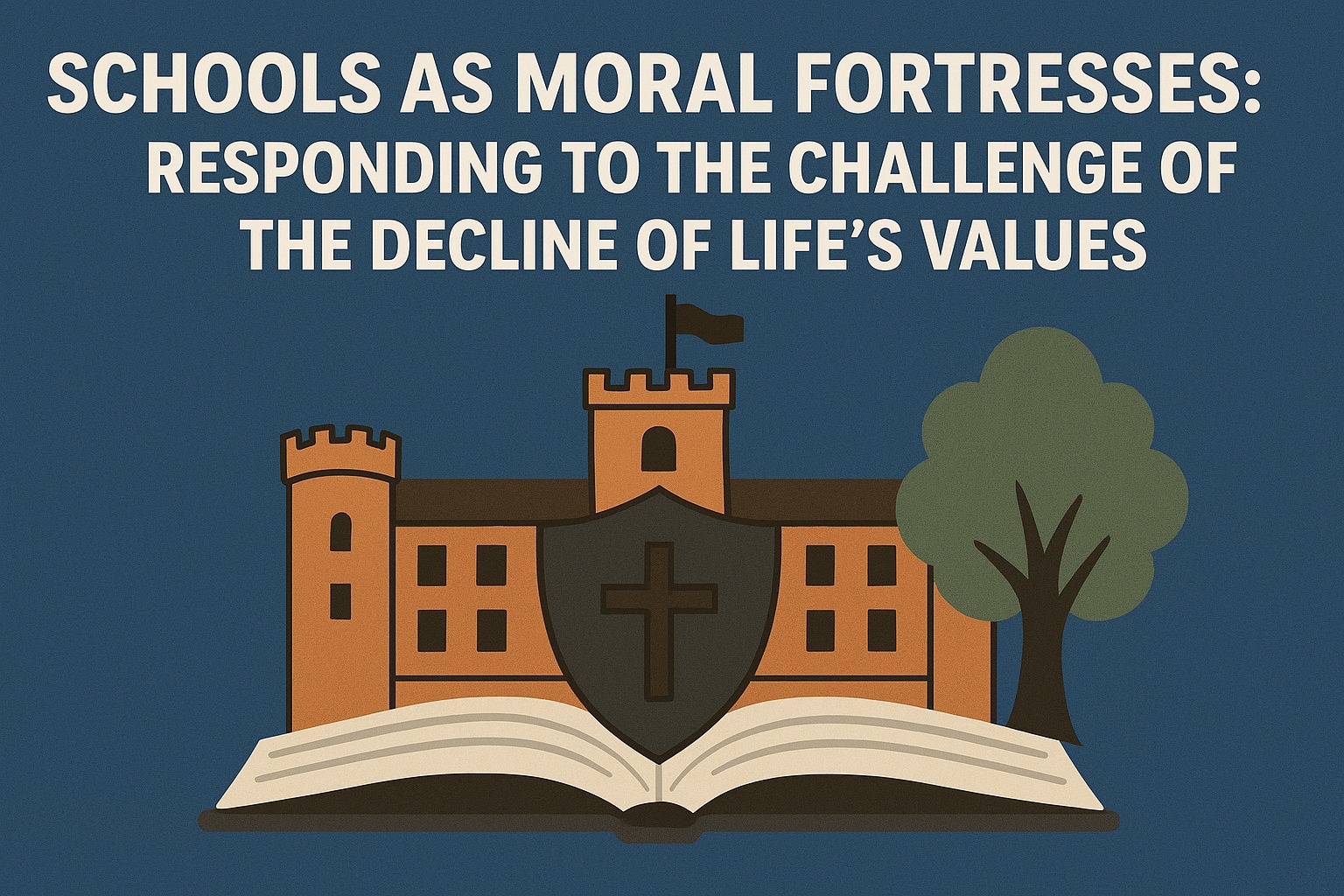
The fast-changing era brings convenience but also anxiety. On one hand, technology opens limitless access to knowledge, yet on the other, it blurs ethical boundaries, manners, and social responsibility. Children grow up surrounded by content that is not always educational, while role models are increasingly difficult to identify. In such circumstances, schools cannot merely be a place for academic transfer. They must stand as a strong moral fortress — a safe space where life values are nurtured, tested, and cultivated through daily practice.
This writing explores why this role is becoming more urgent, the challenges schools face, and strategies for strengthening value-based education in real, practical ways.
The Fading of Values in the Flood of Information
Instant and viral culture encourages people to measure everything quickly: popularity replaces achievement, sensation overshadows substance. Students are exposed to harsh language, symbolic violence, and normalized deviant behavior packaged as entertainment. As a result, empathy fades, discipline weakens, and honesty feels like a burden.
In many families, limited quality time affects value internalization. Society is fragmented by digital spaces that separate people faster than they connect them. Schools stand on the frontline to close this gap — not through rigid morality, but through living, relevant value-based education.
School as an Ecosystem of Character Formation
A morally strong school is not built on slogans, but on ecosystem. Values must exist in culture, policies, and daily interactions. From how teachers greet students, how rules are enforced, to how conflicts are resolved — all become an unwritten curriculum remembered more than theory.
A healthy school culture develops honesty as habit, discipline as necessity, and empathy as a natural social response. Such an environment grows courage to speak truth, loyalty in commitment, and awareness of others — three pillars that protect children from false values.
Core Values That Must Be Cultivated
To build character systematically, schools should prioritize these core values:
Honesty
Encouraged through fair assessment, anti-plagiarism, and teacher transparency.
Responsibility
Trained through clear targets, proportional consequences, and reflection on mistakes.
Discipline
Not as punishment, but as habits: punctuality, consistency, neatness.
Empathy and tolerance
Strengthened through dialogue, group work, and respect for differences.
Collaboration
Shifting competition into cooperation — achievement is not about being the fastest, but the most impactful.
These values must live within learning activities, not stand as separate subjects easily forgotten.
Roles of Education Actors: From Teachers to Parents
A moral fortress will crumble if built alone. Teachers model values, but parents reinforce them at home. Principals ensure policies align with character formation, while counselors guide emotional development. This synergy prevents *dual moral messaging* that confuses children.
Consistent communication — not only during problems — keeps values aligned. When school and family speak the same moral language, children understand that goodness is not an occasional demand but a way of life.
Challenges in the Digital Era and How to Respond
Technology is often blamed for value degradation, yet it can also be a partner. The real challenge is literacy: filtering information, maintaining digital ethics, and managing screen time. Schools must teach these skills early so students are not just tech-savvy, but digitally wise.
Repression is less effective. What works is dialogue, real examples, humane rules. When students feel respected, they view boundaries as protection, not restriction.
Strategies to Strengthen Schools as a Moral Fortress
Concrete actions include:
* Integrating character into curriculum
Every subject carries value context.
* Teacher capacity development
Training in character pedagogy and empathetic communication.
* Appreciation culture
Rewarding good behavior as much as correcting errors.
* Community partnerships
Bringing real role models into school environment.
* Ethical technology use
Digital literacy as the new shield.
Conclusion
Schools as moral fortresses are not idealistic dreams — but urgent necessities. Amid the erosion of life values, schools reignite moral compass through humane ecosystems, strong collaboration, and wise innovation. When values are practiced rather than merely spoken, schools produce not only intelligent students — but a generation with character.
About the Author
Gusti Ayu Tita
Author — STEKOM University
An active author focused on academic issues, educational technology, and human resource development in the campus environment.