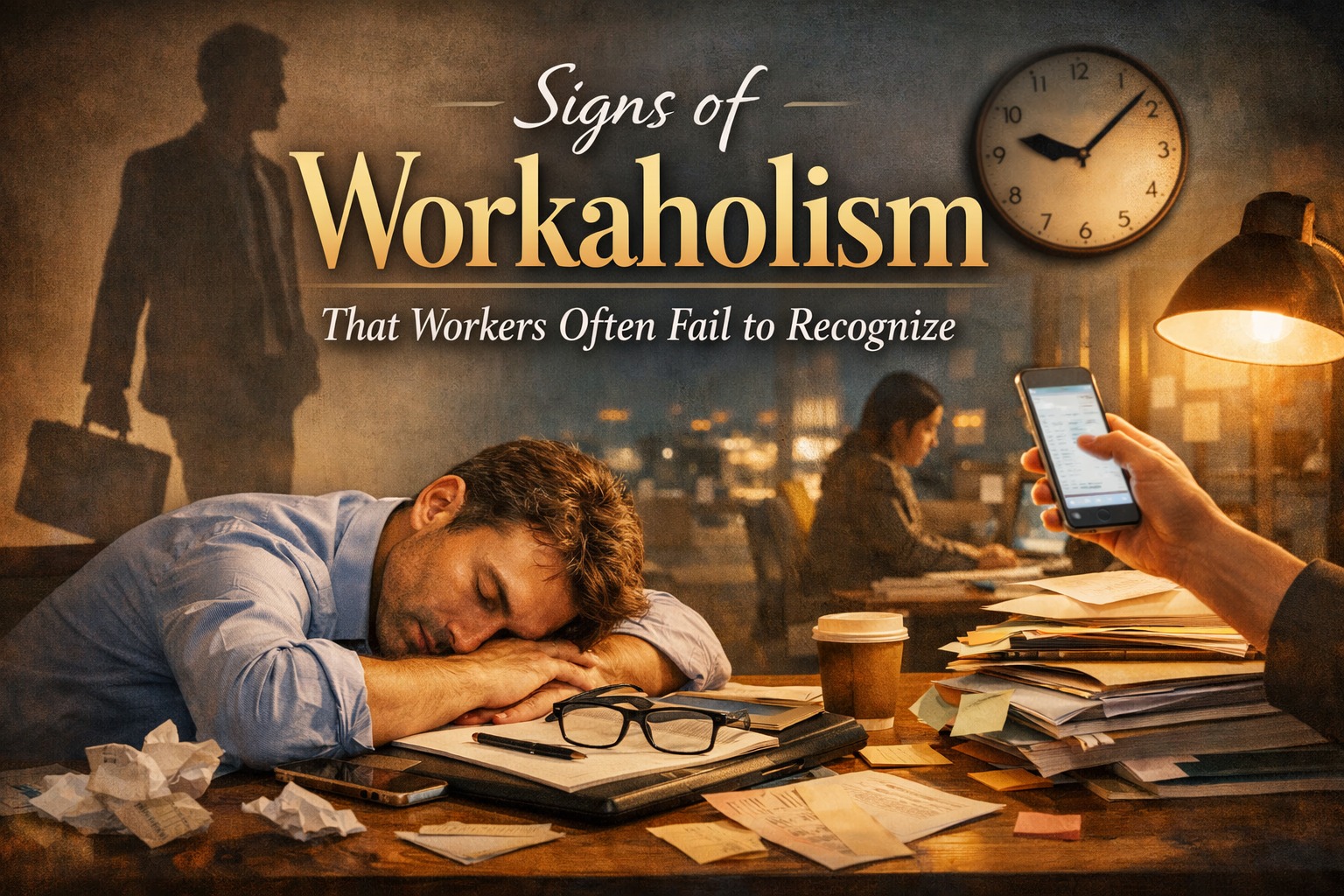
In today's highly competitive workplace, dedication and hard work are often viewed as positive qualities. However, there is a fine line between being committed to a career and becoming a workaholic. Many employees mistakenly believe that constantly working longer hours is a sign of ambition and success. In reality, excessive work habits can negatively affect both physical and mental well-being.
Workaholism is more than simply enjoying work. It is a behavioral pattern where a person feels compelled to work excessively, often at the expense of personal relationships, health, and overall life satisfaction. Understanding the signs of workaholism can help workers maintain a healthier work-life balance and avoid long-term consequences.
CONSTANTLY THINKING ABOUT WORK
One of the most common signs of workaholism is being unable to stop thinking about work, even during personal time. Work-related thoughts may dominate conversations, leisure activities, and even vacations. Individuals often find themselves checking emails, planning projects, or worrying about deadlines outside working hours.
This constant mental engagement prevents proper relaxation and recovery. Over time, it can increase stress levels, reduce productivity, and contribute to emotional exhaustion. A healthy employee should be able to disconnect from work and enjoy personal activities without feeling guilty.
FEELING GUILTY WHEN NOT WORKING
Many people with work addiction experience guilt whenever they are not working. They may feel uncomfortable taking breaks, using vacation days, or spending time on hobbies. Instead of viewing rest as necessary, they see it as wasted time.
This mindset can create an unhealthy relationship with work. Rest and recreation are essential for maintaining creativity, motivation, and overall well-being. When guilt replaces relaxation, it may indicate a deeper issue related to workaholic behavior.
NEGLECTING PERSONAL RELATIONSHIPS
A significant warning sign of workaholism is the gradual neglect of family, friends, and social commitments. Work often becomes the top priority, leaving little time for meaningful interactions with loved ones. Important events and personal responsibilities may frequently be postponed or ignored.
As this pattern continues, relationships can become strained. Family members and friends may feel unimportant or disconnected. Maintaining strong personal connections is crucial for emotional health and can help prevent the negative effects of excessive work habits.
WORKING LONG HOURS WITHOUT REAL NECESSITY
Working overtime occasionally is normal, especially during busy periods. However, workaholics often work long hours even when there is no urgent need. They may voluntarily take on extra tasks or continue working after completing their responsibilities.
This behavior is usually driven by an internal compulsion rather than actual job demands. While it may appear productive, excessive working hours often lead to fatigue, reduced efficiency, and an increased risk of burnout.
DIFFICULTY DELEGATING TASKS
People struggling with workaholism often believe that nobody can perform tasks as well as they can. As a result, they avoid delegating responsibilities and prefer handling everything themselves. This tendency can create unnecessary pressure and workload.
Refusing to share responsibilities may also affect team performance. Effective collaboration requires trust and communication. Learning to delegate tasks not only reduces stress but also improves workplace efficiency and professional growth.
EXPERIENCING CHRONIC STRESS AND FATIGUE
Persistent stress, exhaustion, and lack of energy are common symptoms of excessive work involvement. Individuals may continue working despite feeling physically or emotionally drained. They often ignore warning signs from their bodies and push themselves beyond healthy limits.
Over time, chronic fatigue can lead to serious health problems, including sleep disorders, weakened immunity, and mental health challenges. Recognizing these symptoms early is essential for preventing long-term damage and maintaining sustainable career success.
MEASURING SELF-WORTH THROUGH WORK ACHIEVEMENTS
Another overlooked sign of work addiction is linking personal value solely to professional accomplishments. People may feel successful only when they achieve work-related goals or receive recognition from employers. Failures at work can significantly affect their self-esteem.
A healthy sense of self-worth should come from multiple aspects of life, including relationships, personal interests, and individual growth. Relying exclusively on career achievements can create emotional instability and increase the risk of burnout.
HOW TO PREVENT WORKAHOLISM
Preventing workaholism begins with setting clear boundaries between work and personal life. Establishing regular working hours, taking scheduled breaks, and avoiding unnecessary overtime can help create a healthier routine. Workers should also prioritize hobbies, exercise, and social activities.
Seeking support from family, friends, or mental health professionals can also be beneficial. By recognizing unhealthy patterns early and promoting a balanced lifestyle, employees can protect their well-being while maintaining strong professional performance.
CONCLUSION
Workaholism often develops gradually, making it difficult to recognize in its early stages. Signs such as constantly thinking about work, feeling guilty when resting, neglecting relationships, and experiencing chronic stress should not be ignored. While dedication and ambition are valuable qualities, excessive work involvement can harm both physical and mental health. By identifying these warning signs and prioritizing a healthy work-life balance, individuals can achieve long-term success without sacrificing their overall well-being.
About the Author
Gusti Ayu Tita P
Author — STEKOM University
An active author focused on academic issues, educational technology, and human resource development in the campus environment.