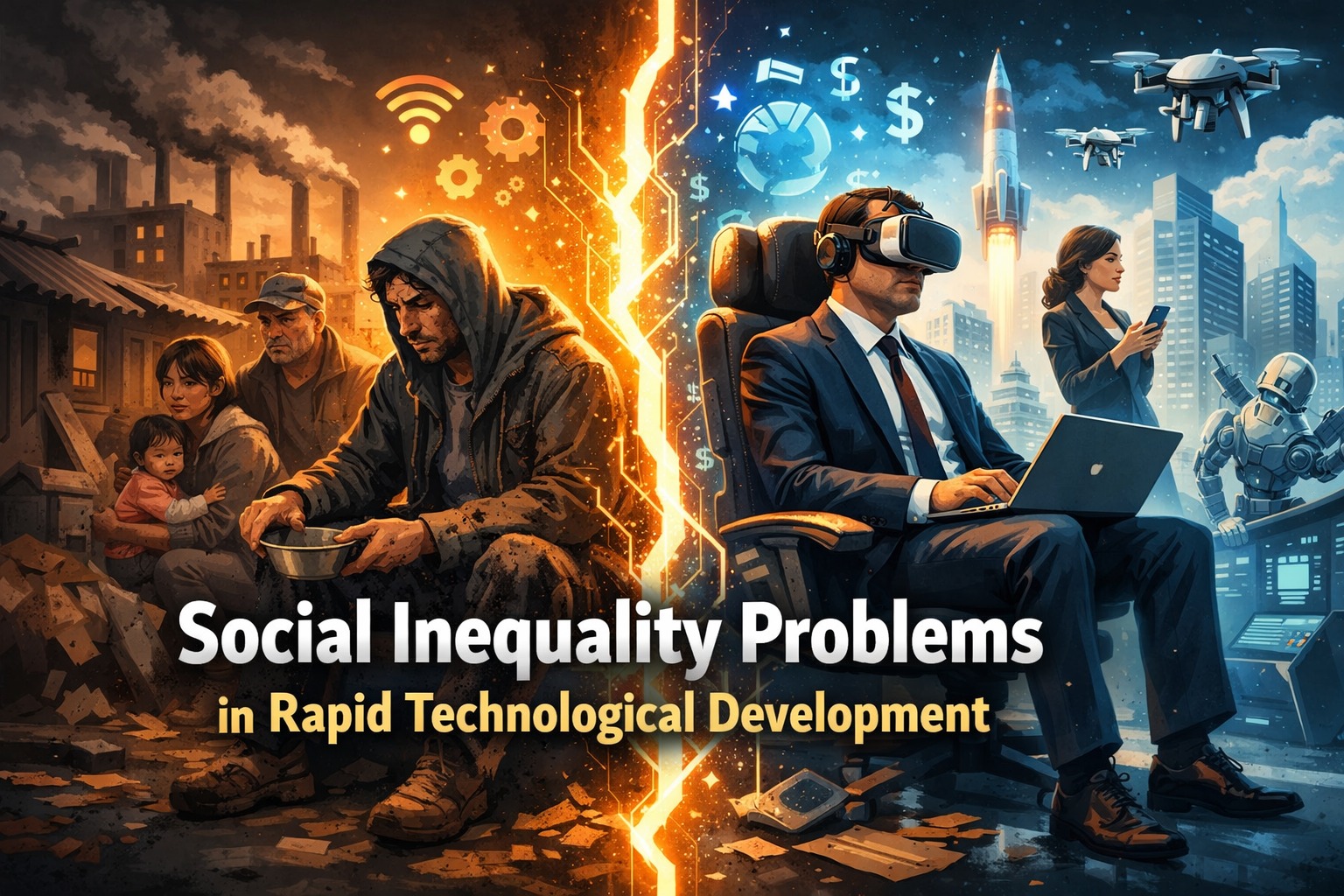
Technology has transformed human life in remarkable ways. From artificial intelligence and automation to digital communication and online education, technological development continues to shape modern society. While these innovations bring convenience and economic growth, they also create serious social inequality problems. The rapid advancement of technology often benefits certain groups while leaving others behind, resulting in unequal access to opportunities, education, and income.
In today’s digital era, understanding the relationship between technology and social inequality is important for creating a fair and inclusive society. This article discusses the major social inequality problems caused by rapid technological development and explores possible solutions to reduce the gap.
THE DIGITAL DIVIDE IN MODERN SOCIETY
One of the biggest inequality issues caused by technological development is the digital divide. The digital divide refers to the gap between individuals who have access to technology and those who do not. People living in urban areas usually enjoy better internet access, modern devices, and digital education compared to those in rural or underdeveloped regions.
Low-income families often struggle to afford computers, smartphones, or stable internet connections. As a result, many students cannot fully participate in online learning, while workers may miss employment opportunities that require digital skills. This situation increases social and economic inequality over time.
In many countries, access to technology has become a necessity rather than a luxury. Without proper digital access, people may find it difficult to compete in education and employment sectors.
AUTOMATION AND JOB DISPLACEMENT
Rapid technological development also affects employment opportunities. Automation and artificial intelligence have replaced many traditional jobs in factories, offices, and service industries. Machines can now perform repetitive tasks faster and more efficiently than humans.
Although technology creates new job opportunities, not everyone has the skills required for modern digital careers. Workers with low educational backgrounds are often the most affected by automation. Many employees lose their jobs without having the ability to adapt to new technological demands.
This condition widens the income gap between highly skilled workers and low-skilled laborers. Companies and industries that benefit from technology may gain enormous profits, while unemployed workers face financial instability and social exclusion.
EDUCATIONAL INEQUALITY IN THE DIGITAL ERA
Education plays a major role in determining social mobility. However, technological progress has also created educational inequality. Students from wealthy families usually have access to advanced learning tools, online courses, and digital resources. Meanwhile, students from disadvantaged backgrounds may lack proper devices or internet access.
The COVID-19 pandemic highlighted this issue globally when schools shifted to online learning. Many students struggled because they did not have laptops, smartphones, or reliable internet connections. This educational gap can negatively affect academic performance and future career opportunities.
Furthermore, digital literacy has become increasingly important. Individuals who cannot use technology effectively may experience difficulties in communication, learning, and professional development.
SOCIAL MEDIA AND SOCIAL STATUS GAPS
Social media platforms significantly influence modern lifestyles and social interactions. While social media can connect people around the world, it can also intensify social inequality. Many users compare their lifestyles, wealth, and achievements with others online, creating pressure and feelings of insecurity.
Influencers and wealthy individuals often display luxurious lifestyles that may not represent reality. This can lead to social jealousy and lower self-esteem among individuals from lower economic backgrounds. In some cases, social media algorithms also prioritize popular content creators, making it difficult for smaller voices to gain visibility.
Additionally, misinformation and online discrimination can spread rapidly through digital platforms, affecting marginalized communities more severely.
UNEQUAL ACCESS TO HEALTH TECHNOLOGY
Technological development has improved healthcare systems through telemedicine, digital health monitoring, and advanced medical equipment. However, access to these healthcare technologies is not equally distributed.
People living in remote areas may lack internet connectivity or healthcare infrastructure needed for digital medical services. Expensive healthcare technologies are often available only to wealthy individuals or developed countries. This creates a health inequality gap where some populations receive better medical treatment than others.
As healthcare increasingly depends on technology, equal access becomes essential for ensuring public well-being.
SOLUTIONS TO REDUCE TECHNOLOGICAL INEQUALITY
Addressing social inequality caused by rapid technological development requires cooperation between governments, educational institutions, businesses, and communities. Several solutions can help reduce inequality in the digital age:
Improve Digital Infrastructure
Governments should expand internet access and technological infrastructure, especially in rural and underserved areas. Affordable internet services can help more people participate in the digital economy.
Increase Digital Education
Schools and training centers should provide digital literacy programs to help individuals develop technological skills. Lifelong learning opportunities are important for adapting to changing job markets.
Support Workforce Reskilling
Workers affected by automation need access to retraining programs. Companies and governments can collaborate to prepare employees for future careers in technology-based industries.
Promote Inclusive Technology Policies
Technology companies should create inclusive systems that consider diverse social and economic backgrounds. Ethical technology development can help minimize discrimination and inequality.
CONCLUSION
Rapid technological development has brought many benefits to society, but it has also created serious social inequality problems. The digital divide, job displacement, educational inequality, social media pressure, and unequal healthcare access are major challenges in the modern world.
Without proper solutions, technological progress may continue to widen the gap between social classes. Therefore, governments, businesses, and individuals must work together to ensure that technology benefits everyone equally. By promoting digital inclusion, education, and fair access to opportunities, society can create a more balanced and sustainable future in the digital era.
About the Author
Gusti Ayu Tita
Author — STEKOM University
An active author focused on academic issues, educational technology, and human resource development in the campus environment.