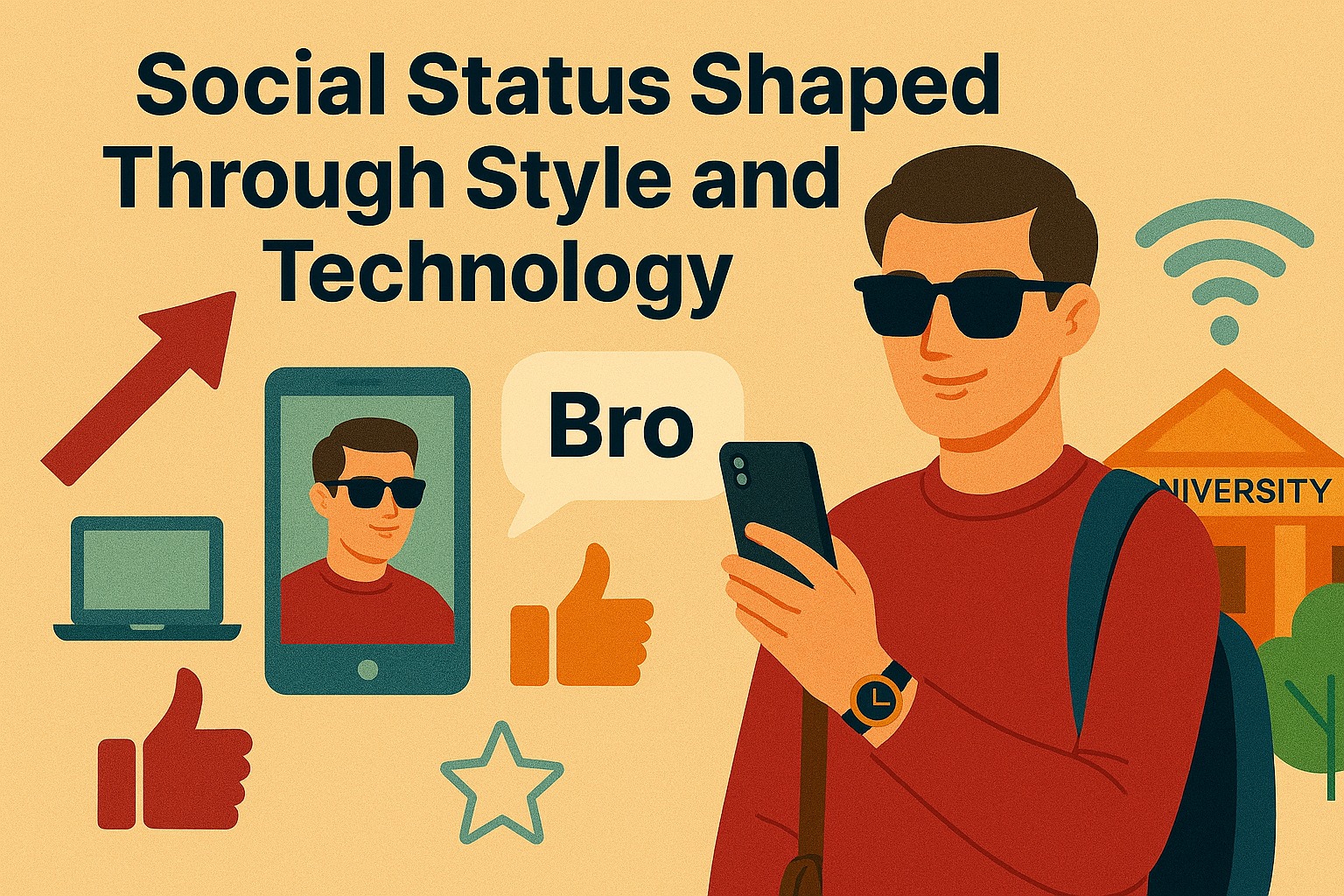
Social status shaped through style and technology has become a defining feature of modern campus life. In universities around the world, students are not only evaluated by academic performance but also by how they present themselves and the devices they use. Fashion choices, communication styles, and technological tools increasingly function as subtle indicators of prestige and belonging.
As digital culture expands, the relationship between appearance and social positioning grows stronger. Style and technology are no longer neutral elements of daily life; they have become symbolic assets that influence perception and interaction.
STYLE AS A SOCIAL LANGUAGE
Style operates as a form of nonverbal communication. Clothing, accessories, and personal grooming send immediate signals about taste, confidence, and group affiliation. On campus, these signals often shape first impressions before academic abilities are even revealed.
Students may adopt certain fashion trends to align with particular communities or to project ambition and creativity. Whether minimalist, professional, or street-inspired, style becomes a visible expression of identity.
Although fashion is a legitimate form of self-expression, it also plays a role in constructing social hierarchies within student environments.
TECHNOLOGY AS A SYMBOL OF PRESTIGE
Technology has become essential in academic life. Laptops, tablets, and smartphones support research, collaboration, and communication. Yet beyond functionality, these devices often carry symbolic meaning.
High-end gadgets may suggest financial stability, digital literacy, or professional orientation. In collaborative settings, advanced technology can enhance confidence and visibility. As a result, technology contributes not only to productivity but also to perceived social standing.
However, technological ownership does not automatically reflect competence or dedication.
DIGITAL VISIBILITY AND STATUS PERCEPTION
The integration of style and technology is amplified through social media. Students frequently share curated images of their study spaces, outfits, and campus achievements. These visual narratives shape how peers interpret ambition and success.
Digital platforms extend campus life into a broader public arena. Recognition is measured not only by academic results but also by engagement metrics such as likes and comments. This environment encourages strategic self-presentation.
While digital visibility can create networking opportunities, it may also intensify social comparison.
THE PSYCHOLOGY OF SYMBOLIC COMPETITION
When social status is shaped through style and technology, invisible competition often emerges. Students may feel pressure to keep up with trends or upgrade devices to maintain relevance.
Such dynamics can influence spending behavior and self-esteem. Some students gain confidence from aligning with dominant standards, while others may feel excluded if they cannot access similar symbols.
Understanding that these markers are socially constructed helps reduce unnecessary pressure and promotes healthier perspectives.
PRIORITIZING SUBSTANCE OVER SYMBOLS
Although style and technology influence perception, sustainable social status depends on substance. Academic achievement, collaboration skills, creativity, and integrity form the foundation of long-term respect.
Students who combine confident self-presentation with genuine competence create a balanced identity. Style can enhance professionalism, and technology can support productivity, but neither should replace intellectual growth.
By prioritizing development over display, students build credibility that extends beyond campus.
CONCLUSION
Social status shaped through style and technology reflects the evolving dynamics of modern university culture. Symbols now play a central role in defining identity and prestige, especially in visually driven environments.
However, lasting recognition is rooted in consistent effort and authentic ability. When students use style and technology as tools rather than measures of worth, they cultivate social standing that is both visible and meaningful.
About the Author
Gusti Ayu Tita
Author — STEKOM University
An active author focused on academic issues, educational technology, and human resource development in the campus environment.