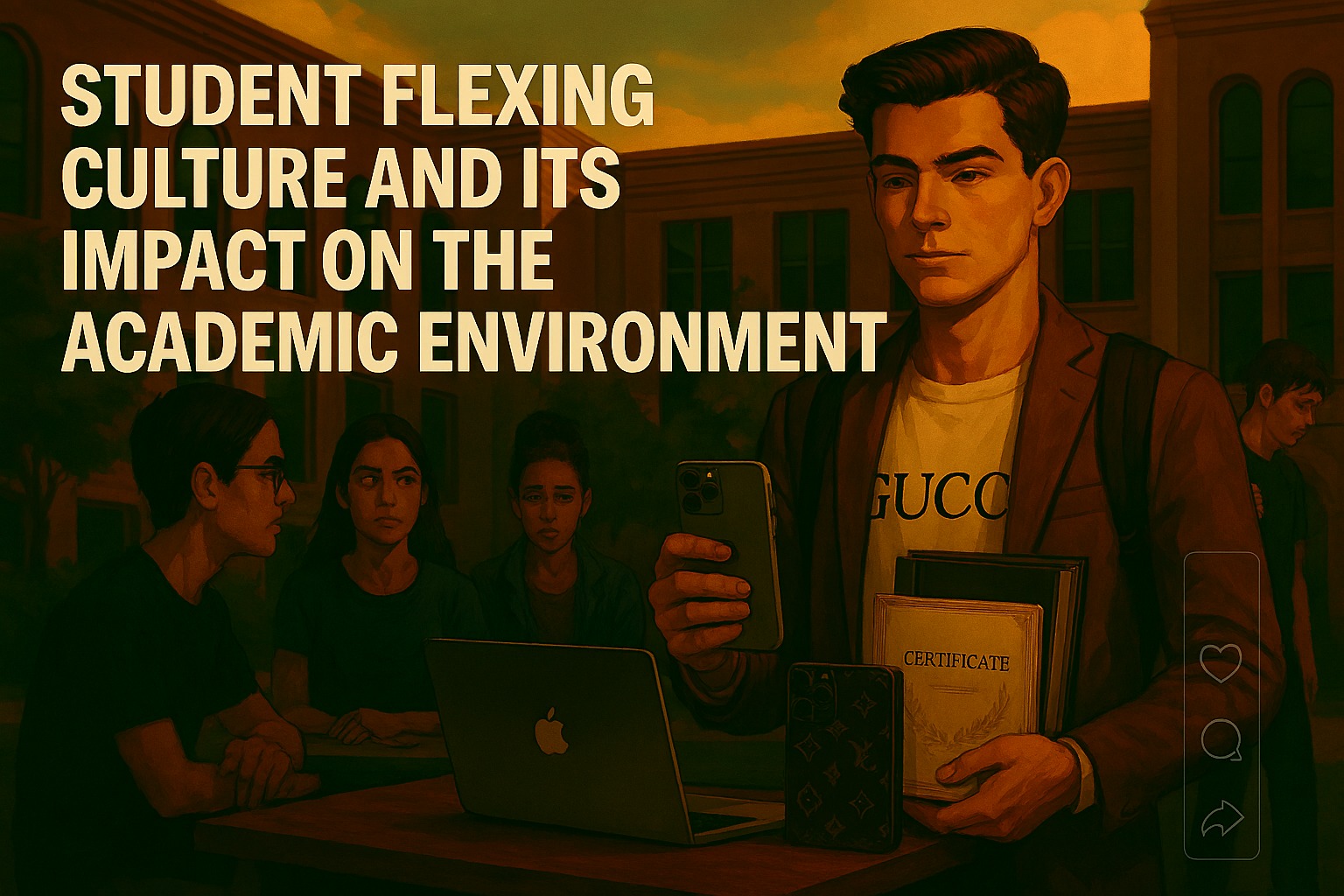
In recent years, student life has been increasingly influenced by digital visibility and social media trends. One phenomenon that has gained attention in higher education is student flexing culture. Flexing, commonly understood as the act of showing off achievements, possessions, or lifestyle for social validation, has moved beyond entertainment spaces into academic environments. On campus, flexing culture shapes how students present themselves, how they are perceived by others, and how the academic atmosphere evolves. Student flexing culture refers to the intentional display of material goods, academic accomplishments, or exclusive experiences to gain recognition. While self-expression and confidence are not inherently negative, the normalization of constant self-display can create complex social dynamics. Within universities, where intellectual growth should be central, flexing culture can influence motivation, relationships, and overall academic climate.
THE EMERGENCE OF FLEXING CULTURE IN STUDENT LIFE
The rise of flexing culture among students cannot be separated from the expansion of social media platforms. Online spaces encourage curated self-presentation. Students post about scholarships, high grades, prestigious internships, branded gadgets, fashionable outfits, or aesthetic study setups. These posts often receive public validation through likes, comments, and shares.
Over time, digital recognition translates into offline social perception. Students who consistently display visible markers of success may be perceived as more competent, successful, or influential. Flexing thus becomes a strategy for building social capital within peer groups.
This culture extends beyond material goods. Academic flexing—such as sharing exam scores, research achievements, or organizational titles—also contributes to competitive visibility. Although celebrating achievements can be motivating, excessive comparison may transform healthy ambition into social pressure.
SOCIAL COMPARISON AND ACADEMIC PRESSURE
One of the most significant impacts of student flexing culture is the intensification of social comparison. Universities are already competitive environments. When achievements and possessions are constantly showcased, comparison becomes unavoidable.
Students may begin to measure their worth against curated representations of peers. Seeing others display academic awards or luxurious lifestyles can lead to feelings of inadequacy, even when personal progress is substantial. This psychological pressure can reduce self-confidence and increase anxiety.
In some cases, flexing culture shifts motivation from intrinsic learning to external validation. Instead of focusing on understanding material deeply, students may prioritize visible achievements that can be publicly displayed. Learning risks becoming performance-oriented rather than growth-oriented.
MATERIAL DISPLAY AND SOCIAL DIVISION
Flexing culture often emphasizes material symbols such as premium laptops, branded clothing, or exclusive experiences. Within diverse university populations, not all students have equal financial resources. When material display becomes a measure of status, social divisions may widen.
Students from higher socioeconomic backgrounds may find it easier to participate in visible consumption. Meanwhile, those with limited resources may feel marginalized or pressured to overspend in order to maintain social acceptance. This dynamic can foster silent competition and reduce authentic peer connection.
Moreover, the focus on external symbols can overshadow personal qualities such as empathy, collaboration, and intellectual curiosity. Academic communities thrive when students value dialogue and shared growth, not hierarchical display.
IMPACT ON CAMPUS RELATIONSHIPS AND CULTURE
The normalization of flexing culture affects interpersonal relationships on campus. When interactions are influenced by status display, authenticity may decline. Students might feel the need to maintain a certain image rather than express vulnerability or seek help.
In classroom discussions, some students may hesitate to participate if they feel their achievements or resources do not match visible campus standards. Conversely, those who frequently flex may unintentionally create social distance. This can reduce collaborative learning, which is essential in higher education.
However, it is important to acknowledge that not all visibility is harmful. Sharing achievements can inspire others when done with humility and inclusivity. The impact depends on intention, context, and how recognition is framed within the academic community.
BUILDING A HEALTHIER ACADEMIC ENVIRONMENT
Addressing the influence of student flexing culture requires collective awareness. Universities can promote values that prioritize intellectual engagement, ethical conduct, and mutual support over material display. Recognition systems can highlight diverse forms of excellence, including teamwork, community service, and resilience.
Students can also develop critical digital literacy. Understanding that social media often presents selective realities helps reduce unhealthy comparison. Reflecting on personal motivations—whether driven by self-development or external validation—encourages more balanced behavior.
Creating safe spaces for dialogue about academic pressure and social expectations can strengthen community bonds. When students feel valued for their ideas and character rather than their possessions or public image, the academic environment becomes more inclusive and supportive.
In conclusion, student flexing culture is a growing phenomenon that significantly impacts the academic environment. While self-expression and celebration of success are natural aspects of student life, excessive emphasis on display and validation can foster competition, anxiety, and social division. By cultivating awareness and prioritizing substance over image, higher education institutions can maintain environments where learning, collaboration, and authentic growth remain central.
About the Author
Gusti Ayu Tita P
Author — STEKOM University
An active author focused on academic issues, educational technology, and human resource development in the campus environment.