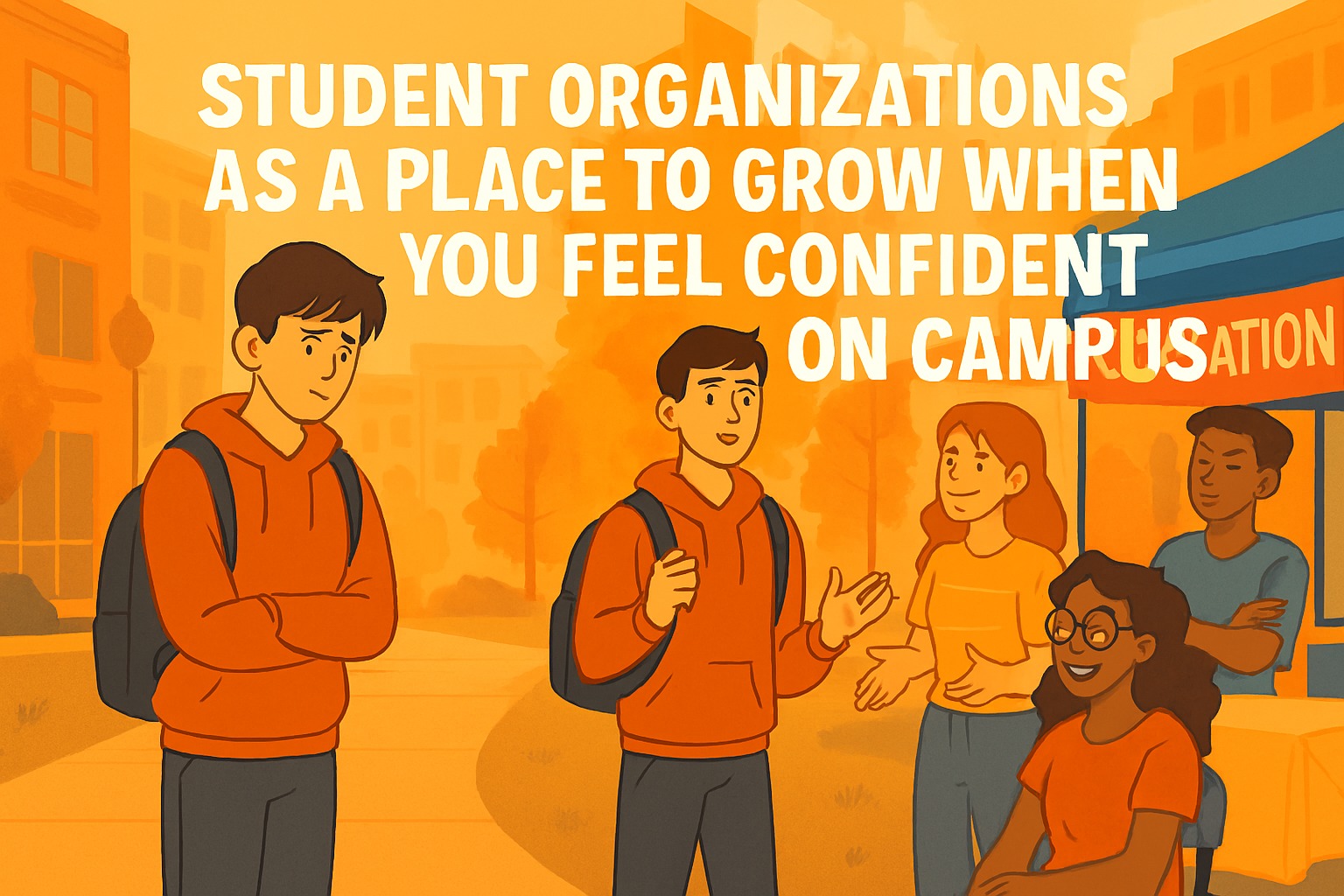
Starting college is an exciting chapter, but it can also feel overwhelming especially for students who struggle with confidence. New environments, unfamiliar faces, and academic pressure can make some students feel unsure of themselves. Fortunately, student organizations offer a supportive space where confidence can grow naturally. More than just extracurricular activities, these organizations can become places where students discover their strengths, build relationships, and develop a stronger sense of self.
WHY CONFIDENCE CAN DROP IN COLLEGE
Many students enter college with high expectations, but reality can be different. The learning system is more independent, competition can feel tougher, and social circles are no longer the same as in high school. Some students may feel left behind, while others feel invisible in large classes.
These experiences can slowly reduce self-confidence. Students may hesitate to speak in class, avoid social interactions, or doubt their abilities. Without the right environment, these feelings can grow and affect both academic and personal life.
THE ROLE OF STUDENT ORGANIZATIONS
Student organizations provide a more relaxed and friendly environment compared to the classroom. Here, students interact with peers who share similar interests, whether in arts, sports, social activities, or academic fields.
In these spaces, students are not judged only by grades. They are valued for their ideas, creativity, and willingness to contribute. This atmosphere helps students feel accepted and appreciated, which is essential for building confidence.
Organizations also give students real responsibilities. Whether it’s organizing events, managing teams, or handling communication, these experiences help students realize their potential.
LEARNING BY DOING AND MAKING MISTAKES
One of the biggest advantages of student organizations is the opportunity to learn through experience. Students are encouraged to try new things, even if they are not perfect at first.
Mistakes are seen as part of the learning process. Instead of being criticized, students are guided and supported by seniors or teammates. This creates a safe space to grow without fear of failure.
Over time, students who once felt shy or uncertain may find themselves leading discussions, presenting ideas, or even becoming leaders within the organization.
BUILDING SOCIAL CONNECTIONS
Confidence is closely related to social support. When students feel they belong to a group, they are more likely to believe in themselves.
Student organizations help students build friendships and networks. These relationships provide emotional support, encouragement, and motivation. Being part of a team also teaches cooperation, empathy, and communication skills.
For students who feel isolated on campus, joining an organization can be the first step toward finding a supportive community.
DEVELOPING A STRONGER MENTALITY
Beyond social skills, student organizations also shape mental resilience. Managing responsibilities, meeting deadlines, and solving problems together teach students how to stay calm under pressure.
They learn how to face challenges, accept feedback, and keep improving. These experiences build a stronger mindset that will be useful not only during college but also in the professional world.
Students who actively participate in organizations often become more confident, adaptable, and independent.
A SMALL STEP THAT MAKES A BIG DIFFERENCE
Joining a student organization may seem like a small decision, but it can create significant changes. It offers a space where students can explore their interests, meet new people, and discover their strengths. For those who feel less confident on campus, student organizations are not just activities—they are opportunities to grow, learn, and build a better version of themselves.
About the Author
Gusti Ayu Tita
Author — STEKOM University
An active author focused on academic issues, educational technology, and human resource development in the campus environment.