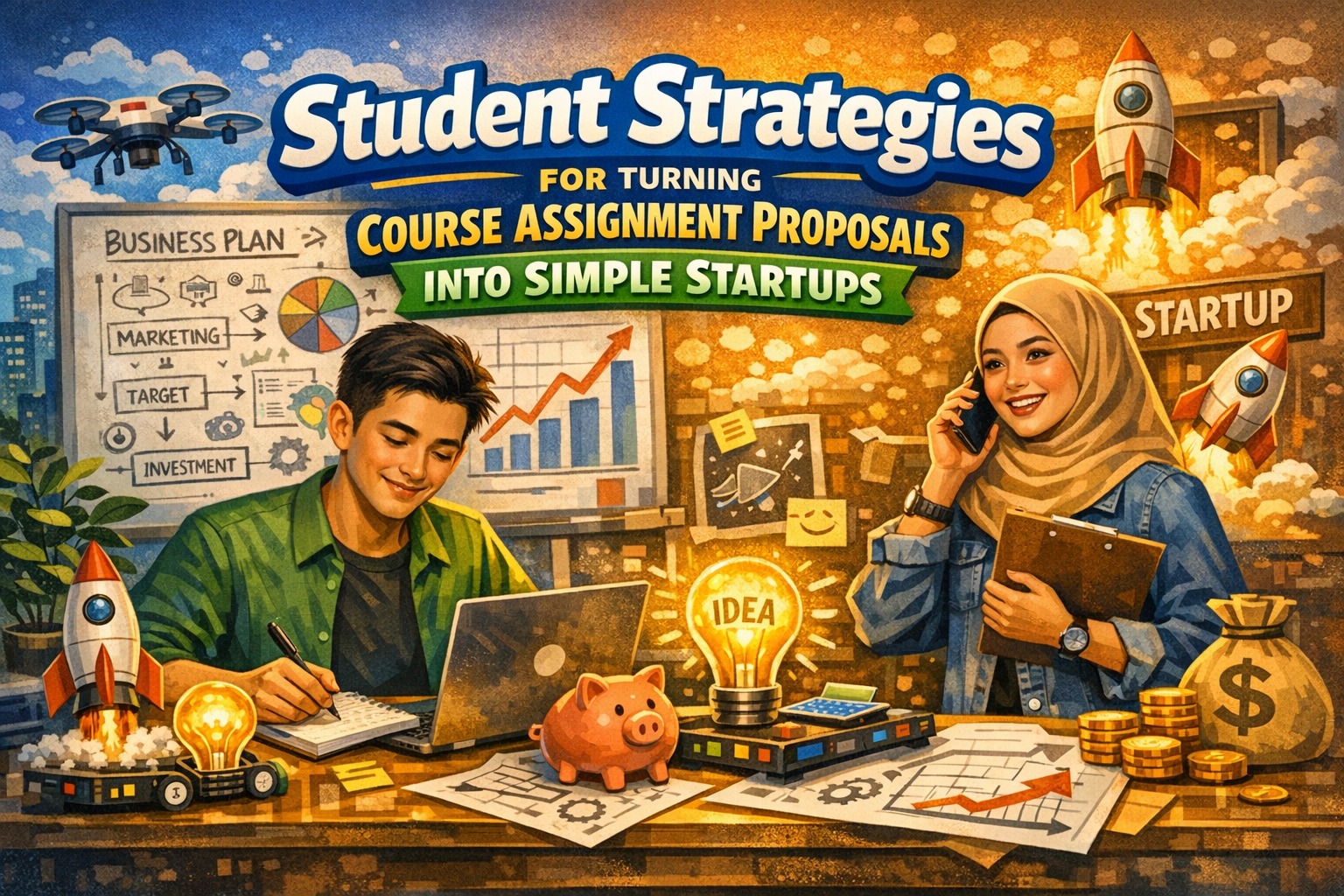
In many universities, course assignment proposals are created as part of academic requirements. Students often prepare proposals to present ideas, research concepts, or project plans related to their field of study. These proposals are usually assessed academically and then archived once the course is completed. However, with the right mindset and strategy, assignment proposals can become more than academic documents. They can evolve into the foundation for simple startups created by students. In today’s innovation-driven world, many successful ideas originate from small concepts developed during academic activities. University students have access to knowledge, mentorship, and collaborative environments that make campuses ideal places for experimenting with startup ideas. By recognizing the potential within course proposals and applying creative strategies, students can transform academic work into practical business opportunities that provide value beyond the classroom.
IDENTIFYING BUSINESS POTENTIAL IN ASSIGNMENT PROPOSALS
The first step in turning a course assignment proposal into a simple startup is recognizing the business potential within the proposed idea. Most assignment proposals already include important elements such as a problem statement, objectives, and proposed solutions. These components closely resemble the early structure of a startup concept.
Students should analyze whether the solution proposed in their assignment addresses a real-world problem. If the idea offers a practical solution that people might need or use, it may have the potential to become a startup concept. For example, a proposal about a productivity tool for students could be developed into a digital application, while a proposal about sustainable products could evolve into an environmentally friendly business.
Understanding the relevance of the idea is crucial. A strong startup concept usually begins with a problem that many people experience. When students identify this connection between academic ideas and real-life needs, they begin to see how their assignment proposal can move beyond academic evaluation and become a business opportunity.
DEVELOPING THE PROPOSAL INTO A SIMPLE PROTOTYPE
After identifying the potential of an assignment proposal, the next step is to transform the concept into a simple prototype. A prototype represents the initial version of a product or service designed to demonstrate how the idea works in practice. For student startups, prototypes do not need to be complex. A simple version that illustrates the main concept is often enough for early testing.
Students can use various digital tools, design platforms, or simple materials to create prototypes. For example, a mobile app idea can begin with interface mockups or wireframes, while a product-based concept can start with a small sample model. This early development stage helps students visualize their ideas more clearly.
Creating a prototype also allows students to evaluate the feasibility of their concept. By turning an idea into a tangible form, students can identify potential improvements and refine their solutions. The prototype stage serves as a bridge between theoretical ideas and real-world applications.
UNDERSTANDING TARGET USERS AND MARKET NEEDS
For a student project to grow into a startup, understanding the target users and market needs is essential. A startup idea must solve a problem that people genuinely care about. Therefore, students should take time to observe the needs of potential users and evaluate whether their idea provides meaningful value.
This process can begin with simple research such as informal surveys, discussions with classmates, or feedback from lecturers and peers. By gathering insights from others, students can better understand how their product or service might be used in real situations.
Understanding user needs also helps students refine their ideas and focus on the most important features of their startup concept. Instead of trying to build something overly complex, students can concentrate on delivering a clear and useful solution. This approach makes it easier to develop simple startups that are practical and realistic for student entrepreneurs.
BUILDING COLLABORATIVE TEAMS FOR STUDENT STARTUPS
Another important strategy in developing startups from assignment proposals is collaboration. Many successful startups are built by teams rather than individuals. In a university environment, students have the advantage of being surrounded by peers from diverse academic backgrounds.
By forming teams with students who possess different skills, startup development becomes more effective. For example, a student with technical skills can handle product development, while another student with business knowledge can focus on marketing strategies. This combination of skills allows the team to work more efficiently in developing the startup idea.
Collaboration also encourages idea exchange and creative problem-solving. When team members share perspectives and feedback, the project becomes stronger and more innovative. In addition, teamwork helps students develop leadership, communication, and management skills that are highly valuable in both entrepreneurial and professional environments.
CONCLUSION
Course assignment proposals can serve as powerful starting points for student startups when approached with creativity and strategic thinking. By identifying the business potential within academic ideas, students can recognize opportunities that extend beyond the classroom. Developing prototypes, understanding market needs, and collaborating with peers are essential steps in transforming academic proposals into simple startup ventures.
Universities provide an ideal environment for experimenting with ideas because students have access to knowledge, mentorship, and supportive communities. When students take advantage of these opportunities, assignment proposals can evolve into meaningful projects that offer real-world solutions.
Ultimately, the journey from a course proposal to a startup demonstrates how academic learning can inspire innovation and entrepreneurship. With determination and creativity, students can transform simple academic ideas into startup initiatives that create value for society and provide valuable learning experiences for their future careers.
About the Author
Gusti Ayu Tita
Author — STEKOM University
An active author focused on academic issues, educational technology, and human resource development in the campus environment.