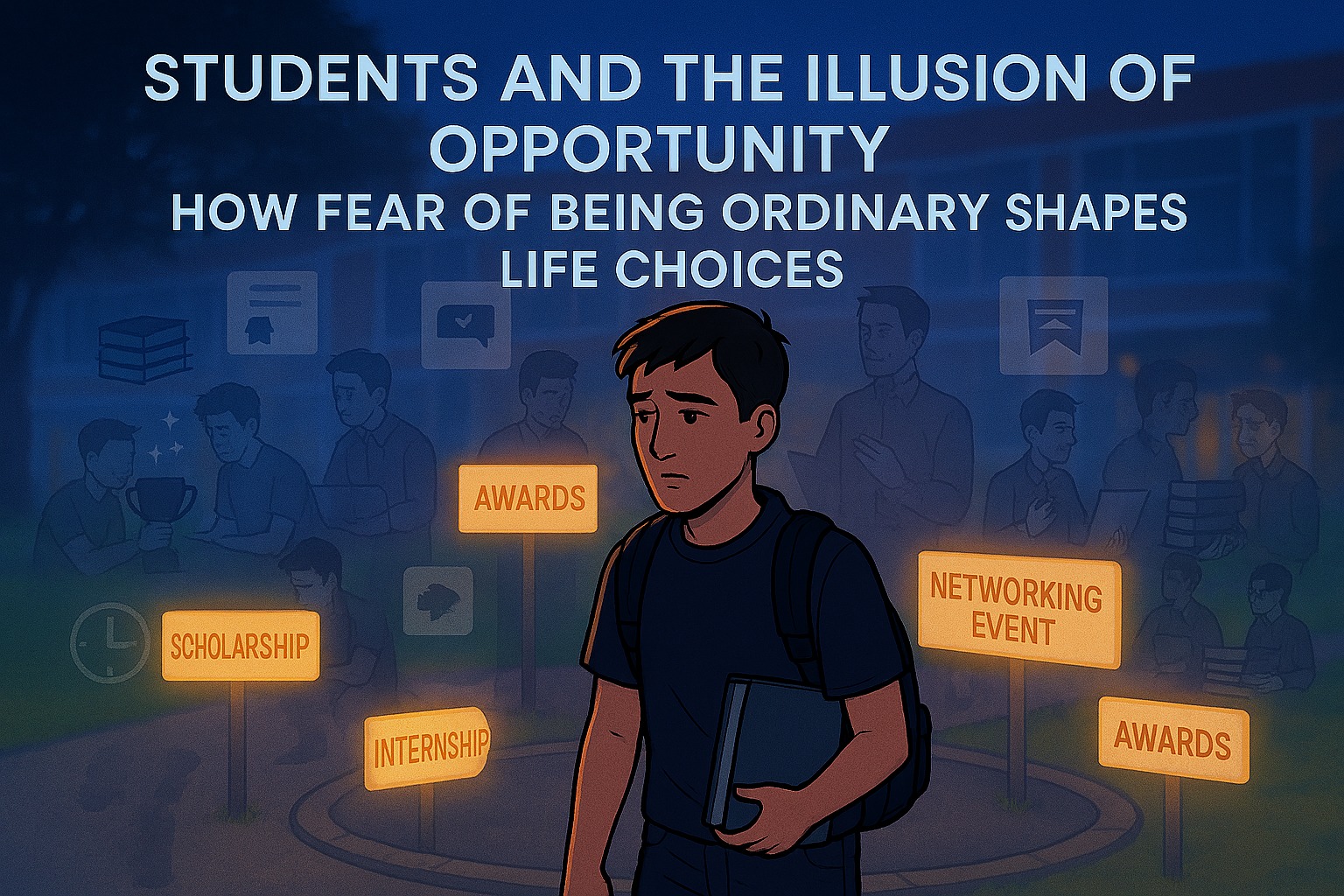
In the competitive world of academia, students are constantly presented with opportunities internships, scholarships, research projects, and extracurricular programs. While these opportunities are valuable, they can create an illusion that every choice is critical to future success. This illusion often intersects with a fear of being ordinary, influencing students’ life decisions in ways that can lead to stress, indecision, and burnout.
THE PRESSURE OF EXTERNAL EXPECTATIONS
Society, families, and peers frequently set high expectations for students. Parents may emphasize top grades or prestigious programs, while social media amplifies peer accomplishments. This constant exposure can make students feel that they must seize every opportunity, creating a sense of urgency and fear of being left behind. Over time, external expectations can heavily influence personal decisions, often at the expense of genuine interests or passions.
THE ILLUSION OF OPPORTUNITY
Not all opportunities are equally valuable, yet students may perceive them as such. The illusion emerges when every choice seems like a make-or-break moment for their future. This mindset can lead students to overcommit, pursue experiences for appearance rather than growth, or avoid saying no, ultimately causing mental fatigue and dissatisfaction. The pressure to be extraordinary in every area blurs the line between meaningful engagement and performative action.
HOW FEAR OF BEING ORDINARY SHAPES DECISIONS
Fear of mediocrity often drives students to constantly compare themselves to others.
Decisions are influenced more by external perception than personal desire, which can result in:
- Overloading schedules with activities that seem impressive but lack personal significance.
- Choosing paths based on prestige rather than genuine interest.
- Experiencing anxiety and self-doubt when unable to “keep up” with peers.
This fear can obscure self-awareness, making it difficult for students to evaluate what truly aligns with their long-term goals and happiness.
STRATEGIES TO NAVIGATE THE ILLUSION
Focus On Personal Goals
Students should define success on their own terms. Identifying passions, interests, and values helps prioritize opportunities that genuinely contribute to growth.
Practice Reflective Decision Making
Regular reflection allows students to consider the long-term impact of their choices. Journaling or discussing decisions with mentors can provide clarity and reduce stress.
Learn To Say No
Saying no is a form of self-respect. Students must recognize that declining certain opportunities can free time and energy for more meaningful pursuits.
Embrace Small Wins
Acknowledging progress, no matter how minor, helps students build confidence and appreciate their personal journey rather than constantly chasing external validation.
CONCLUSION
The illusion of opportunity, combined with the fear of being ordinary, can significantly shape students’ life choices, often in ways that increase stress and reduce satisfaction. By focusing on personal goals, practicing reflective decision-making, setting boundaries, and embracing small wins, students can make conscious choices that align with their values and aspirations. Ultimately, understanding that not every opportunity is life-defining allows students to navigate academic life with purpose and balance.
About the Author
Gusti Ayu Tita
Author — STEKOM University
An active author focused on academic issues, educational technology, and human resource development in the campus environment.