
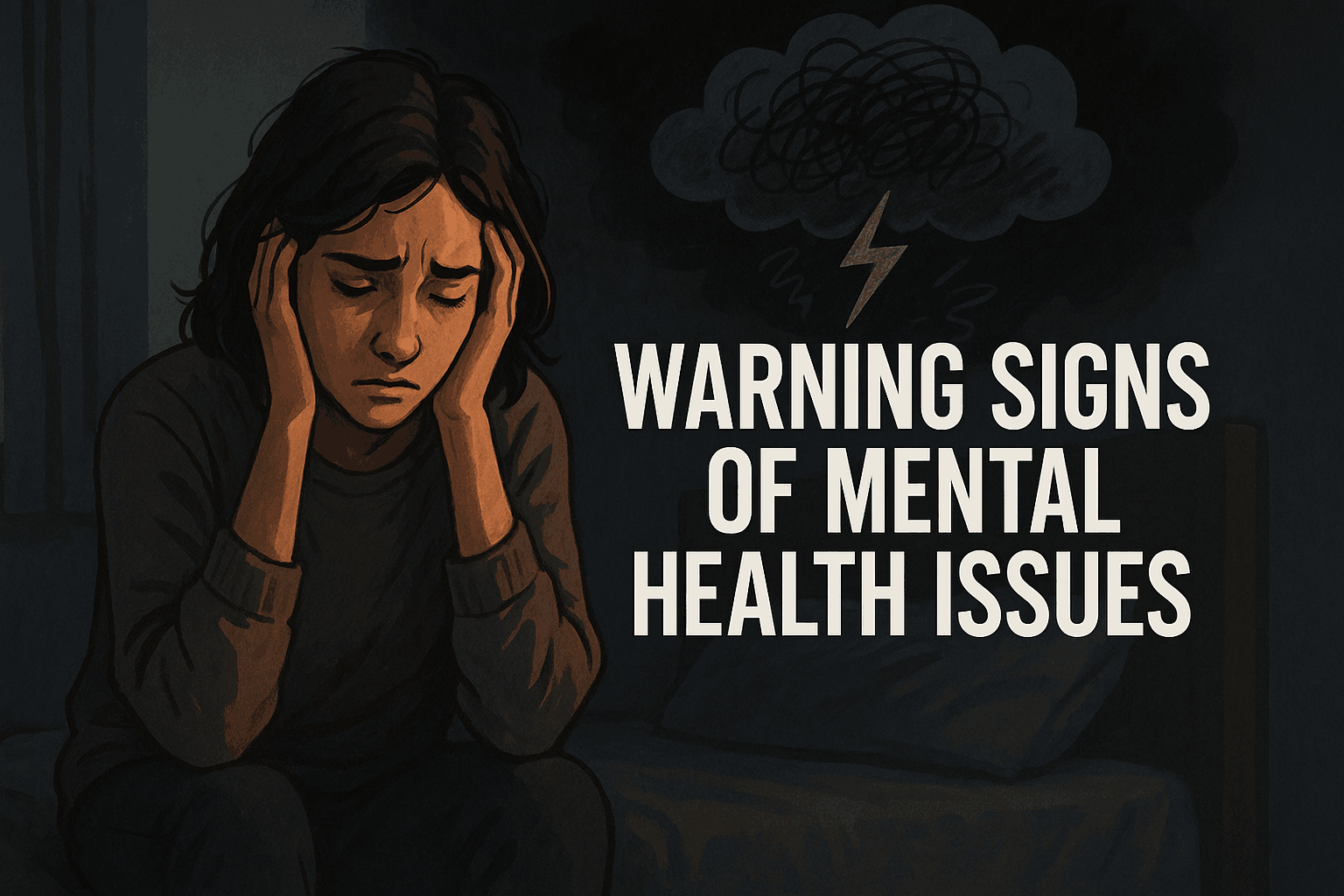
Mental well-being plays a vital role in a person’s overall health. It influences not only our mood and behavior but also our physical health. Sadly, a lot of individuals don't realize when their mental health starts to decline. Recognizing the early signs can help you take action and begin the healing process. In this article, we will explore the most common signs that may indicate your mental health is at risk.
1. SUDDEN MOOD SWINGS
One of the most common signs of mental health issues is experiencing extreme and sudden mood changes. If you find yourself feeling incredibly happy one moment and deeply sad the next, this could indicate an emotional imbalance. These mood swings can result from both internal factors (like hormones or trauma) and external stressors.
2. EMOTIONAL AND PHYSICAL AXHAUSTION
Mental health challenges don’t only drain you emotionally—they can wear you out physically as well. If you're constantly tired despite getting enough rest, it may be due to underlying stress, anxiety, or depression. Emotional fatigue can severely impact your daily functioning and overall energy levels.
3. DIFFICULTY CONCENTRATING
Struggling to stay focused or complete tasks may signal poor mental health. If you find it hard to follow conversations, read, or work without frequent distractions, this could be linked to anxiety, depression, or attention disorders. Mental clarity is often one of the first things to be affected.
4. DISRUPTED SLEEEP PATTERNS
Changes in your sleep—such as insomnia, oversleeping, or waking up feeling unrested—can reflect underlying mental health problems. Poor sleep often worsens emotional regulation and can intensify symptoms of anxiety and depression. A consistent, restful sleep schedule is vital to maintaining mental balance.
5. SOCIAL WITHDRAWAL
Avoiding social interactions, even with close friends or family, is another common warning sign. If you find yourself canceling plans, avoiding group activities, or preferring isolation over connection, it may be time to evaluate your emotional state. Feeling lonely can intensify emotions of sadness and isolation.
6. CHANGES IN APPETITE
A sudden increase or decrease in appetite may indicate emotional distress. Emotional eating or a complete loss of interest in food are both potential signs of mental strain. When left unchecked, these changes can affect your body and mind in the long run.
7. EXCESSIVE ANXIETY
Feeling anxious from time to time is normal, but constant or overwhelming anxiety—especially when it's not triggered by a specific situation—could be a sign of a deeper mental health concern. Ongoing anxiety may disrupt your ability to function at work, maintain relationships, and handle everyday tasks.
8. AVOIDANCE BEHAVIOR
Avoiding people, places, or responsibilities that once brought you joy or purpose may be your mind’s way of coping with unresolved issues. Avoiding certain situations is usually triggered by fear, stress, or unease, and if left unaddressed, it can result in deeper isolation and more severe symptoms.
CONCLUSION
Recognizing the signs of mental health problems is the first step toward healing. If you or someone you know is experiencing any of the symptoms above, don't hesitate to seek help from a mental health professional. Talking about your struggles is not a weakness—it’s a powerful step toward living a healthier and more fulfilling life. Prioritizing your mental health is equally vital as maintaining your physical health. Pay attention to the warning signs—your inner peace is important.
About the Author
Gusti Ayu Tita
Author — STEKOM University
An active author focused on academic issues, educational technology, and human resource development in the campus environment.



