TECHNOLOGY IN EDUCATION: HELPFUL TOOL OR DISTRACTION?
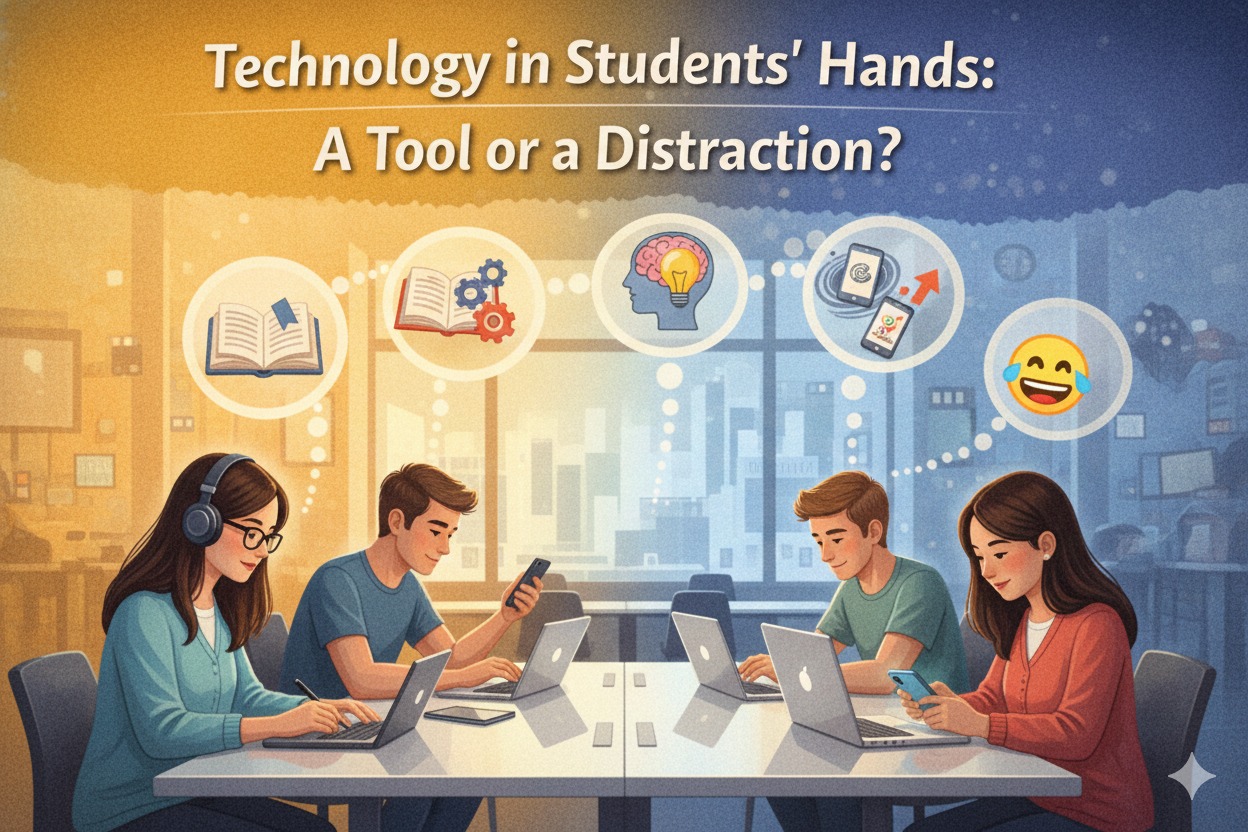
In today’s advanced digital era, technology has become an integral part of daily life, including in education. For students, technology provides many conveniences, from accessing information and collaborating to managing time. However, a major question arises: does technology truly serve as an effective learning tool, or does it distract and reduce productivity? This article explores how technology affects students’ lives and how to use it wisely to support academic success.
TECHNOLOGY AS A LEARNING TOOL
Technology in education has rapidly developed, offering numerous tools that effectively enhance learning quality.
1. Easy Access to Learning Resources
With the internet, students can access various information sources quickly and easily. Platforms like Google Scholar, JSTOR, and YouTube provide access to journals, articles, educational videos, and online courses from top universities. This allows students to deepen their understanding beyond textbooks and broaden their academic knowledge.
2. Online Learning Platforms
Many universities now offer online or blended learning courses, allowing students to study flexibly according to their own schedule and learning style. Platforms like Coursera, edX, and Ruangguru provide diverse course options across disciplines.
3. Time and Task Management Apps
One of the biggest challenges for students is managing time between classes, assignments, and other activities. Apps like Google Calendar, Todoist, and Trello help students plan their schedules, track deadlines, and prioritize tasks efficiently
4. Effective Collaboration and Communication
Group projects are a key part of modern education. Technology allows students to collaborate effectively even when physically apart. Apps like Google Drive, Microsoft Teams, and Zoom facilitate document sharing and virtual meetings, making teamwork more efficient.
DISTRACTION: WHEN TECHNOLOGY HINDERS PRODUCTIVITY
Despite its benefits, excessive or unwise use of technology can reduce student productivity.
1. Social Media and Digital Entertainment
Platforms like Instagram, Facebook, and TikTok can be major distractions. Endless scrolling can consume time meant for studying or completing assignments. Streaming services like YouTube or Netflix also divert attention from academic tasks.
2. Limited Focus Ability
Too many apps or notifications can divert attention and disrupt concentration. Many students struggle to focus without interruptions from surrounding technology.
3. Overreliance on Technology
Excessive dependence on technology can weaken traditional learning skills. Students may prefer searching online for answers rather than solving problems independently, reducing critical thinking and memory retention.
OPTIMIZING TECHNOLOGY AS AN EFFECTIVE TOOL
To make technology truly helpful, students need strategies to manage its use wisely.
1. Use Apps with a Clear Purpose
Choose apps that are directly relevant to academic tasks, like time management, reminders, or collaboration tools. Avoid apps that only serve as distractions.
2. Limit Social Media Usage
Set boundaries on social media time to reduce distractions. Apps like Forest or Freedom can block access to non-essential apps during study time, helping maintain concentration.
3. Schedule Technology-Free Study Time
Studying without digital devices can strengthen focus and critical thinking. Reading physical books or taking handwritten notes helps reduce dependence on technology.
4. Use Technology for Collaboration, Not Procrastination
Use technology to collaborate with classmates for discussions or sharing learning materials. Avoid unrelated digital activities that waste valuable time.
CONCLUSION: TECHNOLOGY — TOOL OR DISTRACTION?
Technology has great potential to enhance student productivity in education. Access to information, online learning platforms, time management apps, and collaboration tools make learning and working more efficient. However, without proper discipline, technology can easily become a distraction that harms focus and productivity. Ultimately, technology is a tool that supports learning, but students must exercise control and self-discipline to maximize its benefits. With proper management, technology can become a valuable asset in academic success rather than an obstacle.
About the Author
Gusti Ayu Tita
Author — STEKOM University
An active author focused on academic issues, educational technology, and human resource development in the campus environment.