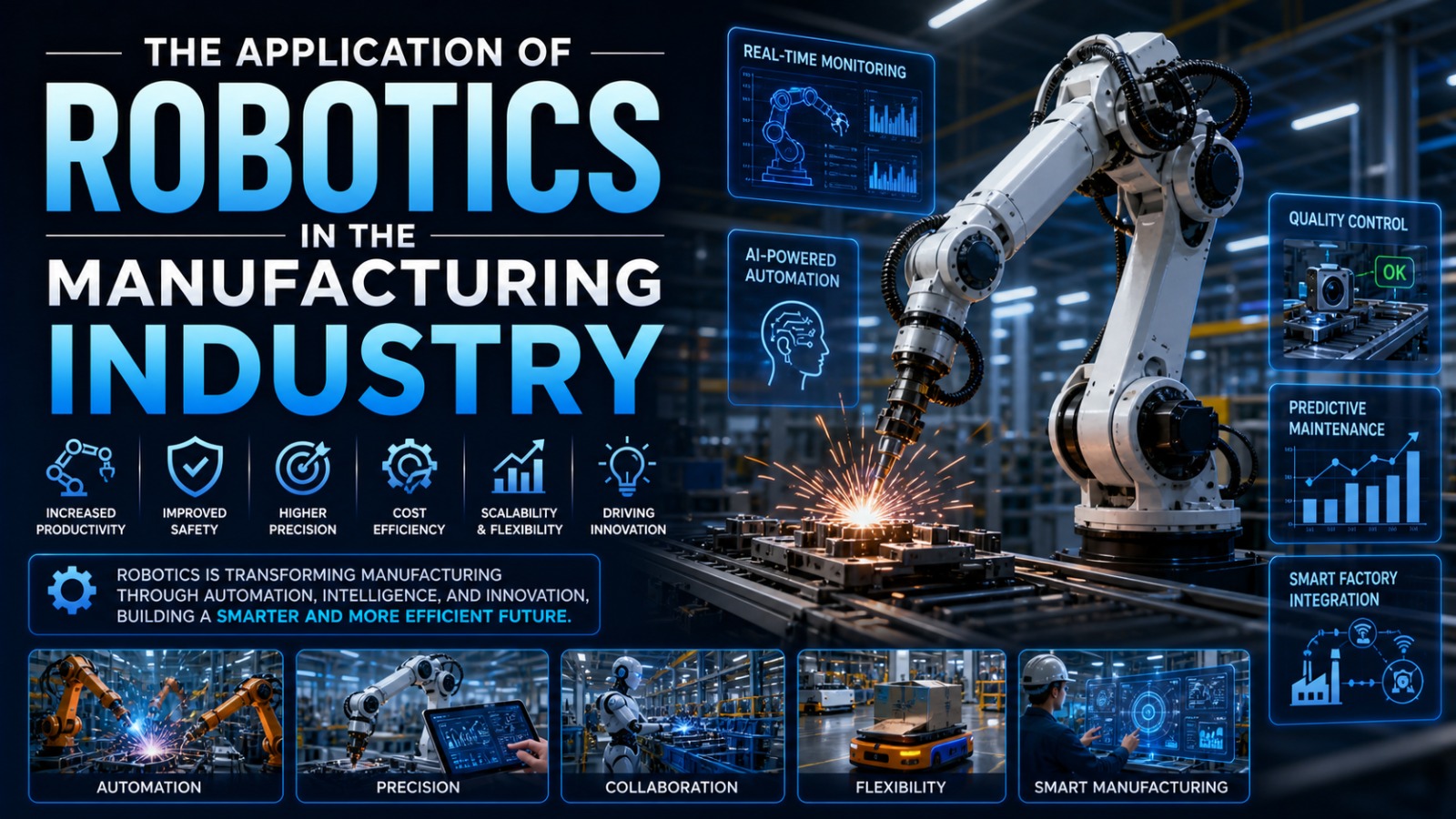
The manufacturing industry has undergone significant transformation over the past few decades, driven by rapid technological advancements. Among these innovations, robotics has emerged as a key factor in improving efficiency, precision, and productivity. The integration of robotic systems into manufacturing processes is not only enhancing operational performance but also reshaping the future of industrial production.
WHAT IS INDUSTRIAL ROBOTICS?
Industrial robotics refers to the use of programmable machines capable of carrying out complex tasks with minimal human intervention. These robots are designed to perform repetitive, dangerous, or highly precise operations, making them ideal for manufacturing environments.
Modern industrial robots are equipped with advanced sensors, artificial intelligence, and machine learning capabilities. This allows them to adapt to different tasks, improve performance over time, and work collaboratively with human operators.
KEY BENEFITS OF ROBOTICS IN MANUFACTURING
The adoption of robotics in manufacturing offers several advantages:
- Increased Efficiency: Robots can operate continuously without fatigue, leading to higher production rates.
- Improved Precision: High accuracy reduces errors and enhances product quality.
- Cost Reduction: Automation lowers labor costs and minimizes waste.
- Enhanced Safety: Robots can perform hazardous tasks, reducing the risk of workplace injuries.
These benefits make robotics an essential component of modern manufacturing systems.
COMMON APPLICATIONS OF ROBOTICS
Robotics is widely used in various manufacturing processes:
- Assembly: Robots assemble components بسرعة and consistently.
- Welding: Ensures strong and precise joints in metal fabrication.
- Material Handling: Moves products efficiently within production lines.
- Packaging: Automates sorting, packing, and labeling tasks.
These applications streamline operations and improve overall productivity.
ROLE IN SMART MANUFACTURING
Robotics plays a crucial role in the development of smart manufacturing, often associated with Industry 4.0. By integrating robotics with technologies such as the Internet of Things (IoT) and data analytics, manufacturers can create intelligent production systems.
These systems enable real-time monitoring, predictive maintenance, and data-driven decision-making. As a result, companies can optimize processes, reduce downtime, and improve efficiency.
IMPACT ON THE WORKFORCE
The introduction of robotics has significantly impacted the workforce. While automation reduces the need for manual labor in certain tasks, it also creates new opportunities for skilled workers in areas such as programming, maintenance, and system management.
Upskilling and reskilling employees are essential to ensure they can adapt to the changing industrial landscape. Human-robot collaboration is becoming increasingly common, combining human creativity with robotic precision.
CHALLENGES IN IMPLEMENTING ROBOTICS
Despite its advantages, implementing robotics in manufacturing comes with challenges. High initial investment costs, integration complexities, and the need for technical expertise can be barriers for some organizations.
Additionally, concerns about job displacement and cybersecurity risks must be addressed. A strategic approach is necessary to maximize the benefits of robotics while minimizing potential drawbacks.
FUTURE TRENDS IN INDUSTRIAL ROBOTICS
The future of robotics in manufacturing looks promising. Advancements in artificial intelligence, machine learning, and sensor technology will make robots more intelligent and adaptable.
Collaborative robots, or cobots, are expected to play a larger role by working safely alongside humans. These innovations will further enhance productivity and flexibility in manufacturing environments.
CONCLUSION
Robotics is revolutionizing the manufacturing industry by improving efficiency, precision, and safety. Its integration into production processes is enabling companies to remain competitive in a rapidly evolving market.
While challenges exist, the continued development of robotic technologies will drive innovation and create new opportunities. Embracing robotics is essential for manufacturers aiming to thrive in the era of digital transformation.
About the Author
Gusti Ayu Tita
Author — STEKOM University
An active author focused on academic issues, educational technology, and human resource development in the campus environment.