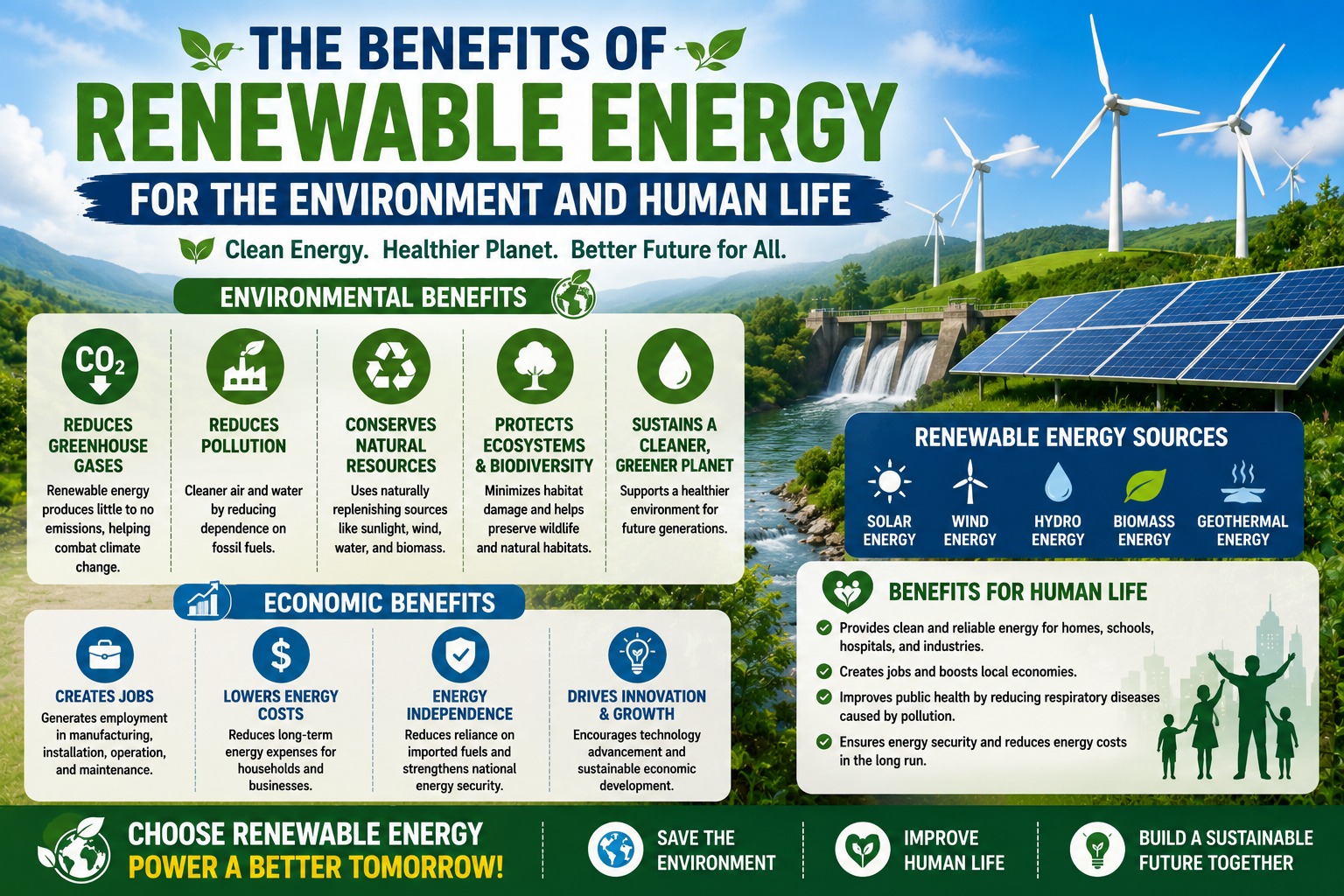
Renewable energy has become one of the most important solutions for addressing global environmental challenges. As the world faces climate change, air pollution, and the depletion of fossil fuels, many countries are shifting toward cleaner and more sustainable energy sources. Renewable energy comes from natural resources that can be replenished continuously, such as sunlight, wind, water, and geothermal heat.
Unlike fossil fuels, renewable energy produces minimal environmental pollution and helps reduce harmful greenhouse gas emissions. In addition to protecting the planet, renewable energy also offers economic, social, and health benefits for human life. By adopting renewable energy technologies, societies can create a cleaner, safer, and more sustainable future.
UNDERSTANDING RENEWABLE ENERGY
Renewable energy refers to energy generated from natural sources that are constantly renewed by nature. These sources are considered sustainable because they do not run out easily and can be used repeatedly without causing major environmental damage.
Some common types of renewable energy include:
- Solar energy from sunlight
- Wind energy from moving air
- Hydropower from flowing water
- Geothermal energy from the Earth’s heat
- Biomass energy from organic materials
These energy sources are increasingly being used worldwide to replace traditional fossil fuels such as coal, oil, and natural gas.
REDUCING ENVIRONMENTAL POLLUTION
One of the greatest benefits of renewable energy is its ability to reduce environmental pollution. Fossil fuel combustion releases harmful gases such as carbon dioxide, sulfur dioxide, and nitrogen oxides into the atmosphere. These pollutants contribute to climate change, acid rain, and poor air quality.
Renewable energy systems generate electricity with little or no harmful emissions. Solar panels and wind turbines, for example, produce clean energy without releasing toxic pollutants. By reducing dependence on fossil fuels, renewable energy helps protect ecosystems, forests, oceans, and wildlife habitats.
Cleaner energy production also helps reduce water pollution caused by mining, drilling, and industrial waste from traditional energy industries.
COMBATING CLIMATE CHANGE
Climate change is one of the biggest environmental threats facing humanity today. Rising global temperatures, melting glaciers, extreme weather events, and sea level rise are closely connected to greenhouse gas emissions from fossil fuels.
Renewable energy plays a major role in reducing carbon emissions and slowing global warming. Transitioning to cleaner energy sources can significantly decrease the amount of carbon dioxide released into the atmosphere.
Governments and environmental organizations around the world continue to encourage renewable energy development as part of global climate action strategies.
IMPROVING HUMAN HEALTH
Renewable energy also provides important health benefits. Air pollution from fossil fuels is linked to respiratory diseases, heart problems, and other serious health conditions. Smoke and toxic emissions from power plants and vehicles can negatively affect millions of people every year.
Using renewable energy helps improve air quality and reduce health risks associated with pollution. Cleaner air can lower the number of asthma cases, lung diseases, and premature deaths caused by contaminated environments.
Communities that adopt clean energy systems often experience healthier living conditions and improved overall quality of life.
CONSERVING NATURAL RESOURCES
Fossil fuels are limited natural resources that will eventually run out. Excessive extraction of coal, oil, and gas can also damage landscapes, forests, and water sources.
Renewable energy offers a sustainable alternative because it relies on naturally replenished resources. Sunlight, wind, and water are continuously available and can provide long-term energy security without depleting the Earth’s resources.
Conserving natural resources through renewable energy helps maintain environmental balance for future generations.
CREATING ECONOMIC OPPORTUNITIES
The renewable energy industry creates many economic benefits and job opportunities. Solar panel manufacturing, wind farm construction, energy maintenance, and green technology development require skilled workers and investment.
As demand for clean energy increases, renewable energy sectors continue to grow rapidly in many countries. This growth supports local economies and encourages technological innovation.
Renewable energy can also reduce long-term energy costs by decreasing dependence on imported fossil fuels and unstable fuel prices.
SUPPORTING ENERGY INDEPENDENCE
Many countries rely heavily on imported oil and gas to meet their energy needs. This dependence can create economic and political challenges, especially during global energy crises.
Renewable energy allows countries to produce more of their own energy using local natural resources. Solar, wind, and hydropower systems can improve energy security and reduce reliance on foreign energy supplies.
Energy independence helps create more stable and resilient economies.
CHALLENGES OF RENEWABLE ENERGY
Although renewable energy offers many benefits, some challenges still exist. Building renewable energy infrastructure often requires high initial investment costs. Weather conditions can also affect energy production from solar and wind systems.
In some regions, limited technology and infrastructure may slow the transition toward renewable energy adoption. However, continuous technological advancements are helping improve efficiency and reduce costs over time.
Government support, public awareness, and international cooperation remain important for expanding renewable energy use worldwide.
CONCLUSION
Renewable energy provides significant benefits for both the environment and human life. It helps reduce pollution, combat climate change, improve public health, conserve natural resources, and support economic growth.
As the world continues to face environmental challenges, renewable energy offers a sustainable path toward a cleaner and healthier future. By investing in renewable energy technologies and encouraging responsible energy use, societies can protect the planet while improving the quality of life for future generations.
About the Author
Gusti Ayu Tita
Author — STEKOM University
An active author focused on academic issues, educational technology, and human resource development in the campus environment.