
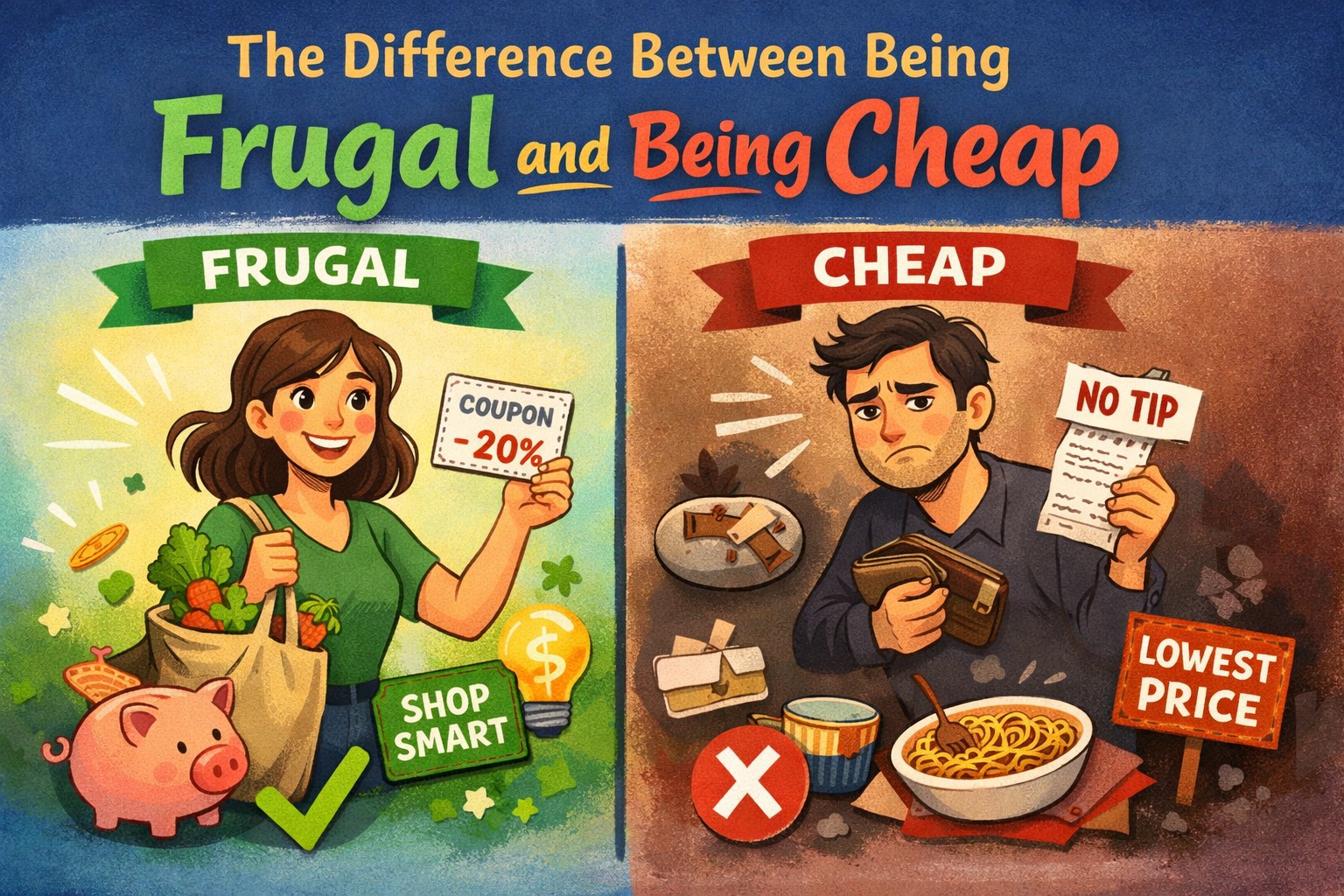
Managing money wisely is an important skill in modern life. However, many people often confuse being frugal with being cheap. While both involve spending less money, the mindset and long-term impact are very different. Frugal people focus on value and smart financial decisions, while cheap people prioritize saving money at any cost, even if it negatively affects quality, relationships, or future expenses. Understanding the difference between these two habits can help people develop healthier financial behaviors and improve their quality of life.
UNDERSTANDING THE MEANING OF FRUGALITY
Being frugal means using money carefully and intentionally. A frugal person looks for ways to maximize value without sacrificing quality or important needs. They focus on long-term benefits instead of short-term savings.
For example, a frugal shopper may buy a durable pair of shoes that costs more upfront but lasts for several years. They understand that quality products often save money over time. Frugal people also plan budgets, avoid unnecessary debt, and prioritize financial stability.
Frugality is closely connected to discipline and smart decision-making. It encourages people to spend wisely while still enjoying life responsibly.
WHAT IT MEANS TO BE CHEAP
Being cheap is different because the primary goal is spending as little money as possible, regardless of the consequences. Cheap people often ignore quality, fairness, or comfort to save a small amount of money.
For instance, someone who constantly buys the lowest-quality products may end up replacing them frequently, leading to higher expenses in the future. Cheap behavior can also affect personal relationships, such as refusing to contribute fairly during shared activities or avoiding generosity entirely.
Unlike frugality, cheapness usually focuses only on immediate savings rather than overall value.
HOW FRUGAL PEOPLE THINK ABOUT VALUE
Frugal individuals understand the importance of balancing cost and quality. They research products, compare prices, and consider long-term usefulness before making purchases. Their goal is not simply to spend less but to spend smarter.
A frugal person may cook meals at home to reduce restaurant expenses while still preparing healthy and enjoyable food. They may also use discounts, coupons, or cashback offers strategically without compromising their lifestyle.
This mindset creates sustainable financial habits and often leads to greater financial freedom over time.
WHY CHEAPNESS CAN CREATE NEGATIVE EFFECTS
Cheap behavior may seem financially beneficial at first, but it can create several problems. Low-quality purchases often lead to frequent replacements, higher maintenance costs, and frustration. In social situations, being excessively cheap may damage trust and relationships.
For example, refusing to tip service workers fairly or avoiding basic generosity can make others feel uncomfortable. Cheapness may also prevent people from investing in important areas such as health, education, or personal growth.
In many cases, focusing only on the lowest price leads to poor decisions that cost more in the long run.
BENEFITS OF DEVELOPING A FRUGAL LIFESTYLE
A frugal lifestyle offers many advantages beyond saving money. It helps people build financial security, reduce stress, and develop healthier spending habits. Frugal individuals are often better prepared for emergencies because they manage their finances carefully.
Additionally, frugality encourages mindful consumption. Instead of buying impulsively, people learn to prioritize what truly matters. This approach can lead to less waste, better budgeting skills, and improved financial confidence.
Frugal living does not mean avoiding enjoyment. Instead, it means finding affordable ways to achieve happiness and long-term goals.
CONCLUSION
The difference between being frugal and being cheap lies in intention and value. Frugal people spend money wisely to achieve long-term benefits, while cheap people focus only on minimizing costs, even when it creates negative consequences. Frugality promotes smart financial management, stronger relationships, and better quality of life. On the other hand, cheapness can lead to poor decisions and unnecessary limitations.
By understanding these differences, people can develop healthier money habits and create a balanced financial future. Choosing frugality over cheapness is not about denying yourself enjoyment but about making thoughtful decisions that support long-term success and well-being.
About the Author
Gusti Ayu Tita
Author — STEKOM University
An active author focused on academic issues, educational technology, and human resource development in the campus environment.



