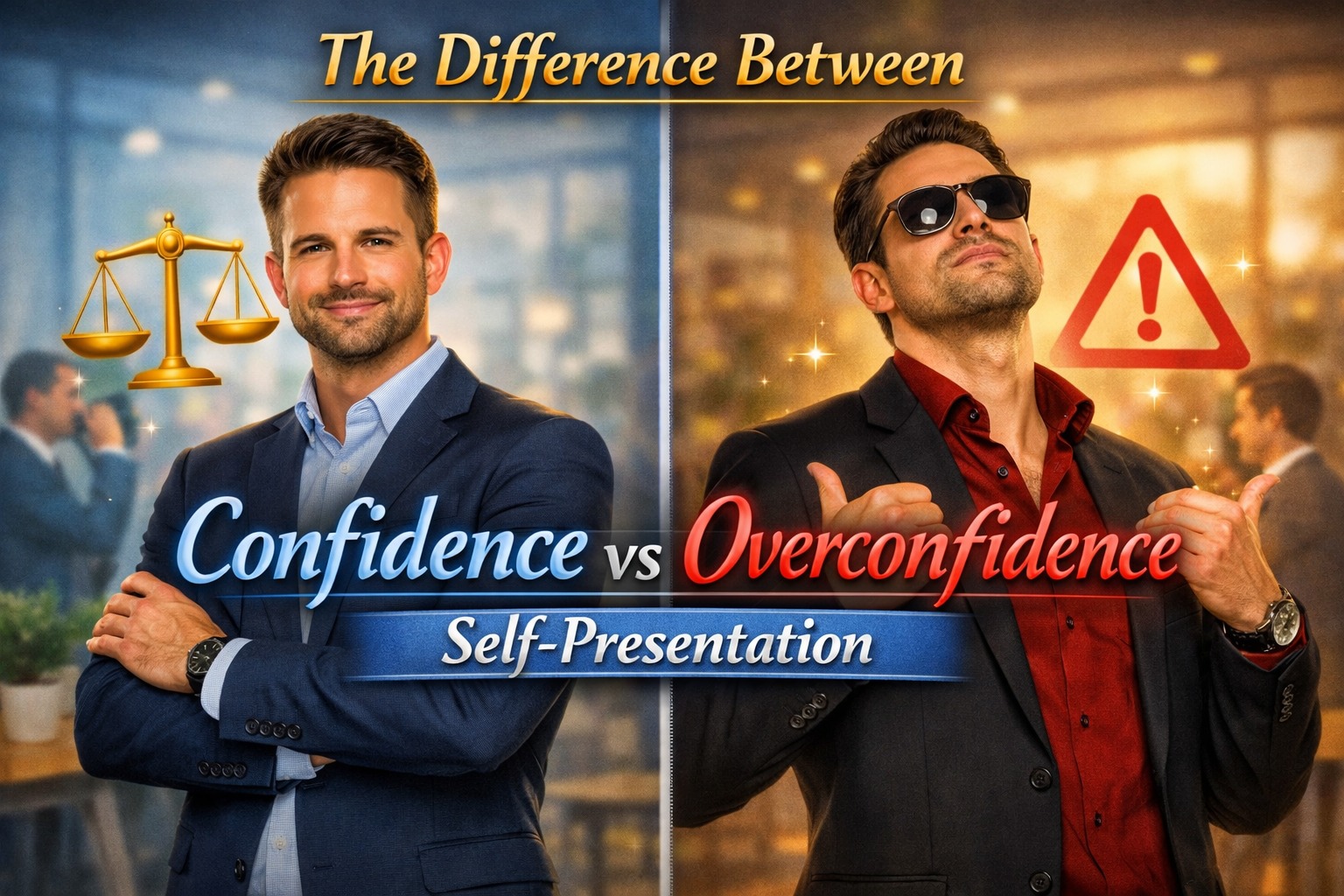
Confidence is one of the most important qualities in positive self-presentation. People who present themselves confidently often appear more professional, trustworthy, and attractive in both social and professional environments. However, there is a fine line between confidence and overconfidence. While confidence creates respect and comfort, overconfidence can make others feel uncomfortable or even distant.
Understanding the difference between confidence and overconfidence is essential for developing healthy self-presentation and building better relationships.
WHAT IS SELF-PRESENTATION?
Self-presentation is the way individuals express themselves through appearance, communication, behavior, body language, and attitude. It shapes how people perceive your personality, professionalism, and emotional intelligence.
Good self-presentation can help:
- Build positive first impressions
- Strengthen communication
- Increase professional credibility
- Improve social relationships
- Support personal growth
Confidence is an important part of self-presentation, but it must be balanced with humility and self-awareness.
WHAT IS CONFIDENCE?
Confidence is the ability to trust your skills, opinions, and abilities without feeling superior to others. Confident people are comfortable with themselves and can communicate effectively while respecting those around them.
Characteristics of confident people include:
- Speaking clearly and calmly
- Maintaining positive body language
- Accepting feedback openly
- Respecting others’ opinions
- Staying calm under pressure
Confidence usually comes from preparation, experience, and self-awareness.
WHAT IS OVERCONFIDENCE?
Overconfidence happens when someone has excessive belief in their abilities or importance. People who are overconfident may appear arrogant, dismissive, or unwilling to learn from others.
Common signs of overconfidence include:
- Constantly bragging about achievements
- Ignoring feedback or criticism
- Interrupting conversations frequently
- Acting superior to others
- Underestimating challenges or risks
While confidence attracts respect, overconfidence can damage relationships and professional reputation.
HOW CONFIDENCE IMPROVES SELF-PRESENTATION
Healthy confidence positively affects how people communicate and interact with others. Confident individuals often create a comfortable and trustworthy atmosphere.
Benefits of confidence in self-presentation:
- Better communication skills
- Stronger leadership presence
- Improved professional image
- Increased emotional stability
- More positive social interactions
Confidence also helps people express ideas clearly without needing constant validation.
HOW OVERCONFIDENCE NEGATIVELY AFFECTS SELF-PRESENTATION
Overconfidence can create negative impressions in both social and professional settings. People may feel uncomfortable around someone who appears arrogant or dismissive.
Negative effects of overconfidence include:
- Poor teamwork
- Communication problems
- Reduced trust from others
- Difficulty accepting criticism
- Damaged professional relationships
Excessive self-focus often prevents meaningful communication and emotional connection.
DIFFERENCES IN COMMUNICATION STYLE
Communication style is one of the clearest differences between confidence and overconfidence.
Confident communication:
- Calm and respectful
- Open to discussion
- Balanced and thoughtful
- Focused on collaboration
Overconfident communication:
- Dominating conversations
- Speaking aggressively
- Ignoring others’ opinions
- Seeking constant attention
Respectful communication is a key sign of genuine confidence.
BODY LANGUAGE DIFFERENCES
Body language also reflects whether someone is confident or overconfident.
Confident body language includes:
- Natural eye contact
- Relaxed posture
- Friendly facial expressions
- Calm movements
Overconfident body language may include:
- Excessive staring
- Invading personal space
- Aggressive gestures
- Attention-seeking behavior
Balanced body language helps create a more approachable and professional presence.
THE ROLE OF HUMILITY
Humility is what separates healthy confidence from arrogance. Truly confident people understand their strengths without needing to constantly prove themselves.
Humble individuals:
- Appreciate others’ contributions
- Accept mistakes openly
- Continue learning and improving
- Respect different perspectives
Humility strengthens relationships and creates a more positive self-presentation.
HOW TO DEVELOP HEALTHY CONFIDENCE
Building healthy confidence requires self-awareness and emotional balance. Confidence should come from growth and experience, not from feeling superior to others.
Ways to develop healthy confidence:
- Focus on self-improvement
- Practice communication skills
- Accept constructive feedback
- Celebrate achievements modestly
- Learn from mistakes
Balanced confidence creates stronger personal and professional relationships.
HOW TO AVOID OVERCONFIDENCE
Preventing overconfidence involves maintaining humility and emotional intelligence.
Helpful habits include:
- Listening actively to others
- Remaining open to feedback
- Avoiding excessive self-promotion
- Respecting different opinions
- Staying realistic about strengths and weaknesses
Self-awareness helps maintain a healthy balance between confidence and humility.
WHY EMOTIONAL INTELLIGENCE MATTERS
Emotional intelligence helps people understand how their behavior affects others. It improves communication, empathy, and self-control.
Emotionally intelligent individuals often:
- Recognize social cues
- Handle criticism maturely
- Communicate respectfully
- Build healthier relationships
Strong emotional intelligence supports confident yet respectful self-presentation.
CONCLUSION
Confidence and overconfidence may appear similar at first, but they create very different impressions. Confidence is based on self-assurance, emotional control, and respect for others, while overconfidence often reflects arrogance and lack of self-awareness.
Healthy self-presentation requires balancing confidence with humility, communication skills, and emotional intelligence. By developing self-awareness and maintaining respect for others, anyone can build a confident presence that feels professional, attractive, and trustworthy without appearing overconfident.
About the Author
Gusti Ayu Tita
Author — STEKOM University
An active author focused on academic issues, educational technology, and human resource development in the campus environment.