
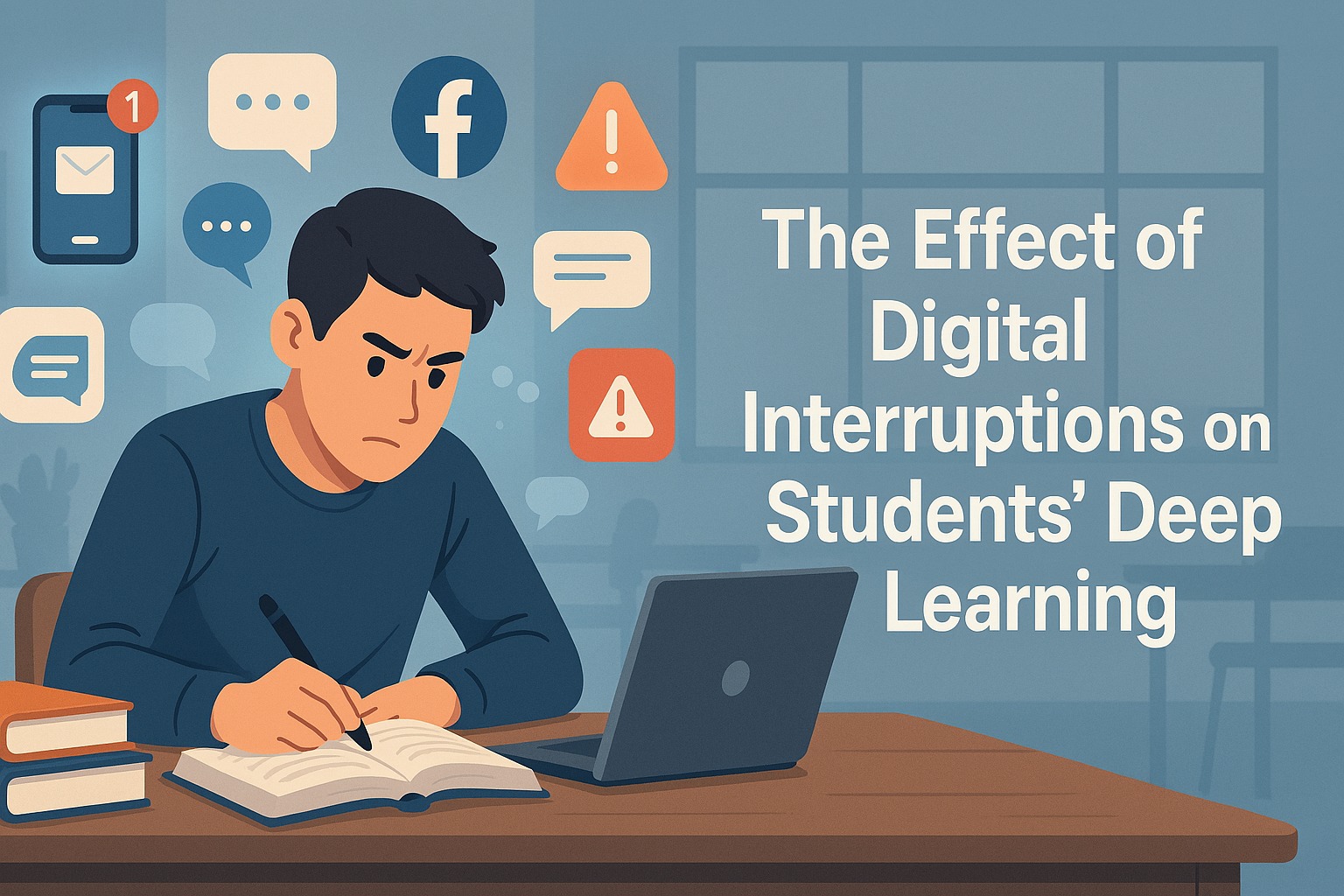
The rapid growth of digital technology has significantly changed the way students learn, access information, and interact with academic materials. Smartphones, laptops, and constant internet connectivity provide endless educational resources that can enhance learning experiences. However, these same technologies also introduce frequent digital interruptions that can disrupt students' focus and concentration.
Digital interruptions refer to sudden distractions caused by notifications, social media updates, messaging applications, or other online activities. While these interruptions may appear minor, they can have a significant impact on how students process and retain information during study sessions. Even brief distractions can break the flow of concentration required for meaningful learning.
In modern academic environments, students often study while connected to multiple digital platforms simultaneously. This multitasking behavior may give the impression of productivity, but research suggests that the brain struggles to effectively process multiple streams of information at once. As a result, interruptions can reduce the depth of understanding students achieve while studying.
Understanding the influence of digital interruptions is crucial for improving academic performance and learning quality. By recognizing how distractions interfere with deep learning processes, students and educators can develop strategies to maintain focus and improve the effectiveness of study activities.
UNDERSTANDING THE CONCEPT OF DEEP LEARNING
Deep learning in education refers to a learning process where students actively engage with material, critically analyze concepts, and build meaningful connections between ideas. Unlike surface learning, which focuses on memorizing facts, deep learning encourages understanding, reflection, and long-term knowledge retention.
Students who practice deep learning tend to ask questions, explore multiple perspectives, and connect new knowledge with prior experiences. This approach allows them to develop stronger analytical and problem-solving skills. As a result, deep learning plays an essential role in higher education and intellectual development.
The process of deep learning requires sustained attention and mental effort. Students need uninterrupted time to reflect on complex ideas, examine relationships between concepts, and internalize new information. When concentration is maintained, the brain can organize knowledge more effectively.
However, digital interruptions often break this mental continuity. When students frequently switch their attention between learning materials and digital distractions, their ability to engage in deep thinking decreases. This makes it more difficult for them to fully understand the subject matter.
HOW DIGITAL INTERRUPTIONS DISRUPT COGNITIVE PROCESSES
The human brain is designed to focus on one primary task at a time. When a digital interruption occurs, the brain must shift attention away from the current task and process new information. This shift requires cognitive effort, which can weaken the mental resources available for learning.
Every time students check a notification or respond to a message, their brain enters a process known as task switching. Although task switching may feel quick and harmless, it actually reduces efficiency and increases the time needed to return to the original learning task. This repeated switching can fragment the learning process.
Digital interruptions also affect working memory, which is responsible for temporarily holding and processing information. When students are distracted, the information stored in working memory can be lost or replaced by new stimuli. As a result, students may struggle to recall important details from their study material.
Over time, frequent interruptions can train the brain to expect constant stimulation. This habit reduces the ability to maintain prolonged focus, making deep learning increasingly difficult. Consequently, students may develop a pattern of shallow engagement with academic content.
THE RELATIONSHIP BETWEEN DIGITAL DISTRACTIONS AND STUDENT PRODUCTIVITY
Student productivity is closely related to the ability to maintain concentration during study sessions. When digital interruptions occur repeatedly, the time needed to complete academic tasks increases significantly. Students may spend hours studying but achieve limited understanding due to frequent distractions.
Digital distractions can also create a false sense of productivity. Students might believe they are effectively studying while simultaneously checking social media or messaging platforms. In reality, divided attention reduces learning efficiency and prevents the brain from processing information deeply.
Another impact of digital interruptions is the decline in learning quality. Instead of carefully analyzing information, students may skim through materials quickly to compensate for lost time. This behavior leads to surface-level learning and weak comprehension.
Furthermore, productivity loss caused by digital interruptions can contribute to academic stress. When students feel that their study time is unproductive, they may experience frustration and pressure to catch up with academic demands.
STRATEGIES TO REDUCE DIGITAL INTERRUPTIONS DURING STUDY
Managing digital interruptions requires conscious effort and disciplined study habits. One effective strategy is creating a distraction-free study environment where unnecessary digital devices are minimized. By limiting access to notifications, students can maintain longer periods of focused attention.
Another useful approach involves scheduling specific times for checking messages or social media. Instead of responding immediately to every notification, students can allocate short breaks between study sessions for digital interactions. This method helps maintain concentration during learning periods.
Students can also use digital tools designed to block distracting applications while studying. These tools help create boundaries between academic work and online entertainment, allowing students to stay focused on their learning objectives.
Developing strong self-regulation skills is equally important. When students become aware of their digital habits and actively manage their attention, they can gradually improve their ability to concentrate and engage in deeper learning.
THE ROLE OF SELF-DISCIPLINE IN SUPPORTING DEEP LEARNING
Self-discipline plays a critical role in helping students overcome digital interruptions and maintain focus on academic tasks. In an environment filled with digital temptations, students must develop the ability to control their attention and prioritize their learning goals.
Students who practice self-discipline tend to establish structured study routines. These routines create consistency and reduce the likelihood of impulsive digital distractions. Over time, consistent study habits can strengthen concentration and support deeper cognitive engagement.
Another important aspect of self-discipline is the ability to delay gratification. Instead of immediately responding to digital notifications, disciplined students choose to complete their study tasks first. This habit allows them to fully immerse themselves in learning activities.
Ultimately, self-discipline enables students to take control of their learning environment. By managing their digital behavior and focusing on meaningful study practices, they can improve their ability to achieve deep learning and long-term academic success.
About the Author
Gusti Ayu Tita
Author — STEKOM University
An active author focused on academic issues, educational technology, and human resource development in the campus environment.



