Corruption remains one of the biggest challenges faced by many countries around the world. It affects not only governments and institutions, but also the daily lives of ordinary people. When corruption becomes widespread, public welfare declines, economic growth slows, and social inequality increases. Understanding the effects of corruption is important so that societies can work together to build transparency, accountability, and justice.
UNDERSTANDING CORRUPTION
Corruption refers to dishonest behavior carried out by individuals or groups in positions of power for personal gain. Common forms of corruption include bribery, embezzlement, fraud, and abuse of authority. Corruption can occur in both public and private sectors, but its impact becomes especially harmful when it affects government services and public resources.
In many developing countries, corruption weakens institutions and reduces the quality of governance. Public funds that should be used for education, healthcare, infrastructure, and social programs are often misused for personal interests.
REDUCED QUALITY OF PUBLIC SERVICES
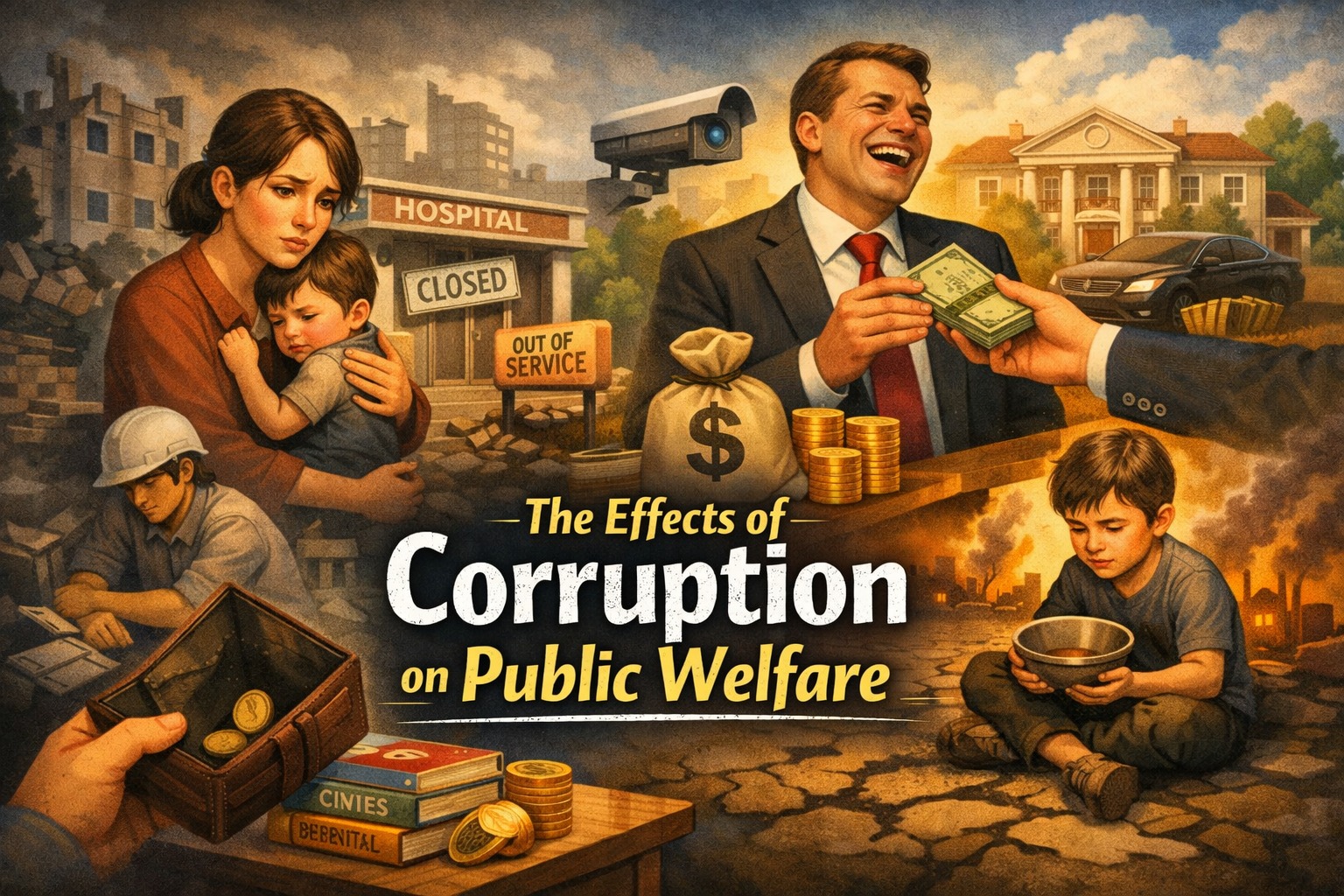
One of the most visible effects of corruption is the decline in public services. When government officials misuse funds, important sectors such as healthcare, education, and transportation suffer greatly.
For example, hospitals may lack proper medical equipment because budgets are stolen or manipulated. Schools may experience shortages of books, facilities, and qualified teachers. Roads and public infrastructure can become damaged quickly because construction projects are handled dishonestly to maximize illegal profits.
As a result, citizens receive poor-quality services even though they continue paying taxes.
INCREASED POVERTY AND SOCIAL INEQUALITY
Corruption often widens the gap between the rich and the poor. Wealthy individuals or companies may use bribery to gain advantages, while poor communities struggle to access fair opportunities.
Public assistance programs intended for low-income families may not reach the people who truly need help. Instead, corrupt officials may divert resources for personal benefit or distribute aid unfairly. This situation increases poverty levels and creates social injustice within society.
Communities affected by corruption often experience limited access to education, healthcare, and employment opportunities, making it difficult to improve their living conditions.
NEGATIVE IMPACT ON ECONOMIC GROWTH
A country with high corruption levels usually faces slower economic development. Investors are often reluctant to invest in environments where bribery and unfair business practices are common.
Corruption also reduces government revenue because taxes may be avoided through illegal agreements. In addition, businesses may face higher operating costs due to unofficial payments and complicated bureaucratic systems.
When economic growth slows, job opportunities become limited, wages stagnate, and the overall quality of life decreases. This directly affects public welfare and national stability.
LOSS OF PUBLIC TRUST
Public trust is essential for maintaining a stable society. However, corruption damages people’s confidence in government institutions and public leaders.
When citizens repeatedly witness dishonest practices, they may begin to believe that the legal system is unfair and ineffective. This can lead to frustration, social conflict, and reduced civic participation.
A society with low trust often struggles to achieve cooperation between citizens and authorities, making it harder to implement policies that benefit the public.
THE IMPORTANCE OF ANTI-CORRUPTION EFFORTS
Fighting corruption requires cooperation from governments, institutions, and society as a whole. Strong laws, transparent systems, and strict law enforcement are important steps in reducing corrupt practices.
Education also plays a major role in building anti-corruption values from an early age. By teaching honesty, responsibility, and integrity, future generations can contribute to creating a cleaner and more accountable society.
In addition, digital technology and public transparency can help reduce opportunities for corruption by making government processes more open and easier to monitor.
CONCLUSION
The effects of corruption on public welfare are serious and far-reaching. Corruption weakens public services, increases poverty, slows economic growth, and destroys public trust. If left unchecked, it can prevent a country from achieving sustainable development and social justice.
Therefore, combating corruption should become a shared responsibility among governments, communities, and individuals. Through transparency, education, and accountability, societies can create a fairer system that supports the well-being of all citizens.
About the Author
Gusti Ayu Tita
Author — STEKOM University
An active author focused on academic issues, educational technology, and human resource development in the campus environment.