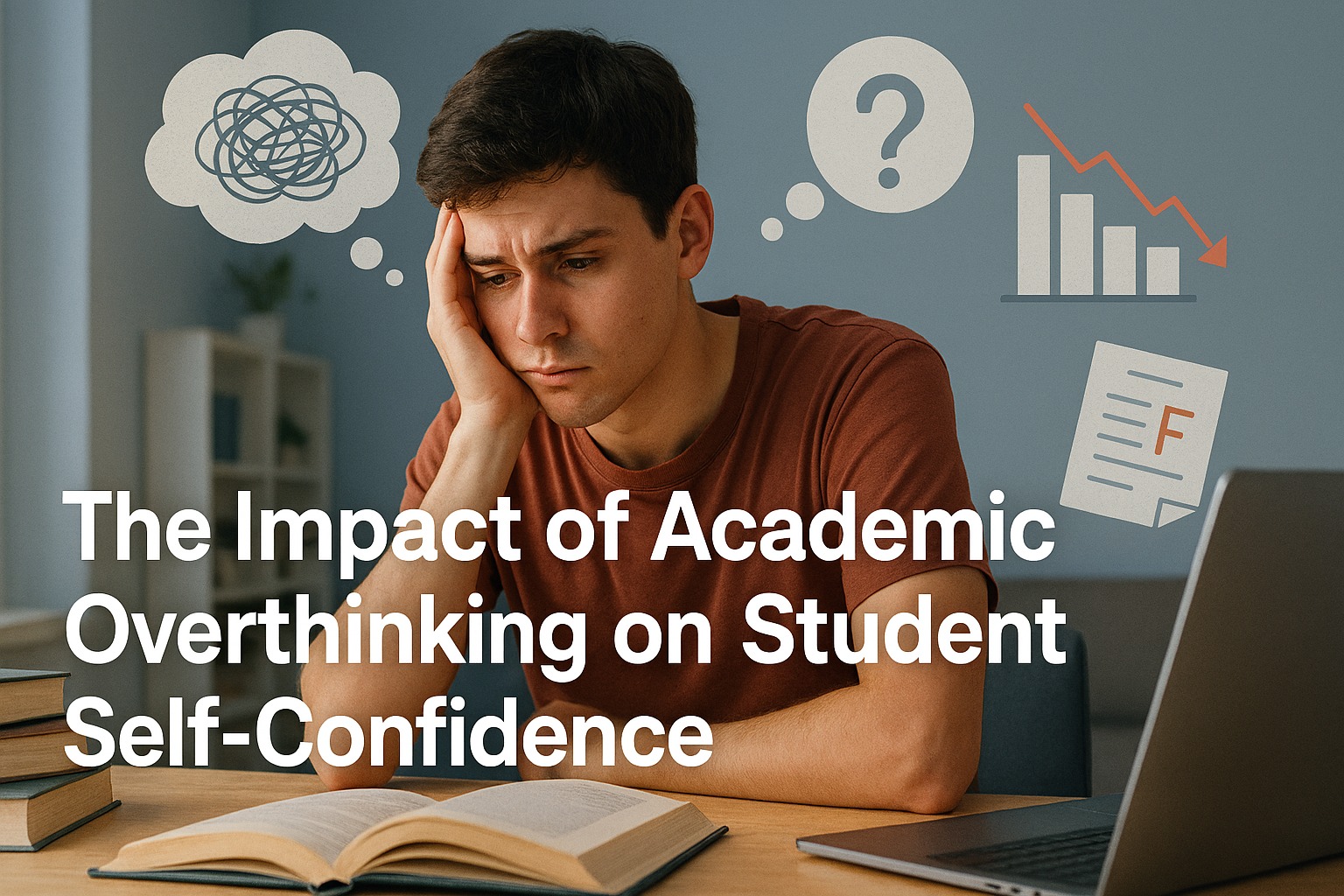
Overthinking has become a common challenge among students in modern academic settings. After exams, presentations, or even simple classroom interactions, many students find themselves replaying scenarios in their minds, obsessing over what they did or did not say. This mental loop can significantly affect self-confidence and overall well-being. Understanding the impact of academic overthinking is essential for students to maintain a healthy mindset and perform at their best.
WHY STUDENTS OVERTHINK ACADEMICALLY
Academic overthinking often stems from high expectations and a competitive environment. Students feel the pressure to excel not only for personal achievement but also to meet external standards from teachers, peers, and family. Fear of judgment or failure amplifies this mental strain, making even small mistakes feel catastrophic. As a result, students become trapped in cycles of self-criticism and doubt, which can slowly erode self-confidence.
EFFECTS OF OVERTHINKING ON SELF-CONFIDENCE
Persistent overthinking affects self-confidence in multiple ways. Firstly, it can create a distorted perception of personal performance, where students undervalue their achievements. Secondly, it can increase anxiety, making students hesitant to participate in class or take on new challenges. Over time, this can lead to a lack of motivation and avoidance behaviors, further weakening self-esteem and personal growth.
STRATEGIES TO MANAGE ACADEMIC OVERTHINKING
Managing academic overthinking requires awareness and practical strategies. Students can benefit from mindfulness techniques, such as deep breathing, meditation, and journaling, to break mental loops. Setting realistic goals and focusing on progress rather than perfection can reduce self-imposed pressure. Additionally, seeking support from mentors, peers, or counselors provides perspective and reassurance, helping students rebuild confidence after stressful academic experiences.
CONCLUSION
Academic overthinking is more than just a temporary stressor; it can have lasting effects on self-confidence and personal development. By recognizing the signs and implementing coping strategies, students can protect their mental health, enhance their performance, and foster a more positive self-image. Understanding and addressing overthinking is a crucial step toward achieving both academic success and personal well-being.
About the Author
Gusti Ayu Tita P
Author — STEKOM University
An active author focused on academic issues, educational technology, and human resource development in the campus environment.