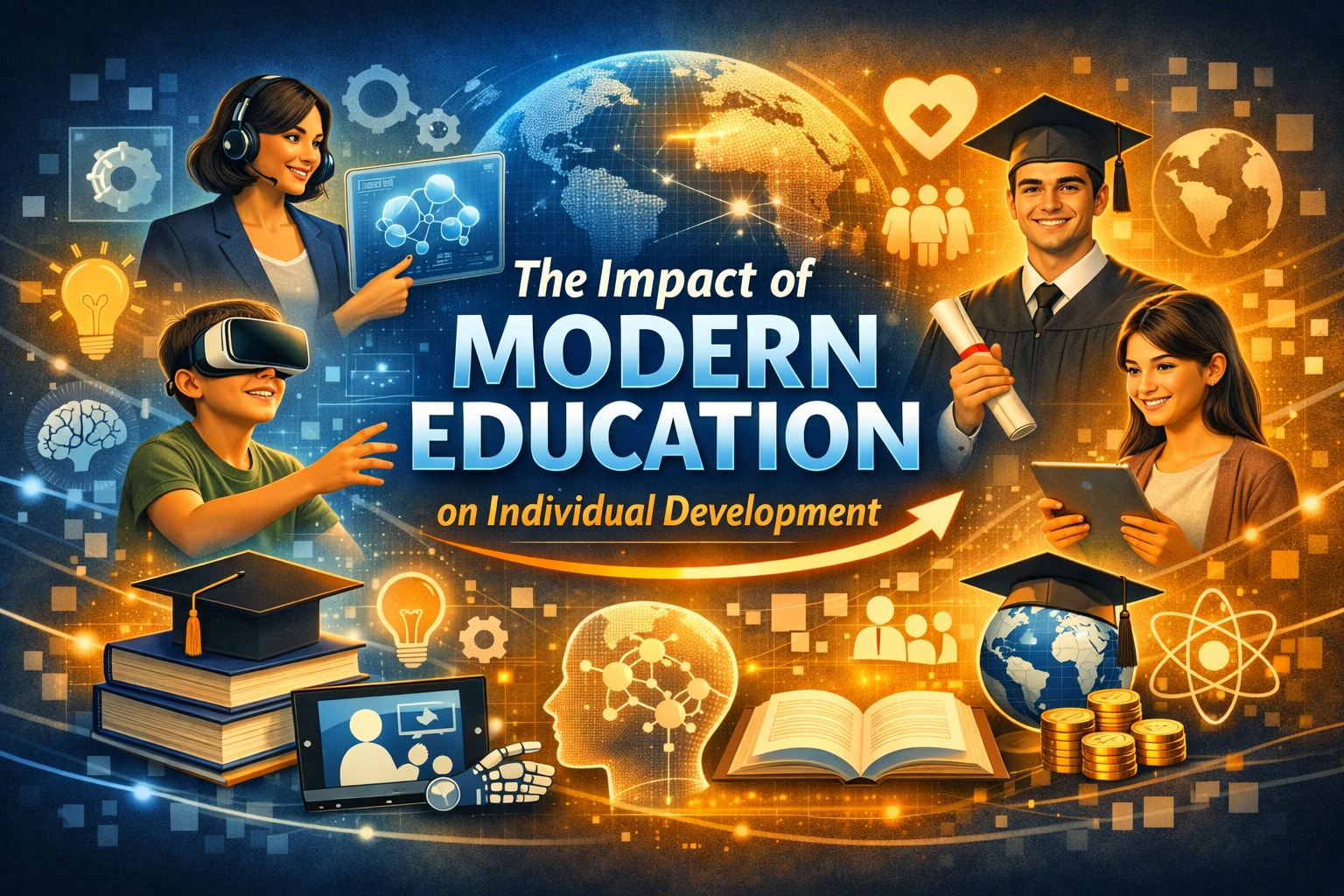
Modern education has become a driving force behind personal growth and societal progress. In today’s fast‑changing world, education is not limited to classrooms—it extends to digital platforms, experiential learning, and global collaboration. The impact of modern education on individual development is profound, shaping not only intellectual abilities but also emotional, social, and ethical dimensions.
THE TRANSFORMATION OF LEARNING IN THE MODERN ERA
Education has evolved from traditional memorization to interactive, technology‑based learning. Modern education emphasizes creativity, critical thinking, and adaptability. Students are encouraged to explore, question, and innovate rather than simply absorb information. This transformation prepares individuals to thrive in a world defined by constant change and technological advancement.
INTELLECTUAL AND COGNITIVE DEVELOPMENT
Modern education enhances cognitive skills by promoting analytical thinking and problem‑solving. Through project‑based learning and digital tools, students learn to apply knowledge in real‑world contexts. This approach nurtures intellectual independence and lifelong learning habits—essential traits for success in the 21st century.
EMOTIONAL AND SOCIAL GROWTH
Education today also focuses on emotional intelligence and social awareness. Collaborative learning environments teach empathy, teamwork, and communication. Students learn to respect diversity and engage constructively with others. These skills are vital for building meaningful relationships and contributing positively to society.
TECHNOLOGY AS A CATALYST FOR PERSONAL DEVELOPMENT
Technology plays a central role in modern education. Online learning platforms, virtual classrooms, and AI‑powered tools make education more accessible and personalized. Learners can pursue their interests, develop new skills, and connect globally. However, balancing technology with human interaction remains crucial to ensure holistic development.
CHALLENGES AND RESPONSIBILITIES IN MODERN EDUCATION
While modern education offers immense benefits, it also presents challenges such as digital distraction, inequality in access, and overreliance on technology. Educators must guide students to use digital tools responsibly and maintain ethical standards. The goal is to create well‑rounded individuals who combine knowledge with integrity and compassion.
Conclusion
Modern education profoundly influences individual development by fostering intellectual growth, emotional maturity, and social responsibility. When technology and human values work together, education becomes a transformative force that empowers individuals to shape a better future.
About the Author
Gusti Ayu Tita
Author — STEKOM University
An active author focused on academic issues, educational technology, and human resource development in the campus environment.