
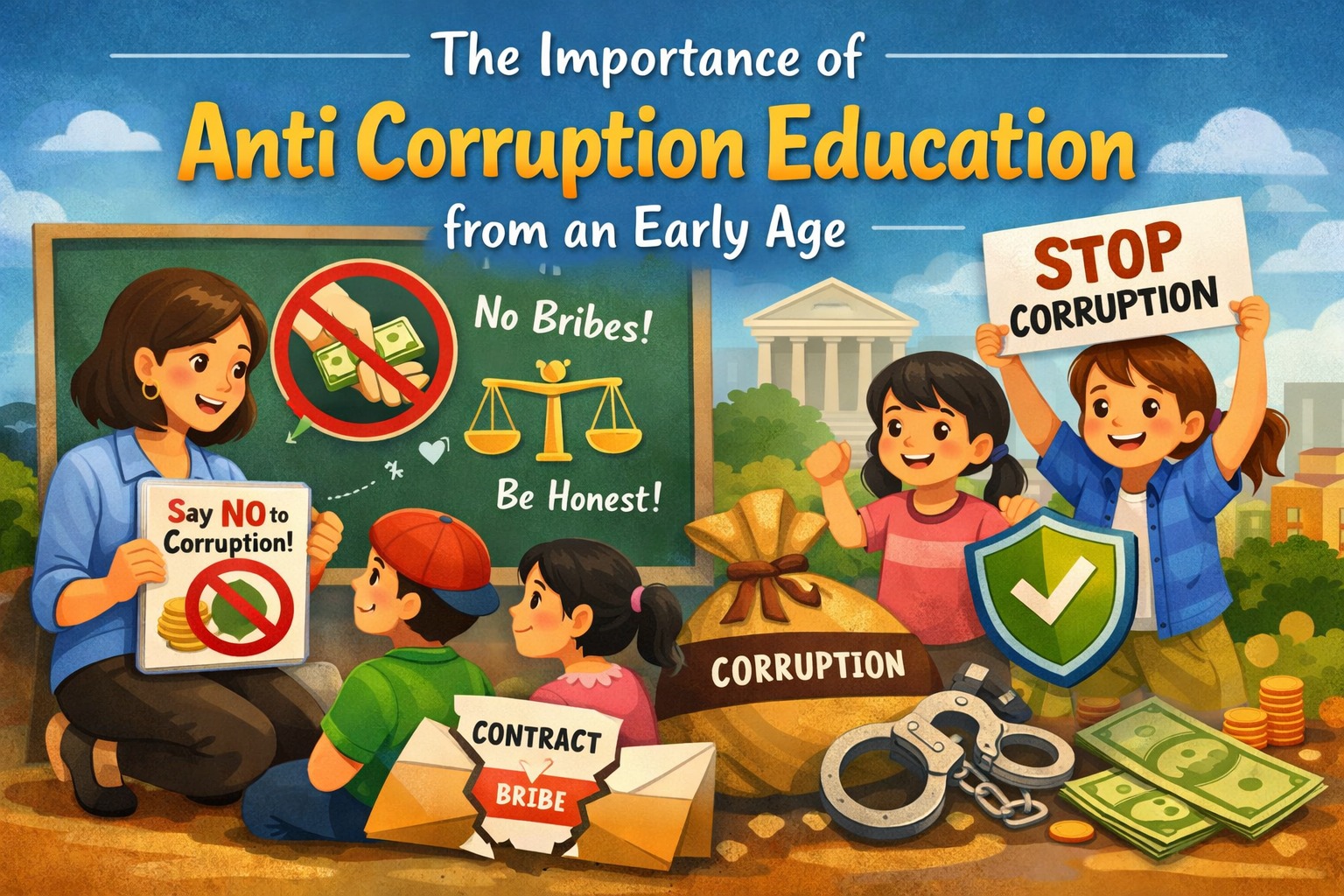
Corruption is one of the biggest challenges faced by many countries around the world. It affects economic growth, weakens public trust, and creates social inequality. Because of its harmful impact, anti corruption education should not only be introduced to adults but also taught to children from an early age. Teaching honesty, responsibility, and integrity during childhood can help build a generation that rejects corrupt behavior in the future.
WHY ANTI CORRUPTION EDUCATION IS IMPORTANT
Anti corruption education is essential because it shapes moral values and ethical behavior. Children who understand the dangers of corruption are more likely to grow into responsible citizens. They learn that cheating, lying, and taking unfair advantages are wrong actions that can harm society.
In many cases, corruption begins with small dishonest actions that are considered normal. Therefore, teaching integrity early can prevent these habits from developing into larger unethical behavior later in life. Education becomes a powerful tool to create awareness and encourage transparency in daily activities.
THE ROLE OF FAMILY IN BUILDING HONESTY
Family is the first environment where children learn values and behavior. Parents play an important role in teaching honesty, discipline, and fairness. Simple habits such as telling the truth, keeping promises, and respecting rules can help children understand the importance of integrity.
Parents should also become good role models. Children often imitate what they see at home. When parents act honestly and responsibly, children are more likely to adopt the same positive behavior. Consistent guidance from family members can strengthen anti corruption values from an early age.
THE IMPORTANCE OF SCHOOLS IN ANTI CORRUPTION EDUCATION
Schools are important places for character development. Teachers can introduce anti corruption values through lessons, discussions, and daily school activities. Subjects related to citizenship, ethics, and social responsibility can include examples of the negative effects of corruption.
Schools can also organize activities that promote honesty and discipline, such as honesty canteens, teamwork projects, and student leadership programs. These activities encourage students to practice integrity in real situations. As a result, students become more aware of the importance of fairness and accountability.
POSITIVE IMPACT OF ANTI CORRUPTION EDUCATION
There are many benefits of introducing anti corruption education early in life. First, it helps create a generation with strong moral principles. Young people who value honesty are less likely to engage in unethical actions.
Second, anti corruption education can improve social trust and community cooperation. When people act fairly and transparently, society becomes more stable and harmonious. Third, reducing corruption can support economic development because public resources are used properly for education, healthcare, and infrastructure.
In the long term, anti corruption education contributes to the creation of a cleaner government and a more just society.
CHALLENGES IN IMPLEMENTING ANTI CORRUPTION EDUCATION
Although anti corruption education is important, there are still challenges in its implementation. Some communities may not fully understand the importance of teaching integrity to children. In addition, inconsistent behavior from adults can make children confused about moral values.
Another challenge is the lack of educational programs specifically designed to teach anti corruption principles. To overcome this problem, cooperation between families, schools, governments, and communities is necessary. Strong support from all parties can make anti corruption education more effective and sustainable.
CONCLUSION
Anti corruption education from an early age is an important step in creating a better future. By teaching honesty, discipline, and responsibility to children, society can reduce the risk of corruption in the future. Families and schools have a major role in building strong moral character and encouraging ethical behavior.
When young generations understand the importance of integrity, they can become responsible leaders and citizens who contribute positively to society. Therefore, anti corruption education should continue to be promoted as part of character development and national progress.
About the Author
Gusti Ayu Tita
Author — STEKOM University
An active author focused on academic issues, educational technology, and human resource development in the campus environment.



