
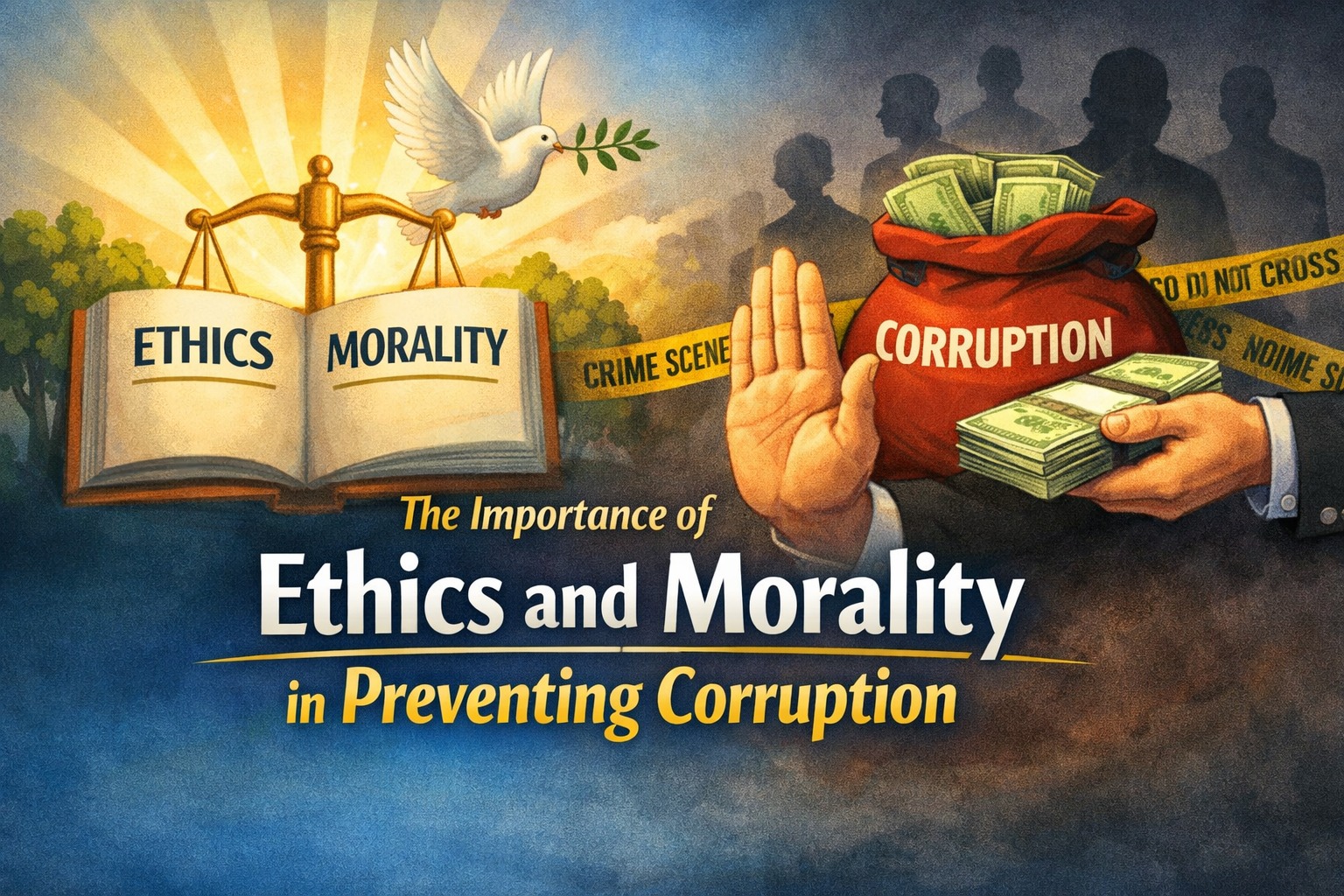
Corruption remains one of the biggest challenges faced by many countries around the world. It damages public trust, weakens institutions, slows economic growth, and creates social inequality. While laws and regulations are important in fighting corruption, they are not enough on their own. Ethics and morality play a crucial role in preventing dishonest behavior and building a transparent society.
Ethics and morality guide individuals to make responsible decisions, even when no one is watching. By strengthening ethical values in society, corruption can be reduced effectively and sustainably.
UNDERSTANDING ETHICS AND MORALITY
Ethics refers to the principles that determine what is right and wrong in human behavior. Morality, on the other hand, relates to personal values and beliefs about good conduct. Although the two concepts are closely connected, both help individuals act honestly, fairly, and responsibly.
In professional environments, ethics often appear in the form of rules, codes of conduct, and standards of behavior. Morality comes from internal awareness and personal integrity. When people combine ethical understanding with strong moral values, they are less likely to engage in corrupt activities.
HOW CORRUPTION DAMAGES SOCIETY
Corruption creates serious negative impacts on society. It can increase poverty, reduce the quality of public services, and weaken confidence in government institutions. Funds meant for education, healthcare, and infrastructure may be misused for personal gain.
In addition, corruption discourages investment and slows national development. Businesses may face unfair competition, while ordinary citizens suffer from inequality and injustice. Because of these harmful effects, preventing corruption should become a shared responsibility for all members of society.
THE ROLE OF ETHICS IN PREVENTING CORRUPTION
Ethics encourages transparency, accountability, and honesty. People who follow ethical principles are more likely to reject bribery, fraud, and abuse of power. Ethical behavior also promotes professionalism in workplaces and public institutions.
Organizations that prioritize ethics often create clear rules and encourage employees to report misconduct. Ethical leadership is especially important because leaders influence the behavior of others. When leaders act honestly and responsibly, employees are more motivated to follow the same standards.
Furthermore, ethical education can help young people understand the dangers of corruption from an early age. Schools and universities play an important role in teaching integrity, responsibility, and respect for the law.
MORAL VALUES AS A FOUNDATION OF INTEGRITY
Strong moral values help individuals maintain integrity in difficult situations. People with good moral character tend to think about the consequences of their actions on others. They understand that corruption not only breaks the law but also harms society as a whole.
Values such as honesty, fairness, discipline, and responsibility are essential in preventing corruption. These principles encourage individuals to prioritize public interest over personal benefit. A society built on strong moral foundations is more likely to create a culture of trust and justice.
THE IMPORTANCE OF FAMILY AND EDUCATION
Families are the first place where children learn values and behavior. Parents who teach honesty and responsibility help shape future generations with strong integrity. Positive examples at home can influence children to reject dishonest practices later in life.
Educational institutions also have a major role in promoting anti-corruption awareness. Schools can include lessons about ethics, civic responsibility, and social justice in their curriculum. Through education, students learn that corruption creates long-term harm for society.
BUILDING A CORRUPTION-FREE FUTURE
Preventing corruption requires cooperation between governments, educational institutions, businesses, and communities. Strong laws are important, but they must be supported by ethical behavior and moral awareness.
Governments should promote transparency and enforce fair regulations. Companies should develop ethical workplace cultures, while communities should encourage honesty and accountability. By working together, society can build a future that values integrity over personal gain.
In the end, ethics and morality are powerful tools in the fight against corruption. They shape human behavior, strengthen trust, and create a fairer society. A strong commitment to ethical values can help reduce corruption and support long-term social and economic progress.
About the Author
Gusti Ayu Tita
Author — STEKOM University
An active author focused on academic issues, educational technology, and human resource development in the campus environment.



