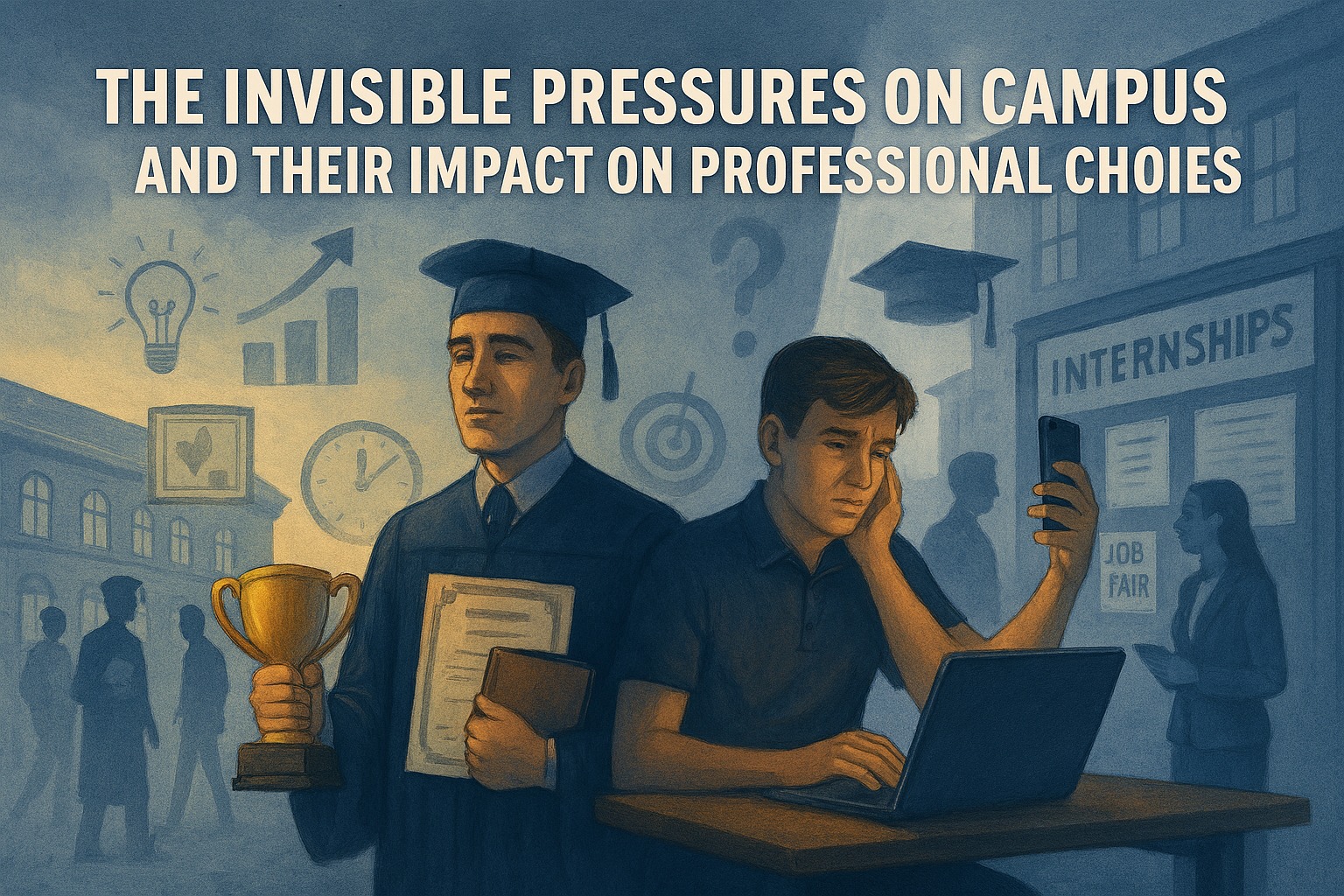
University life is often portrayed as a time of exploration, freedom, and intellectual growth. Yet beneath the surface of lectures, student organizations, and social events, there are invisible pressures on campus that quietly shape students’ professional choices. These pressures are rarely written in official policies, but they strongly influence how students define success and plan their careers.
Understanding the hidden dynamics within campus culture is essential for students who want to make intentional and authentic professional decisions. While ambition and preparation are valuable, unrecognized pressure can lead to rushed or misaligned career paths.
UNDERSTANDING INVISIBLE CAMPUS PRESSURES
Invisible pressures are subtle expectations embedded in academic and social environments. They can take the form of constant comparison, unspoken standards of success, or the normalization of early achievement. Students may feel compelled to secure internships in their first year, choose a specialization quickly, or demonstrate clear career goals before graduation.
Unlike academic deadlines, these pressures are not formally imposed. Instead, they emerge through peer conversations, social media updates, and institutional narratives that celebrate certain accomplishments more than others. Over time, students internalize these expectations without realizing how deeply they influence decision-making.
THE ROLE OF SOCIAL COMPARISON
One of the strongest invisible pressures on campus is social comparison. Students regularly observe their peers’ achievements, from scholarships and leadership positions to job offers and international programs. These visible milestones can create the impression that everyone else is progressing faster.
This comparison often accelerates professional choices. Rather than reflecting carefully on personal strengths and interests, students may choose paths that appear safe, prestigious, or popular. The fear of falling behind can overshadow genuine curiosity and exploration.
In such an environment, professional identity becomes shaped by collective momentum rather than individual clarity.
INSTITUTIONAL EXPECTATIONS AND DEFINITIONS OF SUCCESS
Universities also contribute to invisible pressure through the way they frame success. Career centers highlight high employment rates. Departments promote alumni who work in prestigious industries. Guest speakers often represent competitive sectors such as finance, technology, or consulting.
While these examples are inspiring, they can unintentionally narrow students’ perception of viable career options. When certain industries are consistently showcased, alternative paths may seem less legitimate.
As a result, students may align their professional choices with institutional narratives instead of personal aspirations.
PSYCHOLOGICAL IMPACT ON DECISION MAKING
Invisible campus pressures can significantly affect mental well-being. Anxiety about the future, fear of disappointing others, and concern about reputation often accompany career planning. Decisions made under stress tend to prioritize immediate security over long-term fulfillment.
Some students select careers primarily for stability or status, even if those paths do not resonate with their interests. Others overcommit to internships or extracurricular activities to maintain competitiveness, leaving little room for self-reflection.
When professional choices are driven by pressure rather than purpose, dissatisfaction may surface later in the workplace.
RECLAIMING AUTONOMY IN PROFESSIONAL CHOICES
Recognizing invisible pressures is the first step toward regaining control. Students benefit from pausing to ask deeper questions: What motivates me beyond comparison? Which environments align with my values? What kind of work gives me energy rather than just approval?
Engaging in reflective practices, seeking mentorship, and exploring diverse experiences can help counterbalance external influence. Universities can also support healthier decision-making by promoting multiple definitions of success and encouraging exploratory learning.
Professional choices should reflect both awareness of reality and alignment with personal identity.
CONCLUSION
The invisible pressures on campus are powerful precisely because they are subtle. They shape perceptions of success, accelerate career decisions, and influence professional identity without formal enforcement. While ambition and preparation remain essential, unexamined pressure can redirect students away from authentic paths.
By becoming conscious of these influences, students can transform campus culture from a source of anxiety into a platform for growth. When professional choices emerge from clarity rather than comparison, long-term satisfaction and resilience become far more attainable.
About the Author
Gusti Ayu Tita
Author — STEKOM University
An active author focused on academic issues, educational technology, and human resource development in the campus environment.