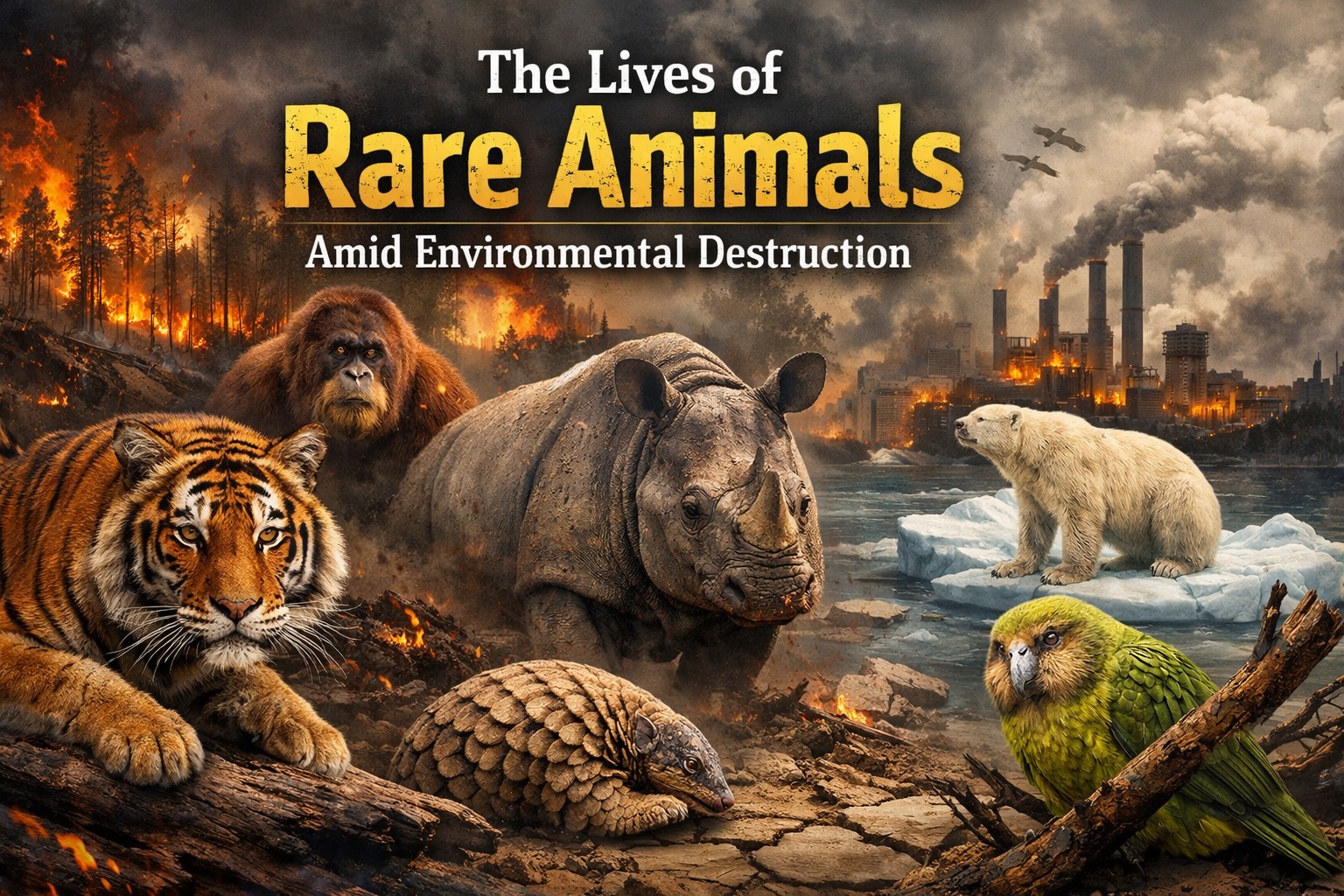
Rare animals around the world are facing increasing threats due to environmental destruction. Deforestation, climate change, pollution, and illegal hunting have pushed many species closer to extinction. These animals are not only part of nature’s beauty but also play an important role in maintaining ecological balance. Without serious conservation efforts, future generations may only know these creatures through pictures and history books.
THE GROWING THREAT OF ENVIRONMENTAL DESTRUCTION
Environmental destruction continues to expand across forests, oceans, rivers, and grasslands. Human activities such as illegal logging, mining, industrial waste disposal, and land conversion have damaged countless ecosystems. As habitats disappear, rare animals lose their homes, food sources, and breeding areas.
Climate change also worsens the situation. Rising temperatures, melting ice, and changing weather patterns affect the survival of many species. Animals that rely on specific environmental conditions struggle to adapt quickly enough to these rapid changes.
RARE ANIMALS THAT ARE ENDANGERED
Many unique animals are now categorized as endangered due to habitat destruction and human exploitation. Some of the most threatened species include:
Orangutans
Orangutans in Southeast Asia are losing their rainforest habitats because of palm oil plantation expansion and illegal logging. These intelligent primates depend on dense forests for survival.
Sumatran Tigers
The Sumatran tiger population continues to decline because of poaching and shrinking forests. They are among the rarest tiger species left in the world.
Sea Turtles
Plastic pollution in oceans threatens sea turtles every day. Many turtles mistakenly consume plastic waste, which can cause severe injuries or death.
Polar Bears
Melting Arctic ice caused by global warming reduces the hunting grounds of polar bears. This makes it harder for them to find food and survive.
WHY BIODIVERSITY MATTERS
Biodiversity is essential for a healthy planet. Every animal species contributes to the ecosystem in different ways. Predators help control prey populations, while herbivores maintain vegetation balance. The disappearance of one species can affect the entire food chain.
Rare animals also provide scientific, cultural, and economic benefits. Ecotourism, for example, supports local communities while encouraging wildlife protection. Preserving biodiversity ensures environmental stability for humans and animals alike.
HUMAN ACTIVITIES THAT DAMAGE WILDLIFE
Several human actions directly contribute to the destruction of wildlife habitats:
- Illegal hunting and wildlife trafficking
- Deforestation for agriculture and industry
- Ocean pollution from plastic waste
- Forest fires caused by land clearing
- Excessive use of fossil fuels contributing to climate change
Without stricter regulations and environmental awareness, these activities will continue to threaten rare species worldwide.
EFFORTS TO PROTECT RARE ANIMALS
Conservation organizations, governments, and local communities are working together to protect endangered species. National parks and wildlife reserves help preserve natural habitats. Rescue centers rehabilitate injured animals and release them back into the wild.
Public education also plays a vital role. People can help by reducing plastic use, supporting sustainable products, and avoiding illegal wildlife products. Small actions from individuals can create significant positive impacts for the environment.
THE FUTURE OF ENDANGERED SPECIES
The future of rare animals depends on global cooperation and environmental responsibility. If habitat destruction continues unchecked, many species may disappear forever. However, with stronger conservation efforts and sustainable living practices, endangered animals still have a chance to survive.
Protecting wildlife is not only about saving animals. It is about preserving the balance of life on Earth. Humans and nature are deeply connected, and safeguarding the environment means protecting the future of humanity itself.
About the Author
Gusti Ayu Tita
Author — STEKOM University
An active author focused on academic issues, educational technology, and human resource development in the campus environment.