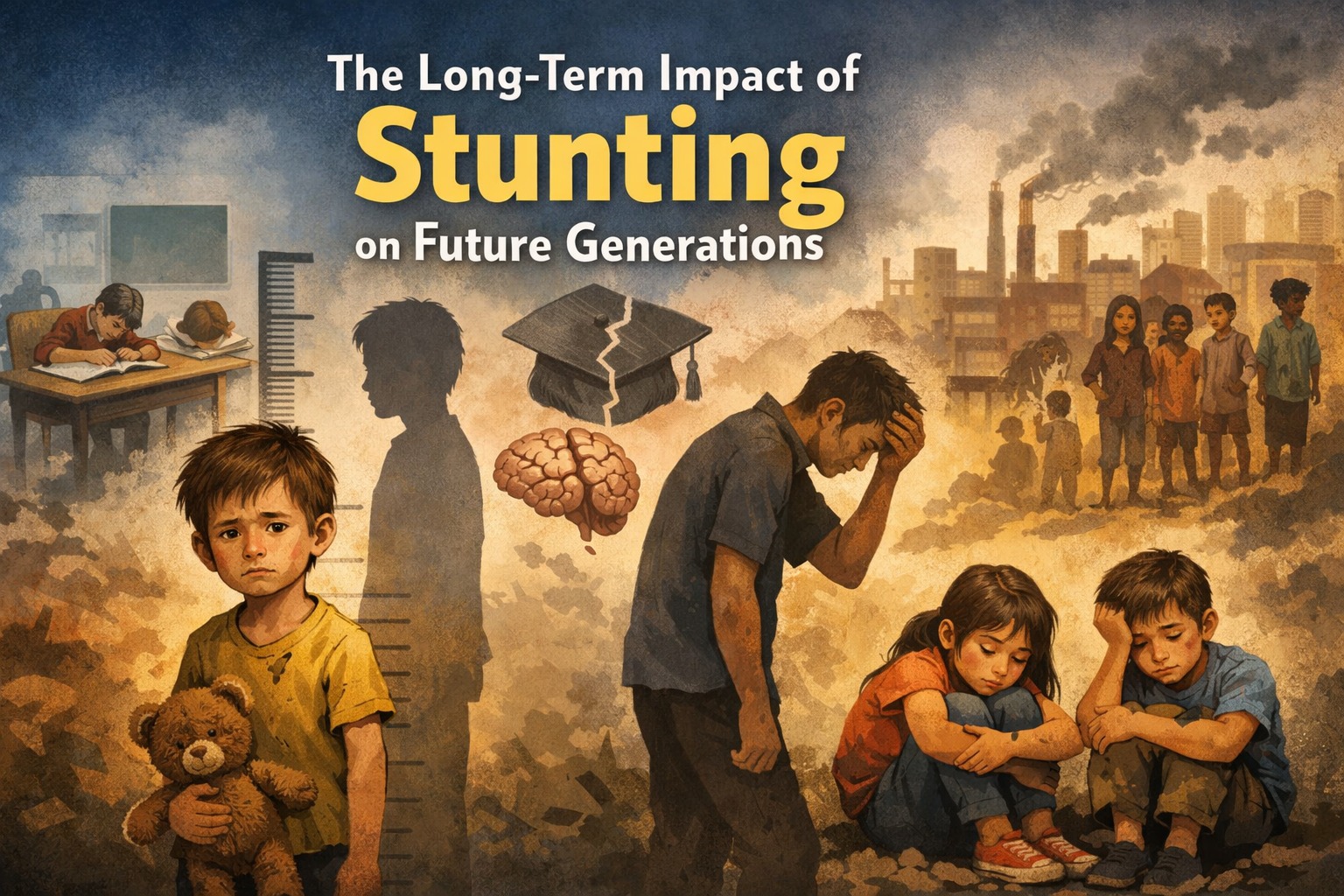
Stunting remains one of the most serious public health challenges affecting children worldwide. It occurs when a child experiences impaired growth and development due to chronic malnutrition, repeated infections, and inadequate care during the early years of life. Although stunting is often associated with shorter height, its impact goes far beyond physical appearance. The condition can influence brain development, educational achievement, productivity, and even the health of future generations.
Understanding the long-term impact of stunting is essential to building healthier societies and creating a stronger future for children around the world.
WHAT IS STUNTING?
Stunting is a condition in which children fail to grow according to standard height-for-age measurements. It usually develops during the first 1,000 days of life, starting from pregnancy until a child reaches two years old. During this critical period, proper nutrition and healthcare are essential for healthy growth and cognitive development.
Children who experience stunting may face permanent physical and mental consequences if the condition is not prevented early. In many developing countries, stunting remains a major issue caused by poverty, poor sanitation, limited healthcare access, and lack of nutritional awareness.
EFFECTS OF STUNTING ON CHILD DEVELOPMENT
Stunting has a direct influence on a child’s physical and cognitive growth. Malnourished children often have weaker immune systems, making them more vulnerable to illness and infection. Frequent sickness can further reduce nutrient absorption, creating a dangerous cycle of poor health.
In addition, stunted children commonly experience delays in language skills, memory, concentration, and problem-solving abilities. These developmental challenges can negatively affect school performance and reduce opportunities for future success.
The long-term consequences may include:
- Lower academic achievement
- Reduced physical strength
- Increased risk of chronic diseases
- Emotional and social difficulties
- Limited employment opportunities
THE ECONOMIC IMPACT ON SOCIETY
The impact of stunting does not only affect individuals but also influences economic development. Adults who experienced stunting during childhood are more likely to earn lower incomes due to reduced productivity and limited educational attainment.
As a result, countries with high stunting rates may experience slower economic growth and increased healthcare costs. Governments and communities must spend more resources on healthcare support, nutrition programs, and social assistance.
Investing in child nutrition and early healthcare can therefore provide long-term economic benefits by creating a healthier and more productive population.
HOW STUNTING AFFECTS FUTURE GENERATIONS
One of the most concerning aspects of stunting is its intergenerational impact. Mothers who experienced malnutrition during childhood are more likely to give birth to undernourished babies. This creates a continuous cycle where poor nutrition passes from one generation to the next.
Children born into families affected by poverty and limited education often face similar nutritional risks. Without proper intervention, the cycle of stunting can continue for decades and affect national development.
Breaking this cycle requires strong collaboration between families, healthcare providers, schools, and governments to improve nutrition awareness and maternal health.
STRATEGIES TO PREVENT STUNTING
Preventing stunting requires comprehensive action from both communities and policymakers. Several effective strategies include:
Improving Maternal Nutrition
Pregnant women need balanced nutrition to support healthy fetal growth and reduce the risk of low birth weight.
Promoting Exclusive Breastfeeding
Exclusive breastfeeding during the first six months provides essential nutrients and strengthens a child’s immune system.
Providing Nutritious Complementary Foods
After six months, children require healthy and nutrient-rich foods to support continued growth and brain development.
Enhancing Sanitation and Hygiene
Clean water, proper sanitation, and healthy living environments help prevent infections that contribute to malnutrition.
Increasing Nutrition Education
Parents and caregivers should understand the importance of balanced diets, child healthcare, and regular growth monitoring.
THE ROLE OF COMMUNITIES AND GOVERNMENTS
Communities play a vital role in reducing stunting through education programs, health campaigns, and family support systems. Healthcare workers, teachers, and local leaders can help raise awareness about proper child nutrition and healthy lifestyles.
Meanwhile, governments must strengthen healthcare infrastructure, improve food security, and provide affordable nutrition programs for vulnerable families. Policies focused on maternal health, child welfare, and poverty reduction are essential for preventing stunting on a national scale.
CONCLUSION
Stunting is not only a health issue but also a long-term challenge that affects education, economic growth, and future generations. Children who experience stunting may face lifelong physical and cognitive limitations, while societies may struggle with reduced productivity and increased healthcare burdens.
Preventing stunting requires early intervention, balanced nutrition, proper healthcare, and strong public awareness. By prioritizing child health and nutrition today, societies can create healthier, smarter, and more productive future generations.
About the Author
Gusti Ayu Tita
Author — STEKOM University
An active author focused on academic issues, educational technology, and human resource development in the campus environment.