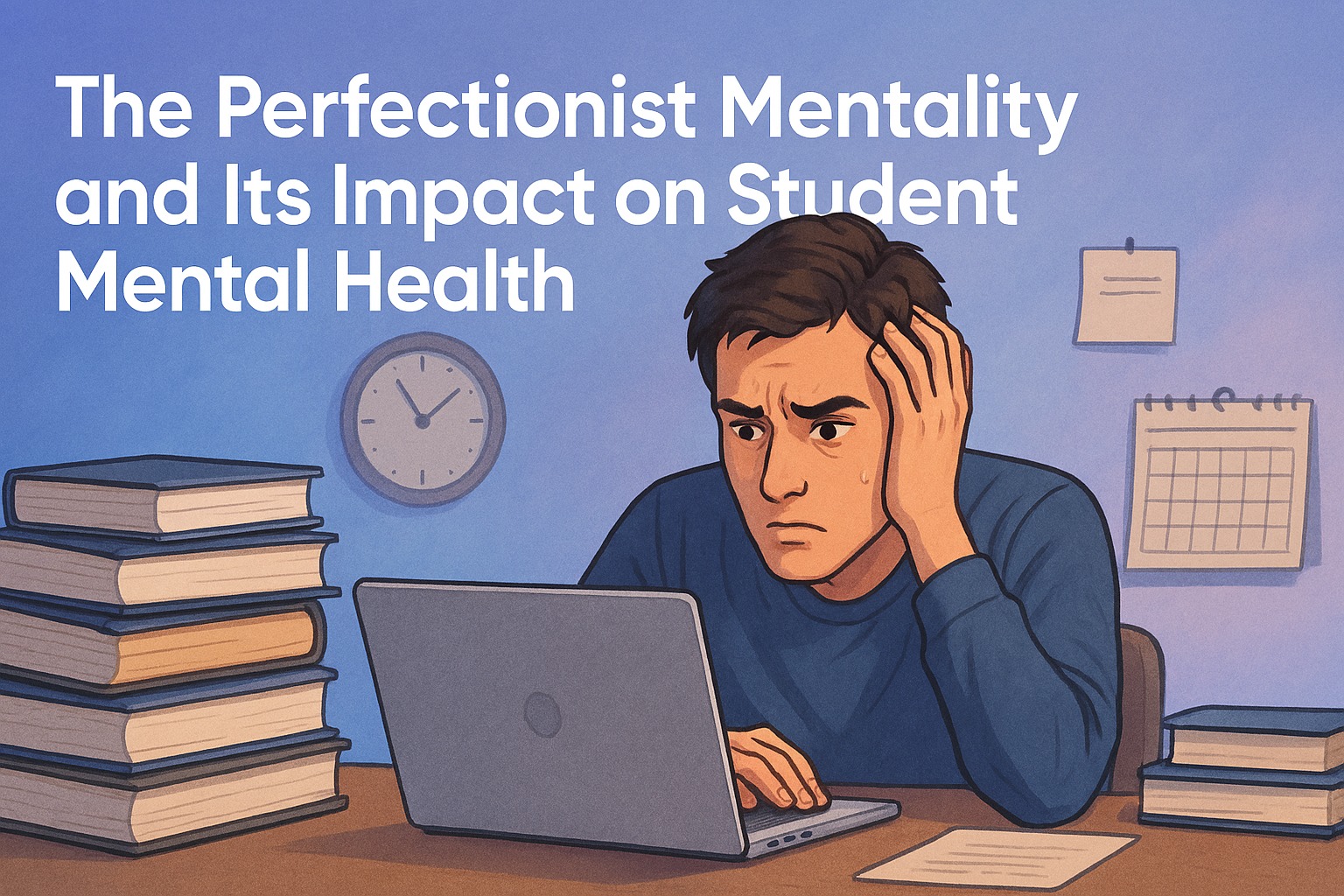
Many students enter university with high expectations for themselves, often driven by a desire to excel academically, socially, and personally. This perfectionist mindset can manifest as setting unattainable goals, fearing mistakes, or constantly comparing oneself to peers. While striving for excellence can be motivating, perfectionism becomes problematic when it prevents students from taking risks or trying new things. In many cases, students may avoid assignments, presentations, or extracurricular activities simply because they fear failing or not meeting their own impossibly high standards. Recognizing this mindset is the first step toward creating healthier habits and a more balanced approach to learning and growth.
THE LINK BETWEEN PERFECTIONISM AND ANXIETY
Research consistently shows that perfectionist tendencies are closely tied to anxiety and stress in students. When the focus shifts from learning to flawless performance, the pressure can become overwhelming. Students may experience constant worry about deadlines, grades, or evaluations from professors and peers. This anxiety often leads to procrastination, sleep disruption, and difficulty concentrating, which further exacerbates feelings of inadequacy. Over time, these patterns can contribute to chronic stress and even more serious mental health challenges, including depression and burnout. Understanding this connection highlights the importance of addressing perfectionist tendencies early in the academic journey.
HOW SOCIAL PRESSURE INTENSIFIES PERFECTIONISM
University environments can inadvertently amplify perfectionist behaviors. Students are surrounded by high achievers and social media portrayals of success, creating a culture of comparison and competition. Family expectations, scholarships, and career ambitions add another layer of pressure. The result is a constant internal dialogue that tells students they must always excel, never show weakness, and avoid mistakes at all costs. This social pressure reinforces the perfectionist mentality, making it difficult for students to embrace failure as a normal and constructive part of growth. Learning to navigate these pressures requires intentional strategies, self-compassion, and realistic goal-setting.
THE IMPACT ON STUDENT MENTAL HEALTH
The consequences of unchecked perfectionism are significant. Students may experience heightened stress, persistent self-criticism, and feelings of inadequacy despite tangible achievements. Mental health challenges can manifest as anxiety disorders, depression, or even eating disorders. In addition, perfectionist students often struggle with forming authentic relationships, as they may fear judgment or perceive themselves as inferior to peers. This isolation can exacerbate emotional distress, creating a cycle that is difficult to break. Addressing perfectionism is essential not only for academic success but also for long-term well-being and personal development.
STRATEGIES TO OVERCOME PERFECTIONISM
Overcoming the perfectionist mentality requires deliberate effort and self-awareness. Students can start by setting realistic, attainable goals and celebrating small achievements rather than focusing solely on perfect outcomes. Practicing self-compassion and reframing mistakes as opportunities for growth can reduce fear of failure and increase resilience. Mindfulness techniques, therapy, and peer support are also effective tools to manage stress and develop a healthier perspective on success. By gradually letting go of perfectionist expectations, students can build confidence, enjoy their academic journey, and protect their mental health in the long term.
RECOGNIZING THE SIGNS EARLY
One of the most important steps in addressing perfectionism is early recognition. Students should pay attention to patterns such as procrastination due to fear of imperfection, excessive self-criticism, or avoidance of new challenges. Early identification allows students to implement coping strategies before stress and anxiety escalate. Parents, mentors, and educators also play a critical role by observing these tendencies and providing guidance or resources for support. Awareness is the foundation for change, allowing students to create healthier academic habits and emotional resilience.
THE ROLE OF SELF-COMPASSION
Self-compassion is a crucial tool in combating perfectionism. Instead of harshly criticizing themselves for mistakes or perceived failures, students can practice understanding, patience, and encouragement. By viewing setbacks as part of the learning process rather than personal shortcomings, students reduce stress and anxiety. Techniques like journaling, positive self-talk, and mindful reflection can help reinforce self-compassion. Developing this mindset not only improves mental health but also encourages a growth-oriented approach that fosters long-term personal and academic success.
BALANCING AMBITION AND WELL-BEING
Ambition is valuable, but without balance, it can lead to burnout and mental strain. Students should learn to set priorities, allocate time for rest, and engage in activities that promote joy and relaxation. Building a support network of friends, mentors, or counselors can help maintain this balance. By redefining success as personal growth rather than flawless achievement, students can pursue their goals with enthusiasm and resilience while safeguarding their mental health. Striking this balance is the key to thriving both academically and personally in a demanding university environment.
About the Author
Gusti Ayu Tita P
Author — STEKOM University
An active author focused on academic issues, educational technology, and human resource development in the campus environment.