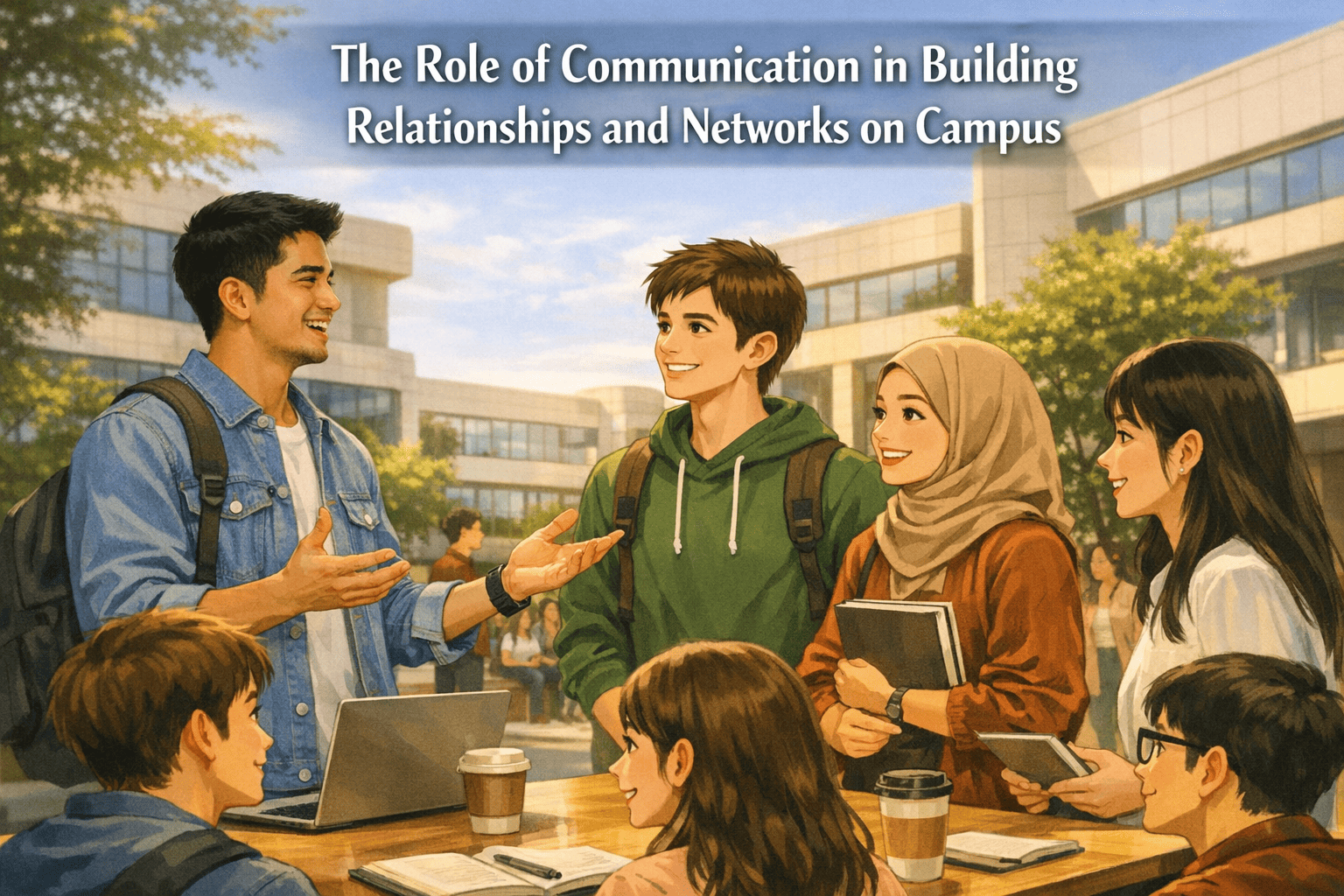
Campus life offers students far more than academic knowledge. It provides opportunities to build friendships, create professional connections, and develop networks that can influence future opportunities. In this environment, communication plays a central role in shaping how students interact with others and how relationships are formed. Without effective communication, it becomes difficult for students to establish meaningful connections within the academic community. Communication helps students share ideas, express their personalities, and build trust with others. Through conversations, discussions, and collaborations, students gradually create relationships that support their academic and personal growth. As a result, communication becomes a key factor in building strong relationships and expanding networks on campus.
THE IMPORTANCE OF COMMUNICATION IN CAMPUS INTERACTION
University environments bring together students from different regions, cultures, and academic backgrounds. This diversity creates a dynamic community where interaction is essential. Communication allows students to connect with people they may not have met otherwise.
Through effective communication, students can introduce themselves, exchange ideas, and engage in meaningful conversations. These interactions help build familiarity and comfort among individuals. Over time, simple conversations can grow into strong relationships that support academic collaboration and social bonding.
Moreover, communication helps students adapt to new social environments. For many students, entering university means adjusting to unfamiliar surroundings and meeting new people. Communication skills enable them to navigate these situations confidently and form positive connections with peers and lecturers.
BUILDING TRUST AND FRIENDSHIPS THROUGH COMMUNICATION
Trust is an important foundation in any relationship, and communication is the primary tool used to establish that trust. When students communicate honestly, respectfully, and openly, they create an atmosphere where others feel comfortable interacting with them.
Friendships on campus often begin with small conversations in classrooms, libraries, or student organizations. As students communicate more frequently, they begin to understand each other's personalities, interests, and perspectives. This understanding strengthens relationships and encourages deeper social connections.
Students who communicate effectively are often perceived as approachable and supportive. These qualities make it easier for them to form friendships and maintain positive relationships with others in their academic environment.
COMMUNICATION AS A TOOL FOR BUILDING PROFESSIONAL NETWORKS
Beyond friendships, communication also plays a significant role in developing professional networks on campus. Universities often provide opportunities for students to interact with lecturers, alumni, and professionals through seminars, workshops, and academic events.
Students who possess strong communication skills can take advantage of these opportunities to build meaningful connections. By asking thoughtful questions, participating in discussions, and engaging in conversations, students can expand their networks and gain valuable insights from experienced individuals.
Networking through communication can open doors to internships, research collaborations, and career opportunities. Many successful professionals emphasize that strong relationships and professional connections often begin with effective communication during university years.
THE ROLE OF COMMUNICATION IN STUDENT ORGANIZATIONS
Student organizations are another important space where communication helps build relationships and networks. In these organizations, students work together to plan activities, manage projects, and achieve shared goals.
Effective communication ensures that members can share ideas, coordinate tasks, and collaborate efficiently. When communication flows smoothly, teamwork becomes more productive and relationships among members become stronger.
Participation in student organizations also allows students to interact with individuals from different academic programs and backgrounds. These interactions broaden their networks and expose them to diverse perspectives that enrich their campus experience.
CONCLUSION
Communication plays a vital role in building relationships and expanding networks on campus. Through effective communication, students can connect with peers, develop friendships, and establish professional relationships that enrich their university experience.
Strong communication skills help students adapt to diverse environments, collaborate with others, and take advantage of networking opportunities. These interactions not only enhance their academic journey but also prepare them for future professional challenges.
Ultimately, communication serves as the bridge that connects individuals within the campus community. By developing this skill, students can create meaningful relationships and networks that support their growth both during their university years and throughout their future careers.
About the Author
Gusti Ayu Tita
Author — STEKOM University
An active author focused on academic issues, educational technology, and human resource development in the campus environment.