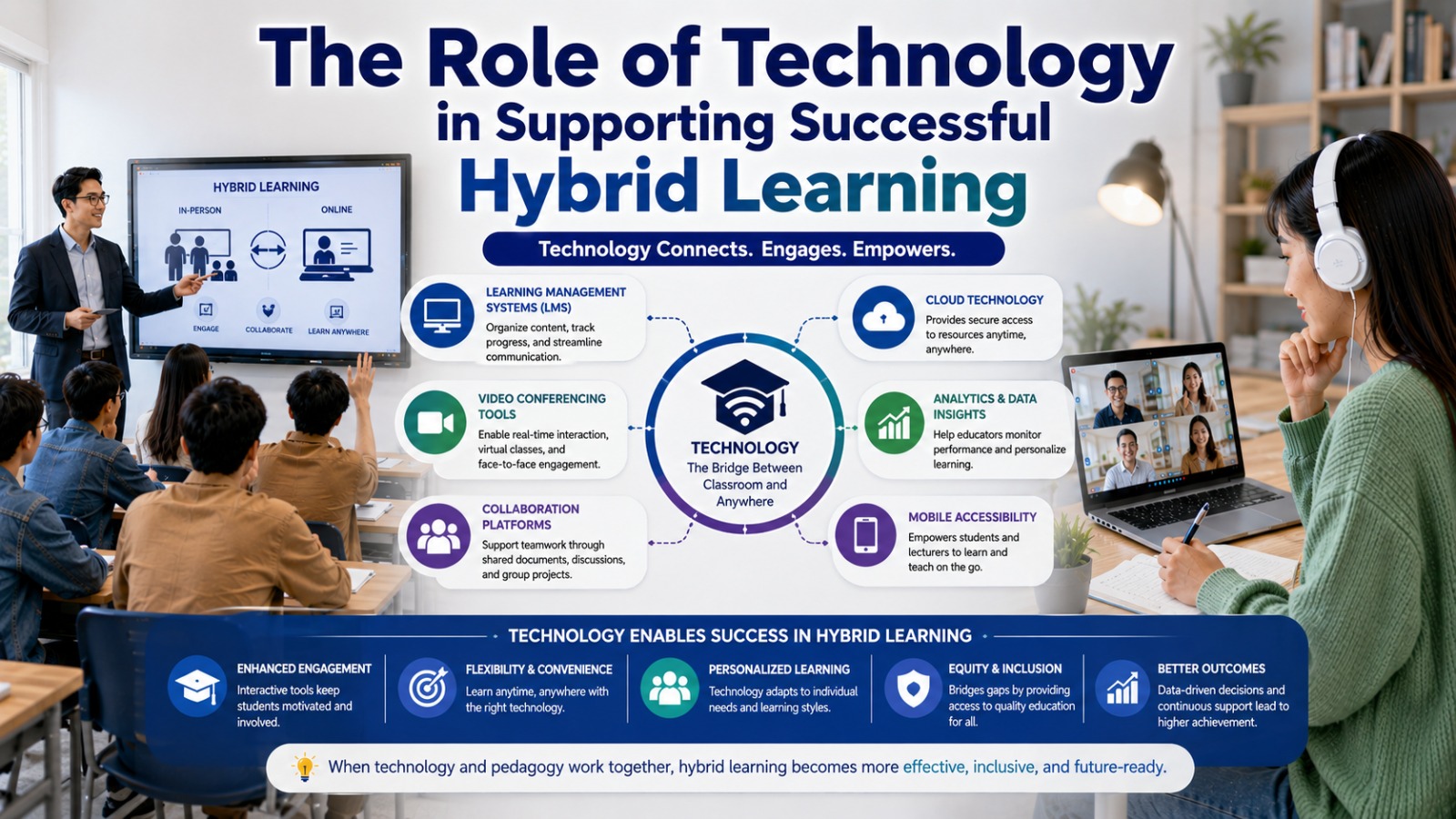
Technology has become an essential part of modern education, especially in the implementation of hybrid learning. As educational institutions continue to adapt to digital transformation, hybrid learning has emerged as one of the most effective methods for combining traditional classroom instruction with online education. This learning approach allows students and lecturers to experience greater flexibility, accessibility, and interaction in the learning process.
The success of hybrid learning depends heavily on the effective use of technology. Digital tools, online platforms, and communication systems play a major role in ensuring that learning activities remain productive and engaging. Without proper technological support, hybrid learning may face challenges related to communication, participation, and accessibility.
UNDERSTANDING HYBRID LEARNING
Hybrid learning is a teaching method that combines face-to-face classroom activities with online learning experiences. Students participate in direct classroom discussions while also accessing digital learning materials, virtual assignments, and online collaboration platforms.
This approach creates a balanced educational environment where traditional teaching methods are enhanced by technological innovation. Hybrid learning also allows educational institutions to provide flexible learning opportunities for students with different schedules and learning needs.
TECHNOLOGY AS THE FOUNDATION OF HYBRID LEARNING
Technology serves as the foundation of hybrid learning systems. Digital infrastructure enables communication, content delivery, collaboration, and academic assessment in both online and offline learning environments.
Learning management systems, video conferencing applications, cloud storage services, and educational software help lecturers organize learning materials and interact with students more effectively. These technologies create seamless connections between classroom activities and virtual learning experiences.
Without reliable technology, hybrid learning would be difficult to implement successfully.
IMPROVING ACCESS TO EDUCATION
One of the biggest advantages of technology in hybrid learning is improving access to education. Students can access educational materials from anywhere using internet-connected devices such as laptops, tablets, and smartphones.
This accessibility is especially beneficial for students who live far from campus, have physical limitations, or manage work and family responsibilities while studying. Online platforms allow students to continue learning without being restricted by location or time.
Technology has made education more inclusive and accessible to a wider range of learners.
SUPPORTING FLEXIBLE LEARNING EXPERIENCES
Technology enables flexibility in the learning process. Students can attend virtual classes, review recorded lectures, and complete assignments according to their schedules.
This flexibility allows learners to study at their own pace and revisit difficult topics whenever necessary. Students who need additional time to understand lessons can replay instructional videos and access digital resources repeatedly.
For lecturers, technology simplifies course management and makes it easier to distribute learning materials and announcements efficiently.
ENHANCING COMMUNICATION AND COLLABORATION
Effective communication is essential in hybrid learning environments, and technology provides multiple ways for students and lecturers to stay connected.
Video conferencing platforms, discussion forums, messaging applications, and collaborative tools encourage interaction beyond traditional classroom settings. Students can ask questions, participate in group discussions, and work on projects together even when they are in different locations.
These communication tools help maintain student engagement and strengthen collaboration among learners.
CREATING MORE INTERACTIVE LEARNING
Technology allows lecturers to create more engaging and interactive learning experiences. Multimedia presentations, educational videos, online quizzes, animations, and virtual simulations can make lessons more interesting and easier to understand.
Interactive digital content encourages students to participate actively rather than simply listening to lectures passively. Gamification features such as quizzes, points, and rewards can also increase motivation and classroom participation.
As a result, technology helps improve both student engagement and learning outcomes.
SUPPORTING DIFFERENT LEARNING STYLES
Every student has unique learning preferences, and technology helps accommodate these differences in hybrid learning environments.
Visual learners can benefit from videos and graphics, auditory learners can focus on recorded lectures, and independent learners can explore digital resources at their own pace. Interactive platforms also support collaborative learning for students who prefer teamwork and discussion-based activities.
This personalized learning experience helps students understand materials more effectively and increases overall academic performance.
IMPROVING ASSESSMENT AND FEEDBACK
Technology also improves the assessment process in hybrid learning. Online quizzes, digital assignments, and automated grading systems help lecturers evaluate student performance more efficiently.
Learning management systems allow lecturers to monitor attendance, track assignment completion, and provide feedback quickly. Students can receive immediate responses to quizzes and assessments, helping them identify areas that need improvement.
This faster feedback process supports continuous learning and academic development.
DEVELOPING DIGITAL SKILLS
Hybrid learning encourages students and lecturers to develop digital literacy and technological competence. In today’s digital world, these skills are essential for academic success and professional careers.
Students become familiar with online communication tools, virtual collaboration systems, and digital learning platforms. Lecturers also improve their ability to create digital educational content and manage online learning environments effectively.
These technological skills prepare both students and educators for future workplace demands.
CHALLENGES OF TECHNOLOGY IN HYBRID LEARNING
Although technology offers many benefits, there are still challenges in implementing hybrid learning successfully. Limited internet access, lack of digital devices, and technical difficulties can disrupt the learning process.
Some students and lecturers may also struggle to adapt to new technologies or experience fatigue from excessive screen time.
Educational institutions must provide technical support, training programs, and reliable digital infrastructure to overcome these challenges and ensure effective learning experiences.
CONCLUSION
Technology plays a critical role in supporting successful hybrid learning. It improves accessibility, flexibility, communication, collaboration, and student engagement while helping educational institutions adapt to the demands of modern education.
By using digital tools effectively, universities and schools can create innovative learning environments that support academic success and skill development. As technology continues to evolve, its role in hybrid learning will become even more important in shaping the future of global education.
About the Author
Gusti Ayu Tita
Author — STEKOM University
An active author focused on academic issues, educational technology, and human resource development in the campus environment.