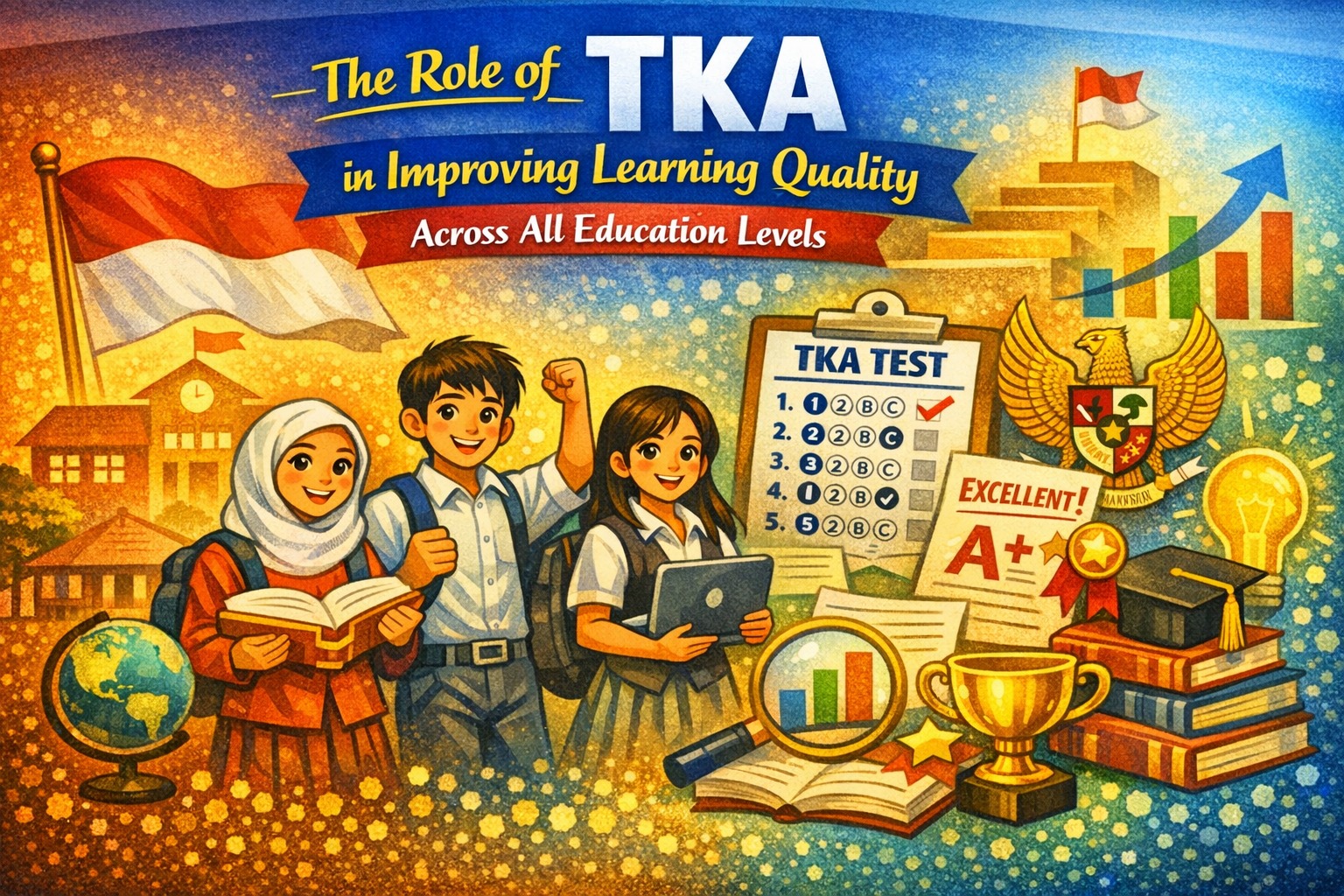
The Academic Competency Test, or TKA, has become a key instrument in enhancing learning quality across all education levels. From elementary schools to higher education, the presence of a standardized assessment system allows educators to measure student achievement more accurately. This ensures that learning outcomes are aligned with educational standards and helps maintain consistency in academic evaluation.
As education systems continue to evolve, the need for reliable and data-driven assessment tools becomes increasingly important. TKA provides valuable insights into student performance, enabling schools and policymakers to make informed decisions. By using TKA as a benchmark, the education system can continuously improve its teaching methods, curriculum, and overall learning experience.
ENHANCING CONSISTENCY IN ACADEMIC EVALUATION
One of the main roles of TKA is to enhance consistency in academic evaluation across different education levels. Without a standardized system, assessments can vary significantly between schools and regions, leading to unequal measurement of student abilities. TKA ensures that all students are evaluated based on the same criteria, creating a fair and uniform system.
Consistency in evaluation also helps teachers better understand student progress. With clear benchmarks, educators can track improvements and identify learning gaps more effectively. This allows them to adjust their teaching strategies to meet the needs of their students, resulting in a more targeted and effective learning process.
Furthermore, consistent assessment methods make it easier for students to adapt as they move through different stages of education. When evaluation systems remain stable, students experience less confusion and can focus more on developing their academic skills. This continuity supports long-term learning success.
SUPPORTING EFFECTIVE TEACHING STRATEGIES
TKA plays a significant role in supporting effective teaching strategies by providing accurate data on student performance. Teachers can use the results to evaluate the effectiveness of their instructional methods and identify areas that need improvement. This data-driven approach helps create a more responsive and adaptive learning environment.
With insights from TKA, educators can design lessons that are better suited to student abilities. They can focus on topics that require more attention and provide additional support where needed. This targeted approach ensures that students fully understand the material before moving on to more complex concepts.
In addition, TKA encourages teachers to continuously improve their professional skills. By analyzing assessment results, they can reflect on their teaching practices and explore new methods to enhance student engagement. This ongoing development contributes to higher quality education overall.
IMPROVING STUDENT LEARNING OUTCOMES
Another important role of TKA is its contribution to improving student learning outcomes. By setting clear academic standards, TKA motivates students to achieve specific goals. This sense of direction helps them stay focused and committed to their studies.
TKA also helps students understand their strengths and weaknesses. With this knowledge, they can take proactive steps to improve their performance. This self-awareness is essential for developing independent learning habits and achieving long-term academic success.
Moreover, regular assessment through TKA helps reinforce learning. When students are tested on their knowledge, they are more likely to retain information and apply it effectively. This leads to deeper understanding and better overall academic performance.
FACILITATING EDUCATIONAL DEVELOPMENT AND POLICY
TKA serves as a valuable tool for facilitating educational development and policy-making. The data collected from assessments provides insights into the overall performance of the education system. Policymakers can use this information to identify trends and make strategic decisions.
By analyzing TKA results, governments and institutions can implement targeted reforms to improve education quality. For example, they can update curricula, provide teacher training, or allocate resources to areas that need improvement. This ensures that educational policies are based on real needs and challenges.
Additionally, TKA helps monitor the effectiveness of implemented policies over time. Continuous evaluation allows stakeholders to assess whether changes are producing the desired outcomes. This feedback loop is essential for maintaining and improving education standards.
PROMOTING EQUITY AND ACCESS TO QUALITY EDUCATION
Equity is a fundamental aspect of quality education, and TKA plays a role in promoting fairness across all levels. By using standardized assessment criteria, TKA ensures that every student has an equal opportunity to demonstrate their abilities. This reduces bias and supports a more inclusive education system.
TKA also helps identify disparities in educational access and achievement. By examining assessment data, educators can detect gaps between different groups of students. This information is crucial for developing targeted interventions that address inequality.
Furthermore, promoting equity through TKA contributes to national development. When all students have access to quality education, they are better prepared to contribute to society. This creates a more skilled and capable workforce, supporting long-term economic and social progress.
CONCLUSION
In conclusion, TKA plays a vital role in improving learning quality across all education levels. It enhances consistency in evaluation, supports effective teaching strategies, improves student outcomes, facilitates policy development, and promotes equity in education. These contributions make TKA an essential component of a modern and effective education system.
As the demand for high-quality education continues to grow, the importance of TKA will become even more significant. By leveraging its benefits, educators and policymakers can ensure that students receive the best possible learning experience and are well prepared for future challenges.
About the Author
Gusti Ayu Tita
Author — STEKOM University
An active author focused on academic issues, educational technology, and human resource development in the campus environment.