
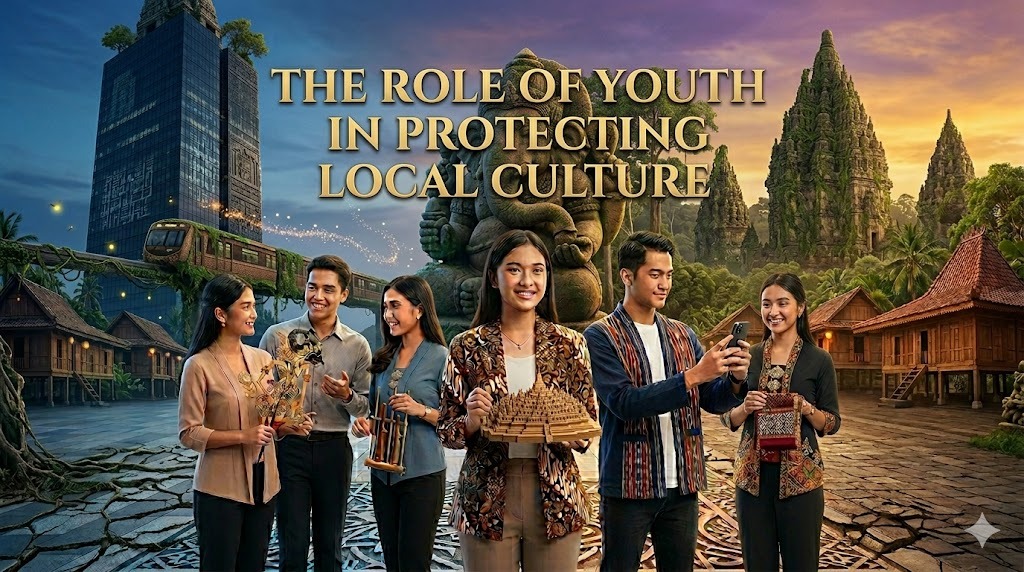
Local culture is one of the most valuable identities of a nation. Traditional dances, local languages, traditional clothing, music, and customs reflect the history and uniqueness of a community. However, in the modern era, globalization and technological development have caused many young people to become more familiar with foreign cultures than their own traditions.
This condition makes the role of youth increasingly important in protecting and preserving local culture. Young generations are not only the future of a nation but also the guardians of cultural heritage. By actively participating in cultural preservation, youth can help ensure that local traditions continue to survive in the future.
THE IMPORTANCE OF LOCAL CULTURE
Local culture is more than just tradition. It represents the identity, values, and history of a society. Every cultural element contains moral lessons, social values, and wisdom passed down from generation to generation.
Preserving local culture is important because it helps strengthen national identity. A nation that respects its culture will have stronger unity and pride. In addition, cultural diversity can become an attraction in tourism and support the creative economy.
CHALLENGES IN PRESERVING LOCAL CULTURE
Despite its importance, local culture faces many challenges in modern society. Some of the main challenges include:
### GLOBALIZATION
Foreign cultures spread rapidly through social media, movies, and digital platforms. Many young people tend to follow global trends while ignoring traditional values.
### LACK OF CULTURAL EDUCATION
Some young people do not fully understand the history and meaning behind local traditions. This lack of knowledge can reduce their sense of belonging toward their culture.
### MODERN LIFESTYLE
Modern lifestyles often prioritize practicality and entertainment, making traditional cultural activities less attractive to younger generations.
THE ROLE OF YOUTH IN CULTURAL PRESERVATION
Young people have a significant role in protecting local culture. Their creativity and connection with technology can help traditional culture remain relevant in modern times.
### LEARNING ABOUT LOCAL TRADITIONS
Youth should actively learn about local customs, languages, dances, and traditional arts. Understanding cultural roots is the first step toward preservation.
### PARTICIPATING IN CULTURAL EVENTS
Joining cultural festivals, art performances, and traditional ceremonies can help keep local traditions alive and appreciated by society.
### USING SOCIAL MEDIA FOR CULTURE
Social media can become a powerful tool for promoting local culture. Young people can create creative content about traditional food, music, or local history to attract wider audiences.
### SUPPORTING LOCAL PRODUCTS
Buying and promoting traditional crafts, local fashion, and handmade products can help preserve cultural heritage while supporting local communities.
BENEFITS OF PROTECTING LOCAL CULTURE
Protecting local culture provides many positive impacts. It strengthens national identity, increases social unity, and teaches younger generations about respect and diversity.
In addition, preserving culture can create economic opportunities through tourism and creative industries. Traditional arts, cultural festivals, and local crafts can attract both domestic and international visitors.
CONCLUSION
Youth play a crucial role in protecting local culture in the modern era. Through education, participation, creativity, and technology, young generations can help preserve cultural heritage for the future.
Protecting local culture is not only about maintaining traditions but also about preserving national identity and pride. By appreciating and promoting local culture, youth can ensure that cultural values continue to thrive in a rapidly changing world.
About the Author
Gusti Ayu Tita
Author — STEKOM University
An active author focused on academic issues, educational technology, and human resource development in the campus environment.



