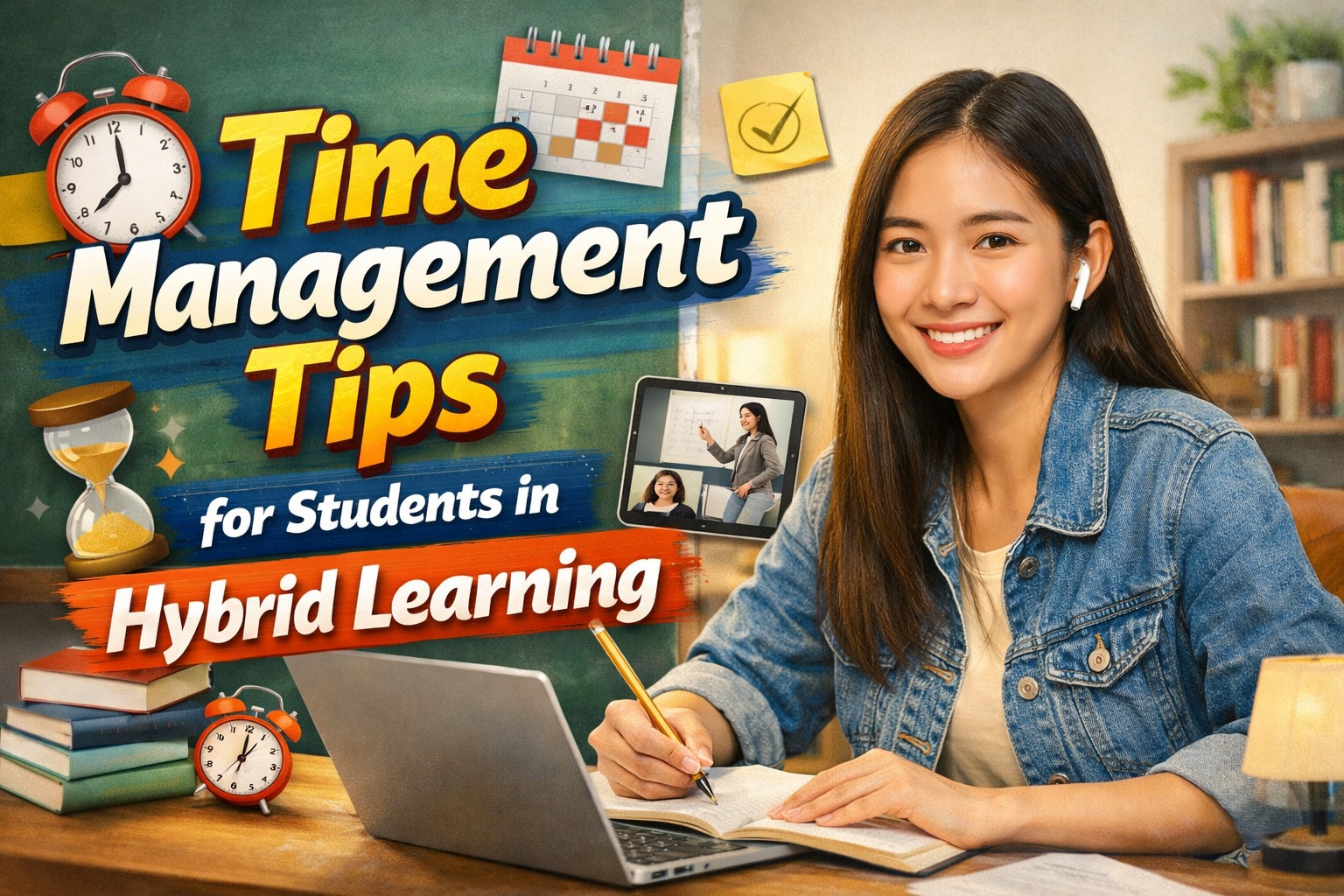
Hybrid learning has transformed the way students study by combining online and face-to-face classes. This learning model offers flexibility, but it also requires students to manage their time more effectively. Without proper planning, students may struggle to balance assignments, virtual meetings, classroom activities, and personal responsibilities.
Good time management is one of the most important skills for success in hybrid learning. By organizing tasks and creating productive habits, students can improve academic performance while reducing stress. Here are some practical time management tips that can help students stay focused and productive.
CREATE A CONSISTENT STUDY SCHEDULE
One of the best ways to succeed in hybrid learning is to establish a consistent study schedule. Students should allocate specific hours for attending online classes, reviewing lessons, completing assignments, and preparing for exams. A fixed routine helps the brain adapt to learning activities and reduces procrastination.
Consistency also makes it easier to balance academic and personal commitments. Whether studying from home or attending classes on campus, having a structured schedule ensures that important tasks are completed on time. Students who follow a regular study plan are generally more organized and less overwhelmed.
PRIORITIZE TASKS BASED ON IMPORTANCE
Students often face multiple assignments, projects, and exams at the same time. To avoid feeling overwhelmed, it is important to prioritize tasks according to deadlines and difficulty levels. Creating a daily or weekly to-do list can help identify which tasks require immediate attention.
A simple prioritization method allows students to focus on high-impact activities first. Completing important tasks before less urgent ones improves productivity and prevents last-minute stress. This approach also helps students maintain better control over their workload.
USE DIGITAL TOOLS FOR ORGANIZATION
Technology can be a valuable resource for managing time effectively in hybrid learning. Students can use digital calendars, task management apps, and reminder tools to keep track of deadlines and class schedules. These tools provide notifications that help prevent missed assignments or forgotten meetings.
Digital organization tools also improve planning and coordination. By keeping all academic information in one place, students can easily monitor progress and adjust their schedules when necessary. Effective use of technology supports a more organized and efficient learning experience.
AVOID MULTITASKING DURING STUDY SESSIONS
Many students believe multitasking increases productivity, but it often leads to reduced concentration and lower-quality work. Focusing on one task at a time allows students to fully understand the material and complete assignments more efficiently.
During study sessions, students should minimize distractions from social media, messaging apps, and unnecessary notifications. Creating a dedicated learning environment helps maintain attention and improves overall academic performance. Concentrated effort usually produces better results than trying to handle multiple tasks simultaneously.
SET REALISTIC GOALS AND DEADLINES
Setting realistic goals helps students stay motivated and organized throughout the semester. Large projects can be divided into smaller tasks with achievable deadlines. This strategy makes assignments feel more manageable and reduces the risk of procrastination.
Clear goals also provide a sense of direction and accomplishment. As students complete each step, they build confidence and maintain momentum. Regularly reviewing progress ensures that goals remain relevant and achievable.
MAKE TIME FOR REST AND SELF-CARE
Effective time management is not only about studying. Students should also schedule time for rest, exercise, hobbies, and social activities. Maintaining a healthy balance between academic responsibilities and personal well-being is essential for long-term success.
Adequate sleep and regular breaks improve concentration, memory, and overall productivity. Students who take care of their physical and mental health are better prepared to handle the demands of hybrid learning. A balanced lifestyle supports both academic achievement and personal growth.
CONCLUSION
Hybrid learning offers flexibility and convenience, but it also requires strong time management skills. By creating a structured schedule, prioritizing tasks, using digital tools, avoiding multitasking, setting realistic goals, and maintaining a healthy balance, students can maximize their learning experience. Effective time management not only improves academic performance but also helps students develop valuable life skills that will benefit them in the future.
About the Author
Gusti Ayu Tita P
Author — STEKOM University
An active author focused on academic issues, educational technology, and human resource development in the campus environment.