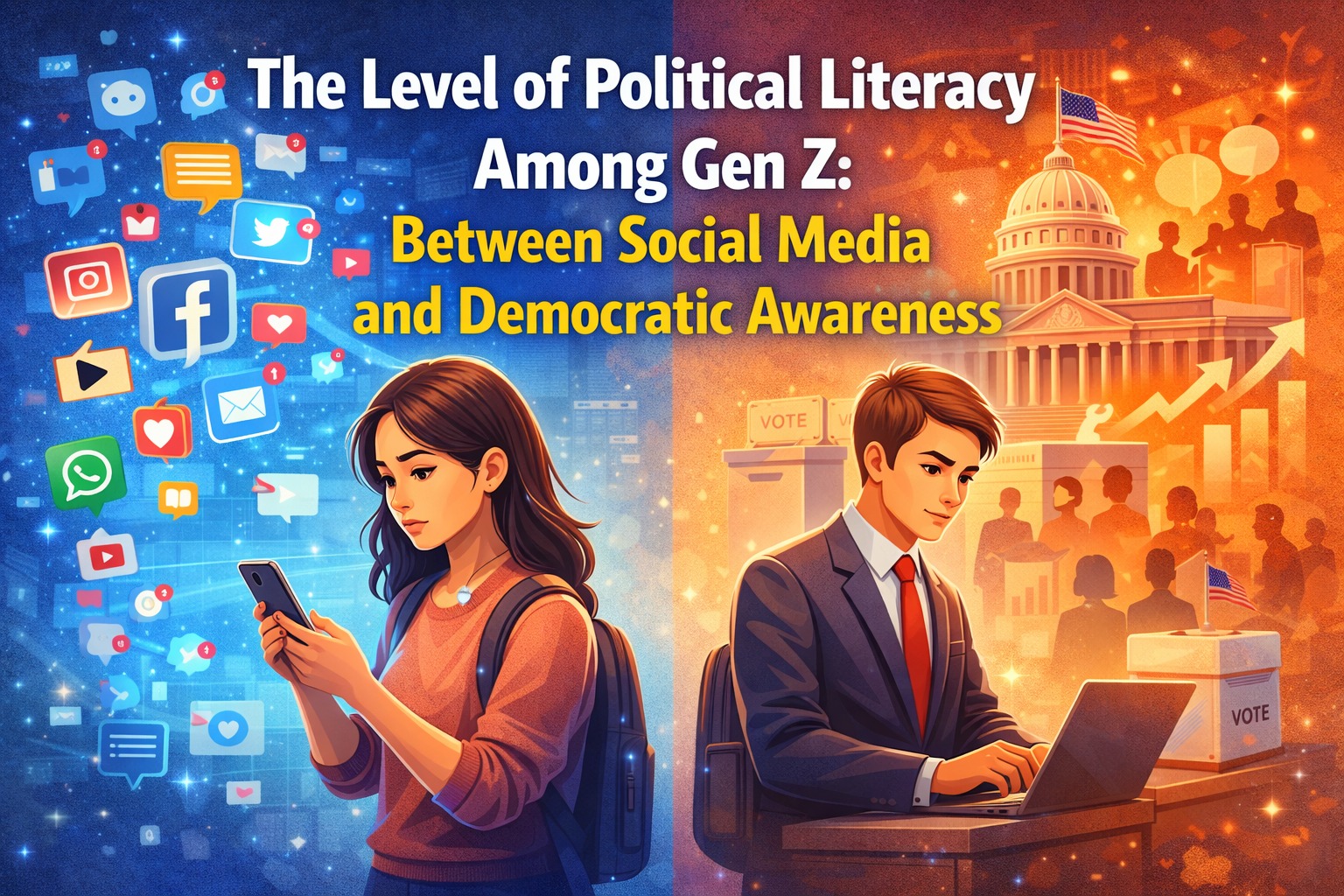
Generation Z, or Gen Z, is known as a generation that has grown up amid the rapid development of digital technology. Social media has become their primary space for accessing information, including political issues. However, the high exposure to information does not always align with an adequate level of political literacy. This condition raises an important question: to what extent has Gen Z’s political literacy developed, and how does it affect democratic awareness?
GEN Z AND DIGITAL CHARACTERISTICS
Gen Z refers to individuals born approximately between 1997 and 2012. They are accustomed to the internet, social media, and fast-paced information flows. In the political context, Gen Z obtains most of its information through platforms such as Instagram, TikTok, X (Twitter), and YouTube rather than conventional media. This pattern of consuming short, visual, and fast content shapes their way of thinking and political attitudes.
However, the ease of access to information also carries risks. Much political content on social media is superficial, biased, or even contains disinformation. Without strong political literacy skills, Gen Z is vulnerable to accepting information at face value without verification.
THE ROLE OF SOCIAL MEDIA IN POLITICAL LITERACY
Social media has two sides in shaping Gen Z’s political literacy. On one hand, it opens spaces for discussion, broadens political insight, and encourages public participation. Digital political campaigns, election education, and democratic issues can be accessed easily by Gen Z.
On the other hand, social media algorithms tend to display content that aligns with users’ preferences. This can create echo chambers that limit critical perspectives. As a result, Gen Z’s political understanding may become narrow and emotional rather than based on rational analysis.
THE CURRENT LEVEL OF GEN Z’S POLITICAL LITERACY
Political literacy does not only involve knowledge of political systems but also the ability to think critically, understand citizens’ rights and obligations, and participate consciously in democracy. In general, Gen Z’s level of political literacy varies. Some actively follow political issues and dare to voice opinions, while others are apathetic or merely follow trends.
The lack of contextual and engaging political education is one of the factors contributing to low political literacy. Political education is often perceived as boring and disconnected from Gen Z’s real-life experiences.
IMPACT ON DEMOCRATIC AWARENESS
Low political literacy can directly affect the quality of democracy. As first-time voters, Gen Z plays a strategic role in shaping the direction of democracy. If their political literacy is weak, political participation tends to be symbolic, uncritical, and easily influenced by hoaxes or propaganda.
Conversely, strong political literacy will encourage Gen Z to become democratically aware citizens who actively participate and are capable of monitoring government performance. This is essential for maintaining a healthy and sustainable democracy.
EFFORTS TO IMPROVE GEN Z’S POLITICAL LITERACY
Improving Gen Z’s political literacy requires collaboration among various stakeholders. Educational institutions need to integrate political education that is relevant to digital life. Governments and election organizers can utilize social media as a creative and informative platform for political education.
In addition, Gen Z must be equipped with digital literacy skills to filter valid and responsible information. In this way, social media can become not only a space for entertainment but also an effective medium for political learning.
CONCLUSION
Gen Z’s level of political literacy stands at a crossroads between the influence of social media and democratic awareness. Social media can be a powerful tool to enhance political literacy, but it can also be misleading if not balanced with critical thinking skills. Therefore, strengthening Gen Z’s political literacy is a key factor in building a high-quality democracy in the future.
**Keywords:**
About the Author
Gusti Ayu Tita
Author — STEKOM University
An active author focused on academic issues, educational technology, and human resource development in the campus environment.