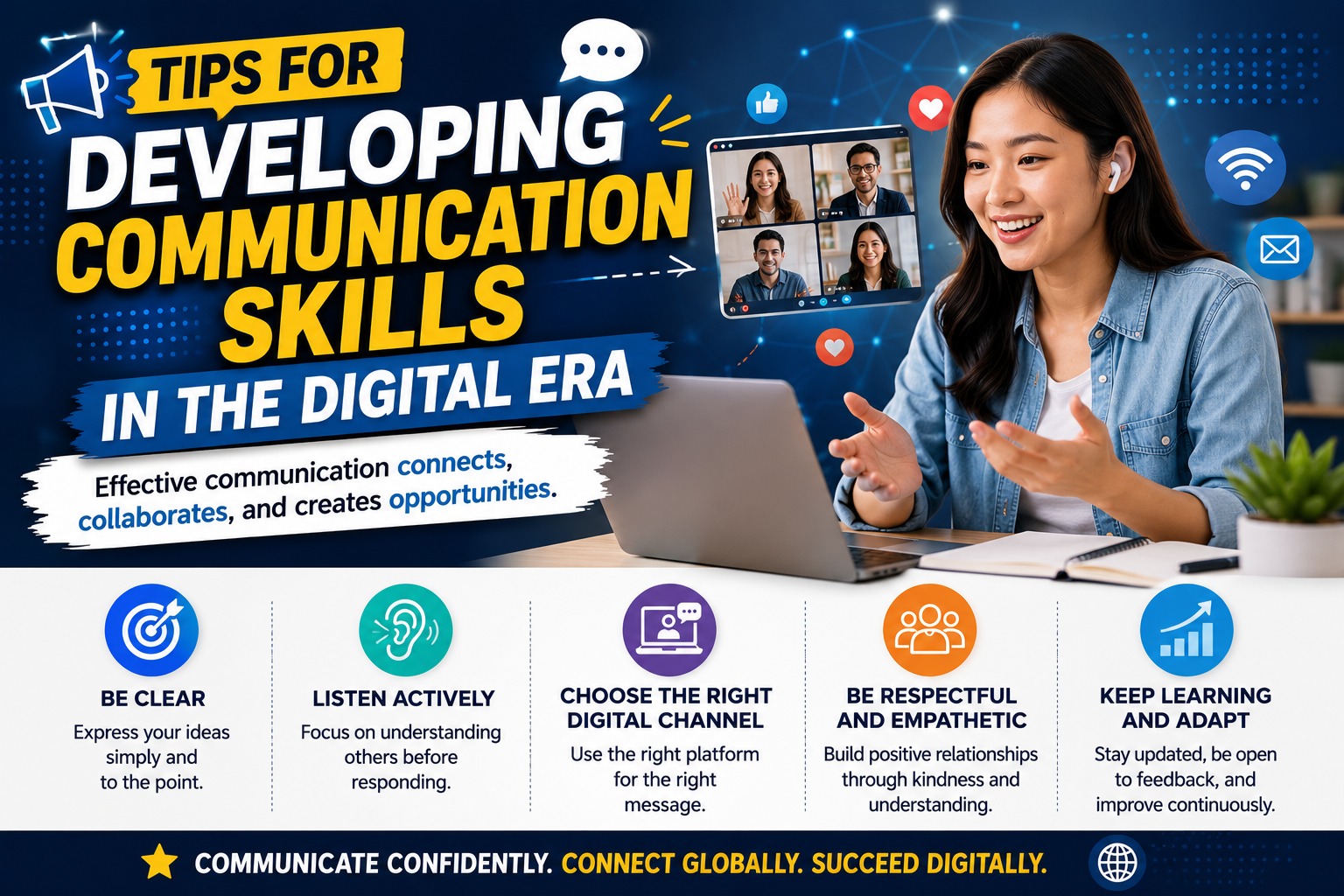
Communication skills have become increasingly important in the digital era. Technology has changed the way people interact, share information, and build relationships. Today, communication happens not only through face-to-face conversations but also through emails, social media, video calls, and messaging applications. Because of this rapid digital transformation, individuals need strong communication skills to communicate effectively in both personal and professional environments.
Developing communication skills in the digital age requires more than simply learning how to speak clearly. It also involves understanding digital etiquette, improving online interaction, and adapting communication styles to different platforms.
UNDERSTANDING DIGITAL COMMUNICATION
Digital communication refers to the exchange of information through electronic devices and online platforms. It includes emails, instant messaging, social media, virtual meetings, and online collaboration tools.
Unlike direct communication, digital communication often lacks facial expressions and body language. Therefore, people must pay close attention to word choice, tone, and clarity to avoid misunderstandings.
IMPROVE WRITTEN COMMUNICATION SKILLS
Written communication is one of the most important skills in the digital era. Emails, messages, and online discussions are widely used in education, business, and social interactions.
To improve written communication, use clear and simple language. Organize ideas properly and avoid overly complicated sentences. Correct grammar and spelling also help create a professional and credible impression.
Before sending digital messages, review them carefully to ensure the information is accurate and respectful.
PRACTICE ACTIVE LISTENING IN VIRTUAL COMMUNICATION
Active listening remains essential even in online communication. During video calls or virtual meetings, focus fully on the speaker and avoid distractions.
Pay attention to tone of voice, key points, and conversation flow. Asking relevant questions and responding thoughtfully can improve understanding and create better communication experiences.
DEVELOP CONFIDENCE IN ONLINE SPEAKING
Many people feel nervous during online presentations or virtual meetings. Practicing online speaking skills can help improve confidence and communication effectiveness.
Prepare your material before virtual discussions and speak clearly at a steady pace. Maintaining eye contact with the camera and using professional body language can also improve your online presence.
The more often you participate in virtual communication, the more comfortable and confident you will become.
LEARN DIGITAL ETIQUETTE
Digital etiquette, often called “netiquette,” is important for maintaining respectful online interactions. Good digital etiquette includes responding politely, respecting others’ opinions, and avoiding offensive language.
In professional communication, avoid writing messages in all capital letters because they may appear aggressive. Use respectful greetings and maintain professionalism in emails and online conversations.
Practicing good digital manners helps build positive relationships and improves communication quality.
USE SOCIAL MEDIA WISELY
Social media has become one of the main communication platforms in modern society. While social media offers many benefits, it should be used responsibly.
Think carefully before posting comments or sharing information online. Positive and respectful communication helps create a healthy digital environment and protects personal reputation.
Using social media wisely can also help individuals build professional networks and improve communication opportunities.
EXPAND VOCABULARY AND LANGUAGE SKILLS
Strong vocabulary and language abilities improve communication in both online and offline environments. Reading articles, books, and professional content can help increase vocabulary naturally.
Learning new words and communication styles allows individuals to express ideas more effectively in digital conversations and professional interactions.
ADAPT TO DIFFERENT COMMUNICATION PLATFORMS
Different digital platforms require different communication styles. Communication on social media may be more casual, while emails and business meetings require a formal tone.
Understanding the appropriate communication style for each platform helps improve professionalism and reduces misunderstandings.
CONTINUE PRACTICING AND LEARNING
Communication skills develop through consistent practice and experience. Participate in online discussions, virtual meetings, and collaborative activities to improve communication abilities regularly.
Learning from feedback and observing effective communicators can also help individuals improve their digital communication skills over time.
CONCLUSION
Developing communication skills in the digital era is essential for success in education, careers, and social interactions. Improving written communication, practicing active listening, understanding digital etiquette, and adapting to different online platforms can help individuals communicate more effectively. With continuous practice and responsible technology use, anyone can become a confident and skilled communicator in the modern digital world.
About the Author
Gusti Ayu Tita
Author — STEKOM University
An active author focused on academic issues, educational technology, and human resource development in the campus environment.