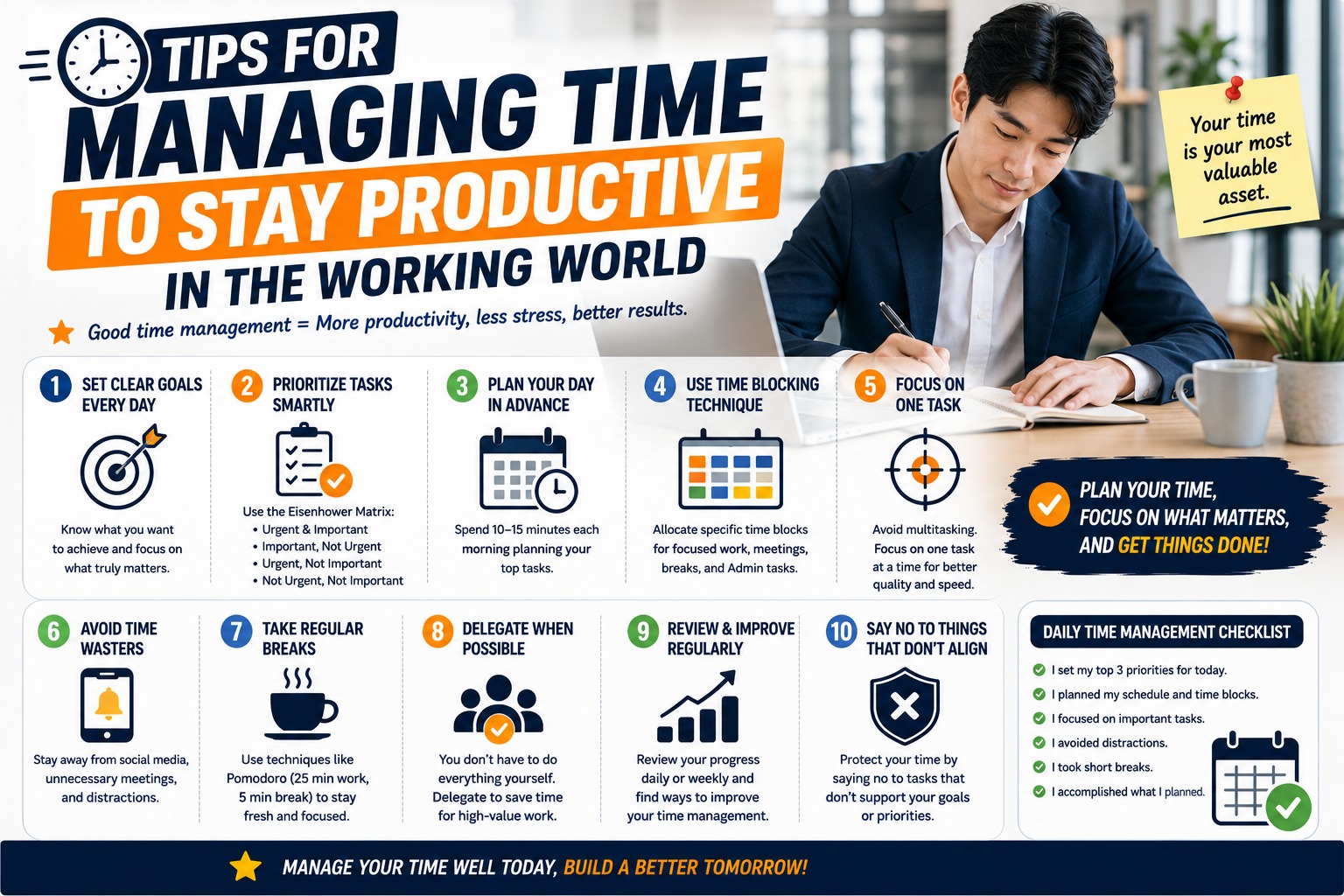
Time management is one of the most important skills for achieving success in the professional world. Employees often face multiple responsibilities, deadlines, meetings, and unexpected tasks every day. Without proper time management, productivity can decrease and stress levels may increase. Professionals who manage their time effectively are usually more organized, efficient, and capable of maintaining a healthy work-life balance. Developing good time management habits can help employees work smarter and achieve better career performance.
SET CLEAR DAILY PRIORITIES
One of the best ways to manage time effectively is by setting priorities. Start each day by identifying the most important tasks that need immediate attention. Focus on high-priority responsibilities before handling less important activities.
Creating a to-do list can help employees stay organized and avoid forgetting important tasks. Prioritizing work also improves focus and prevents wasted time on unnecessary activities.
CREATE A WORK SCHEDULE
Having a clear schedule helps employees organize their daily activities more efficiently. Allocate specific time periods for meetings, project work, communication, and breaks.
A structured schedule reduces confusion and allows employees to manage workloads more effectively. Using digital calendars or productivity applications can also help improve consistency and organization.
AVOID PROCRASTINATION
Delaying tasks is one of the biggest obstacles to productivity. Procrastination can create unnecessary pressure and increase stress when deadlines approach.
Breaking large tasks into smaller steps can make work feel more manageable. Starting tasks immediately, even with small progress, helps build momentum and maintain productivity throughout the day.
LEARN TO FOCUS ON ONE TASK AT A TIME
Multitasking often reduces work quality and concentration. Focusing on one task at a time allows employees to complete responsibilities more efficiently and accurately.
Minimizing distractions such as unnecessary notifications, excessive social media use, or unrelated conversations can help improve concentration and productivity.
SET REALISTIC DEADLINES
Setting achievable deadlines is important for maintaining work quality and reducing stress. Unrealistic expectations can lead to burnout and lower productivity.
Employees should estimate the time required for each task carefully and leave room for unexpected situations. Realistic planning helps maintain balance and improve performance consistency.
TAKE SHORT BREAKS REGULARLY
Working continuously without rest can reduce focus and energy levels. Taking short breaks helps refresh the mind and improve concentration.
Simple activities such as stretching, walking briefly, or resting the eyes can increase productivity and reduce fatigue during busy workdays.
DEVELOP DISCIPLINE AND CONSISTENCY
Discipline is the foundation of effective time management. Employees who consistently follow schedules and complete tasks on time are usually more productive and reliable.
Building consistent habits such as arriving on time, planning ahead, and avoiding distractions can significantly improve long-term work performance.
LEARN TO SAY NO WHEN NECESSARY
Accepting too many responsibilities at once can reduce efficiency and increase stress. Employees should learn to manage workloads realistically and avoid overcommitting themselves.
Politely declining unnecessary tasks or delegating responsibilities when possible can help maintain productivity and work quality.
USE TECHNOLOGY WISELY
Technology can support better time management when used effectively. Productivity tools, reminder applications, project management software, and digital calendars can help employees stay organized and monitor deadlines.
However, employees should also avoid excessive distractions from social media or non-work-related online activities during working hours.
MAINTAIN A HEALTHY WORK-LIFE BALANCE
Productivity is not only about working harder but also about maintaining physical and mental well-being. Employees who balance work responsibilities with rest, exercise, hobbies, and family time usually perform better in the long term.
A healthy balance helps reduce stress, maintain motivation, and improve overall job satisfaction.
CONCLUSION
Managing time effectively is essential for staying productive in the working world. By setting priorities, avoiding procrastination, maintaining discipline, and balancing work with personal well-being, employees can improve efficiency and reduce stress. Good time management habits not only increase productivity but also support long-term career success and professional growth.
About the Author
Gusti Ayu Tita
Author — STEKOM University
An active author focused on academic issues, educational technology, and human resource development in the campus environment.