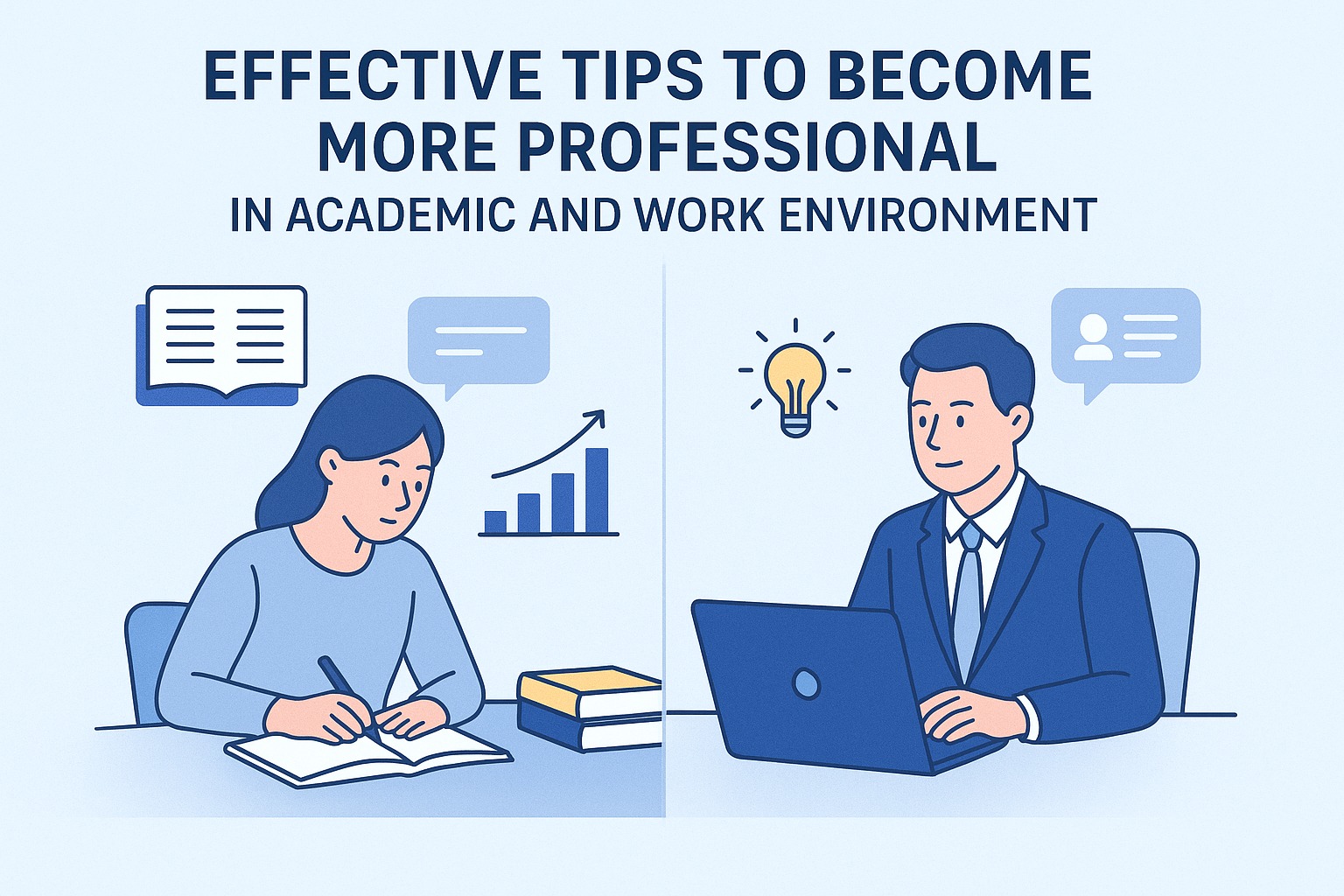
Smart Tips to Be More Professional in Academic and Work Environments
Professionalism is not just about technical skills. How you behave, manage time, communicate, and complete tasks influences how others perceive your quality. The more professional you are, the more trust you earn—from lecturers, colleagues, and supervisors.
1. MASTER EFFECTIVE TIME MANAGEMENT
A core characteristic of professionalism is time discipline.
Tips:
- Record assignments, meeting schedules, and deadlines
- Prioritize important or urgent tasks
- Avoid procrastination
2. MAINTAIN GOOD ATTITUDE AND COMMUNICATION ETIQUETTE
Professional communication means being polite, clear, and effective.
- Use appropriate language with lecturers and colleagues
- Avoid excessively short responses like “ok” or “yes”
- Focus on key points when presenting
- Do not interrupt others
3. BE RESPONSIBLE AND CONSISTENT
A professional individual is reliable.
- Complete tasks on time
- Avoid unnecessary excuses
- Deliver consistently high-quality work
4. BE OPEN TO FEEDBACK AND LEARN NEW THINGS
Criticism is part of academic and work environments. Treat it as a growth opportunity.
5. DRESS APPROPRIATELY
Appearance influences first impressions.
6. BUILD GOOD RELATIONSHIPS
Professionalism also appears in how you treat others.
7. ALWAYS STRIVE TO GIVE YOUR BEST
Preparation and high standards reflect professionalism.
CONCLUSION
Becoming more professional requires ongoing effort. With the right habits, you can build a strong reputation and unlock more opportunities.
About the Author
Gusti Ayu Tita
Author — STEKOM University
An active author focused on academic issues, educational technology, and human resource development in the campus environment.