
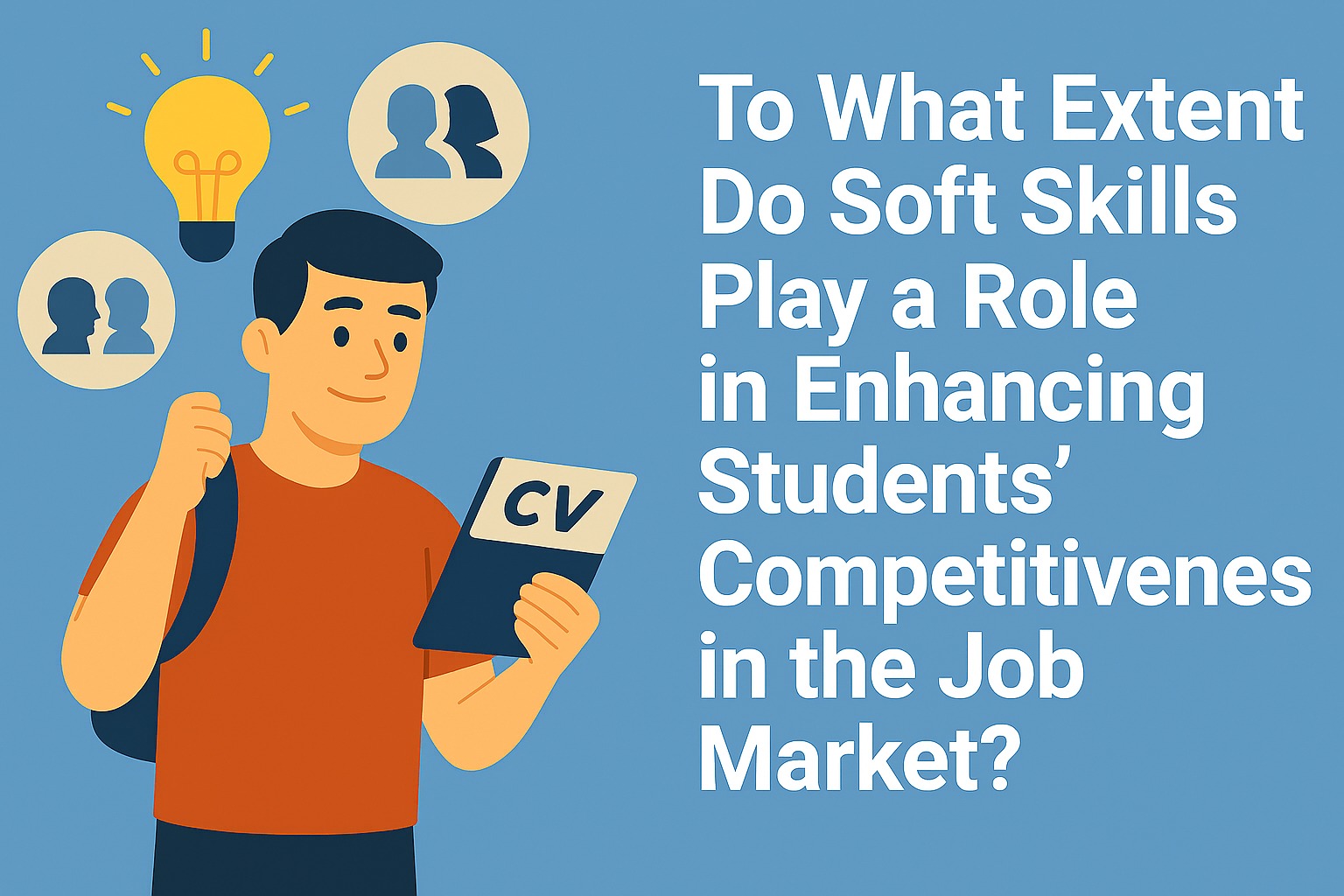
In the increasingly competitive job market, students preparing to enter the workforce need more than just academic proficiency. Today’s companies are not only looking for candidates with high academic scores but also those with deep non-technical skills. These skills, known as soft skills , are critical in setting students apart in the eyes of recruiters. So, how significant are soft skills in enhancing students' competitiveness in the job market? This article will explore the importance of soft skills for students and how these skills can distinguish them in the eyes of employers.
WHAT ARE SOFT SKILLS AND THEIR ROLE IN THE JOB MARKET?
Soft skills are interpersonal skills that enable individuals to interact effectively with others. These include communication, leadership, time management, problem-solving, and teamwork. Unlike hard skills, which are technical and can be learned in academic settings, soft skills focus on how individuals interact and adapt in various professional situations.
In the job market, soft skills play a crucial role, especially in an ever-changing work environment. Employees who possess strong soft skills are generally better at adapting, collaborating with teams, and solving problems at the workplace. This makes soft skills an essential factor that is highly valued by employers.
DEVELOPING SOFT SKILLS DURING COLLEGE
Throughout their college years, students have many opportunities to develop soft skills through extracurricular activities. Campus organizations, event committees, and group projects are examples of activities that can help students enhance their non-technical skills. In these activities, students face situations that require communication, collaboration, and decision-making.
For instance, being the chairperson of a campus event enables students to develop leadership and time management skills. Similarly, participating in group discussions or debates helps students practice public speaking and critical thinking. Such hands-on experiences are incredibly valuable in the professional world.
THE IMPORTANCE OF COMMUNICATION IN SOFT SKILLS
One of the most crucial soft skills needed in the job market is effective communication. This skill involves not only speaking clearly and persuasively but also listening and responding appropriately. In a professional environment, good communication helps prevent misunderstandings and allows for better collaboration among colleagues.
Effective communication is also essential when dealing with clients or customers. Students with strong communication skills can more easily express their ideas, explain products or services, and build strong professional relationships. Therefore, communication skills are a key factor in improving students' competitiveness in the job market.
TEAMWORK: AN EQUALLY IMPORTANT SKILL
In addition to communication, the ability to work in teams is another soft skill that is highly sought after by many companies. Nearly every job in the workforce involves collaboration with others. Thus, companies look for candidates who can work well in teams, integrate different ideas and skills, and generate better solutions together.
In campus group activities or organizations, students can learn how to collaborate with people from diverse backgrounds. This process helps them understand different perspectives, adapt their working styles, and resolve conflicts constructively. All these skills are directly relevant to the workplace, where teamwork is often dynamic and essential.
PROBLEM-SOLVING AND DECISION-MAKING
The ability to solve problems and make decisions is also a critical aspect of soft skills. In the workforce, employees are frequently faced with complex situations that require quick and effective problem-solving. Students who have already dealt with problems in organizational activities or group projects are at a significant advantage.
For example, a student who has been part of an event committee and successfully dealt with challenges like budget delays or sudden schedule changes will have the ability to think creatively and make decisions quickly. This skill is highly valued by companies that need employees who can work under pressure and find the right solutions.
SOFT SKILLS AND CAREER OPPORTUNITIES
Large companies are increasingly aware that technical skills alone are not enough to meet the challenges of today’s work environment. They seek employees who have a combination of hard and soft skills. Students who can demonstrate that they not only possess technical knowledge but also have strong interpersonal skills will have a competitive edge.
Moreover, having strong soft skills also enhances long-term career prospects. Employees who can adapt well, communicate effectively, and collaborate in teams are more likely to progress quickly within a company. Soft skills help individuals build strong relationships with managers and colleagues, as well as showcase their leadership and innovative potential.
CONCLUSION
Soft skills play a vital role in enhancing students' competitiveness in the job market. Skills such as communication, teamwork, leadership, and problem-solving can distinguish one candidate from another. Students who develop their soft skills during college will be better prepared to face the challenges of the professional world and have better career opportunities.
Thus, students need to recognize that mastering soft skills is not only complementary to the hard skills they learn in college but also a key element in helping them stand out in an increasingly competitive job market.
About the Author
Gusti Ayu Tita
Author — STEKOM University
An active author focused on academic issues, educational technology, and human resource development in the campus environment.



