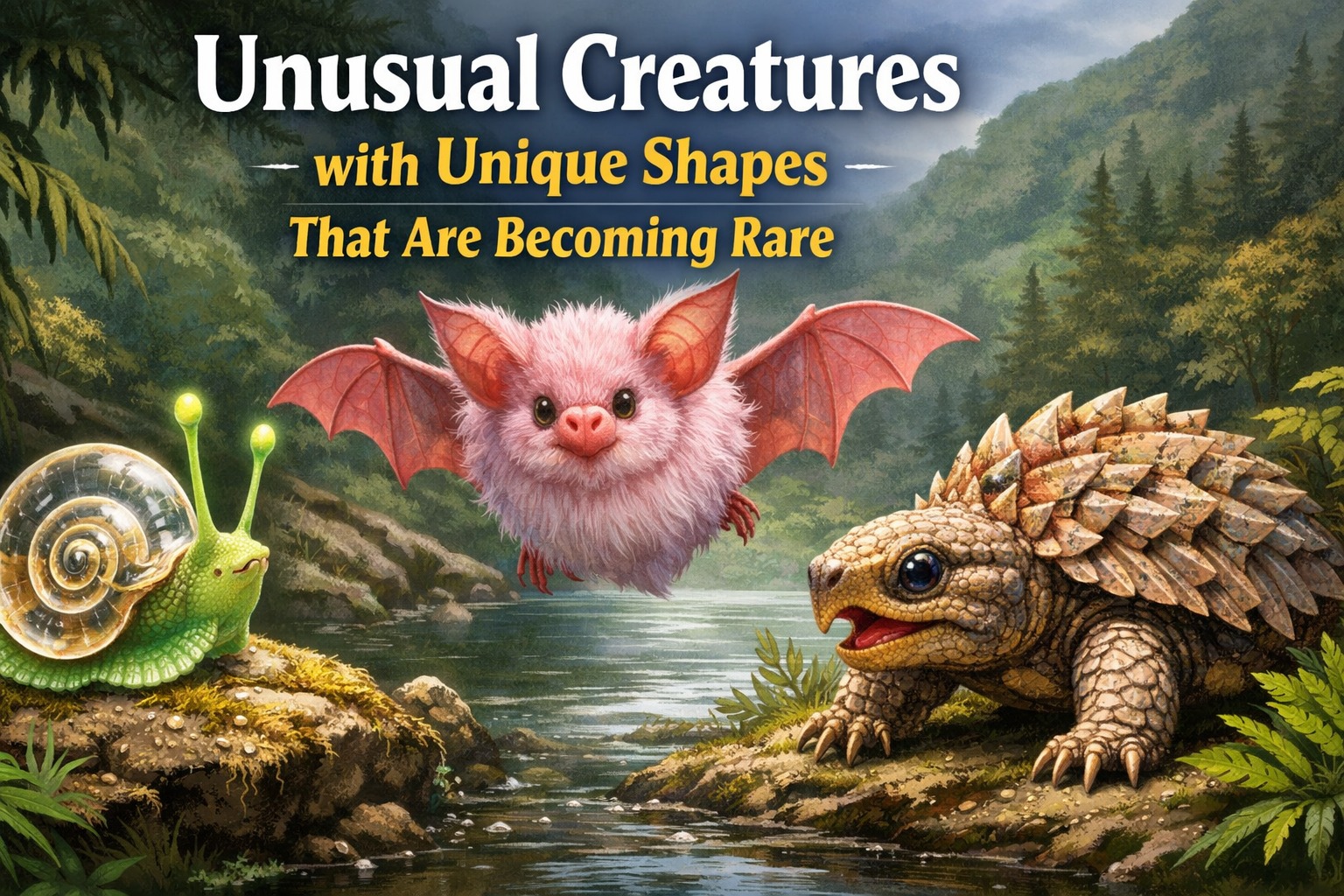
The world is home to many extraordinary animals with unusual appearances and fascinating survival abilities. However, rapid environmental destruction, climate change, illegal hunting, and habitat loss are causing several of these unique creatures to become increasingly rare. Protecting biodiversity is now more important than ever to ensure future generations can still witness these amazing species in the wild.
THE IMPORTANCE OF PROTECTING RARE ANIMALS
Rare animals play an essential role in maintaining ecological balance. Each species contributes to food chains, plant pollination, and ecosystem stability. When one species disappears, the natural environment can become disrupted, affecting countless other living organisms.
Many unusual animals are highly sensitive to environmental changes. Their declining populations often indicate larger environmental problems that could eventually impact humans as well.
UNIQUE CREATURES THAT ARE BECOMING ENDANGERED
AXOLOTL
The axolotl is one of the most unusual amphibians in the world. Native to Mexico, this creature keeps its larval features throughout its life, including its feathery external gills. Axolotls are famous for their incredible ability to regenerate body parts such as limbs, spinal cords, and even parts of the heart.
Unfortunately, pollution and urban development have drastically reduced their natural habitat, making them critically endangered.
SAOLA
Often called the “Asian Unicorn,” the saola is an extremely rare mammal found in the forests of Laos and Vietnam. It has long horns, unique facial markings, and a mysterious nature because it is rarely seen by humans.
Deforestation and illegal hunting continue to threaten the survival of this elusive species.
PANGOLIN
Pangolins are covered in protective keratin scales, giving them a very unusual appearance compared to other mammals. They curl into a tight ball when threatened, using their scales as armor.
Sadly, pangolins are among the most trafficked animals in the world due to illegal wildlife trade. Their scales and meat are highly sought after in black markets.
AYE-AYE
The aye-aye is a strange-looking primate native to Madagascar. It has large eyes, oversized ears, and a long thin middle finger used to find insects hidden inside tree bark.
Because of myths and superstitions, many local communities mistakenly view aye-ayes as bad omens, leading to unnecessary killings.
DUMBO OCTOPUS
Named after the famous flying elephant character because of its ear-like fins, the Dumbo octopus lives deep in the ocean. Its soft body and unique swimming style make it one of the cutest deep-sea creatures.
Deep-sea mining and ocean pollution may threaten these mysterious animals in the future, even though much about them remains unknown.
WHY THESE ANIMALS ARE DISAPPEARING
Several major factors contribute to the decline of rare species around the world:
- Habitat destruction caused by deforestation and urban expansion
- Illegal wildlife trade and poaching
- Climate change affecting ecosystems
- Pollution in oceans, rivers, and forests
- Human activities that disturb natural habitats
Without immediate conservation efforts, many unusual animals may disappear forever.
HOW HUMANS CAN HELP SAVE ENDANGERED CREATURES
Protecting rare animals requires cooperation between governments, organizations, and individuals. Simple actions can make a difference, including:
- Supporting wildlife conservation programs
- Reducing plastic and environmental waste
- Avoiding products made from endangered animals
- Educating others about biodiversity protection
- Supporting sustainable tourism and eco-friendly practices
Raising awareness is one of the most powerful ways to encourage people to care about endangered species.
CONCLUSION
Unusual creatures with unique shapes are valuable treasures of nature. From the regenerating axolotl to the mysterious saola, these animals remind us how diverse and extraordinary life on Earth truly is. Unfortunately, many of them are becoming increasingly rare due to human activities and environmental damage.
Protecting endangered species is not only about saving animals but also about preserving the balance of ecosystems for the future of humanity. By taking action today, we can help ensure these fascinating creatures continue to survive for generations to come.
About the Author
Gusti Ayu Tita
Author — STEKOM University
An active author focused on academic issues, educational technology, and human resource development in the campus environment.