
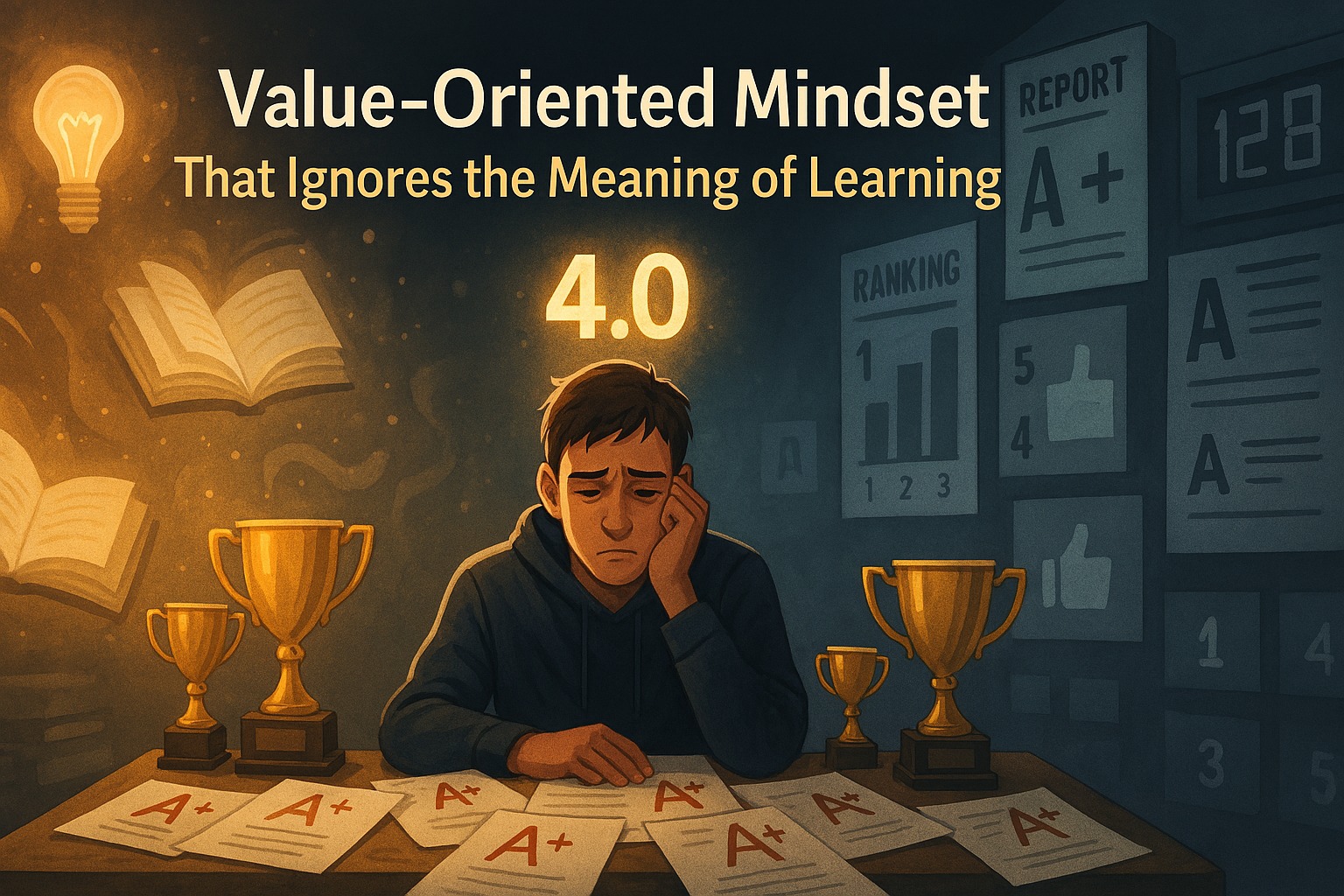
In today’s competitive academic climate, many students are driven by numbers—grades, rankings, GPA scores, and certificates. While measurable achievement is important, an excessive focus on academic value can slowly erode the deeper purpose of education. A value-oriented mindset that ignores the meaning of learning reduces education to a transactional process rather than a transformative journey.
This phenomenon is increasingly visible in schools and universities around the world. Students prioritize high scores over understanding, memorization over reflection, and recognition over growth. As a result, learning becomes a strategy for short-term success instead of long-term intellectual development.
Understanding the consequences of this mindset is essential. Education is not merely about collecting grades; it is about shaping critical thinkers, resilient individuals, and responsible citizens. When the meaning of learning is overlooked, both personal growth and academic integrity are at risk.
THE RISE OF PERFORMANCE-DRIVEN EDUCATION
Modern education systems often emphasize measurable outcomes. Standardized testing, academic rankings, and scholarship requirements contribute to a culture where performance indicators dominate the definition of success. Students quickly internalize the belief that numbers determine their worth.
This performance-driven environment encourages comparison. Learners compete not only with themselves but also with peers, sometimes sacrificing collaboration for individual advantage. The classroom becomes a competitive arena rather than a shared intellectual space.
Over time, this system reinforces external motivation. Students study to achieve high grades, secure awards, or gain recognition rather than to satisfy curiosity or deepen understanding. The joy of discovery gradually fades under the pressure of evaluation.
Although assessment is necessary, overemphasizing measurable results shifts attention away from meaningful engagement. Education becomes an obligation to fulfill requirements instead of an opportunity to explore ideas.
WHEN GRADES BECOME THE PRIMARY GOAL
When grades become the ultimate objective, learning strategies often change. Students may prioritize memorizing information likely to appear on exams rather than engaging in critical analysis. Efficiency replaces exploration.
This mindset can also foster academic shortcuts. Instead of investing time in mastering concepts, some learners focus on strategies that maximize scores with minimal intellectual effort. The process of learning becomes secondary to the outcome.
Moreover, grade-oriented thinking narrows intellectual curiosity. Subjects outside the grading system receive less attention, even if they are valuable for personal development. Students may ignore discussions, creative tasks, or reflective exercises if they do not directly influence final marks.
As a result, academic success appears strong on paper but weak in substance. High grades do not always reflect deep understanding, and students may struggle to apply knowledge in real-world contexts.
THE LOSS OF INTRINSIC MOTIVATION
Intrinsic motivation is the internal drive to learn out of curiosity and interest. When education is dominated by external rewards, this natural motivation declines. Students begin to associate learning with pressure rather than excitement.
Overreliance on extrinsic validation creates dependency. Learners may feel lost or unmotivated when rewards are absent. Without grades or praise, they struggle to see the value in continued effort.
This shift also affects creativity. Intrinsically motivated students are more likely to experiment, ask questions, and embrace challenges. In contrast, those focused solely on grades may avoid risks that could negatively affect their academic record.
Reclaiming intrinsic motivation requires a shift in perspective. Learning must be recognized as a lifelong process, not a temporary pursuit tied to evaluation systems.
IMPACT ON CRITICAL THINKING AND CHARACTER
A value-oriented mindset can limit the development of critical thinking skills. When students aim only to reproduce correct answers, they may avoid questioning assumptions or exploring alternative viewpoints.
Education should cultivate intellectual independence. However, a narrow focus on measurable success can encourage conformity. Students might prioritize what is “safe” or “expected” rather than developing original insights.
Character development also suffers. Patience, resilience, and ethical responsibility are nurtured through meaningful engagement, reflection, and sometimes failure. When failure is viewed solely as a threat to grades, students may avoid challenging experiences that foster growth.
True maturity in learning involves embracing complexity. It requires recognizing that education shapes not only knowledge but also integrity and perspective.
SOCIAL PRESSURE AND COMPARISON CULTURE
The rise of social media and digital platforms amplifies comparison among students. Academic achievements are often displayed publicly, reinforcing the idea that success must be visible and measurable.
This comparison culture intensifies pressure. Students may equate their self-worth with academic standing, leading to anxiety and insecurity. Instead of focusing on individual progress, they measure themselves against peers.
Such pressure can create a cycle of competition and stress. Collaboration, empathy, and mutual support become secondary to outperforming others. Learning shifts from a cooperative process to a ranking system.
Breaking this cycle requires redefining success. Education should celebrate improvement, effort, and understanding rather than solely highlighting top performers.
REDEFINING THE PURPOSE OF LEARNING
To counter a value-oriented mindset, educational institutions and students must revisit the fundamental purpose of learning. Education is a means of cultivating understanding, creativity, and responsible citizenship.
Teachers play a crucial role in this transformation. By encouraging discussion, reflection, and application, they can shift focus from grades to growth. Assessment methods can also incorporate qualitative feedback that emphasizes progress rather than only numerical results.
Students, too, must develop self-awareness. Recognizing that grades are indicators—not ultimate goals—helps restore balance. When learners view education as personal enrichment, academic performance often improves naturally.
Ultimately, meaningful learning prepares individuals for life beyond the classroom. It equips them with adaptability, empathy, and critical insight—qualities that cannot be measured solely by numbers.
BUILDING A BALANCED ACADEMIC MINDSET
A balanced mindset integrates achievement with understanding. Striving for excellence is valuable, but it should not overshadow the deeper meaning of education. Grades can serve as milestones, not destinations.
Developing this balance requires intentional effort. Students can practice reflective learning, ask open-ended questions, and engage in discussions that extend beyond exam preparation. These habits strengthen both knowledge and character.
Institutions can support this shift by valuing diverse forms of achievement, including creativity, collaboration, and community engagement. Recognizing multiple dimensions of success reduces overreliance on numerical evaluation.
In the end, education is not merely about reaching academic targets. It is about becoming thoughtful, capable, and ethical individuals. When the meaning of learning is restored, grades become part of the journey—not the definition of it.
About the Author
Gusti Ayu Tita
Author — STEKOM University
An active author focused on academic issues, educational technology, and human resource development in the campus environment.



