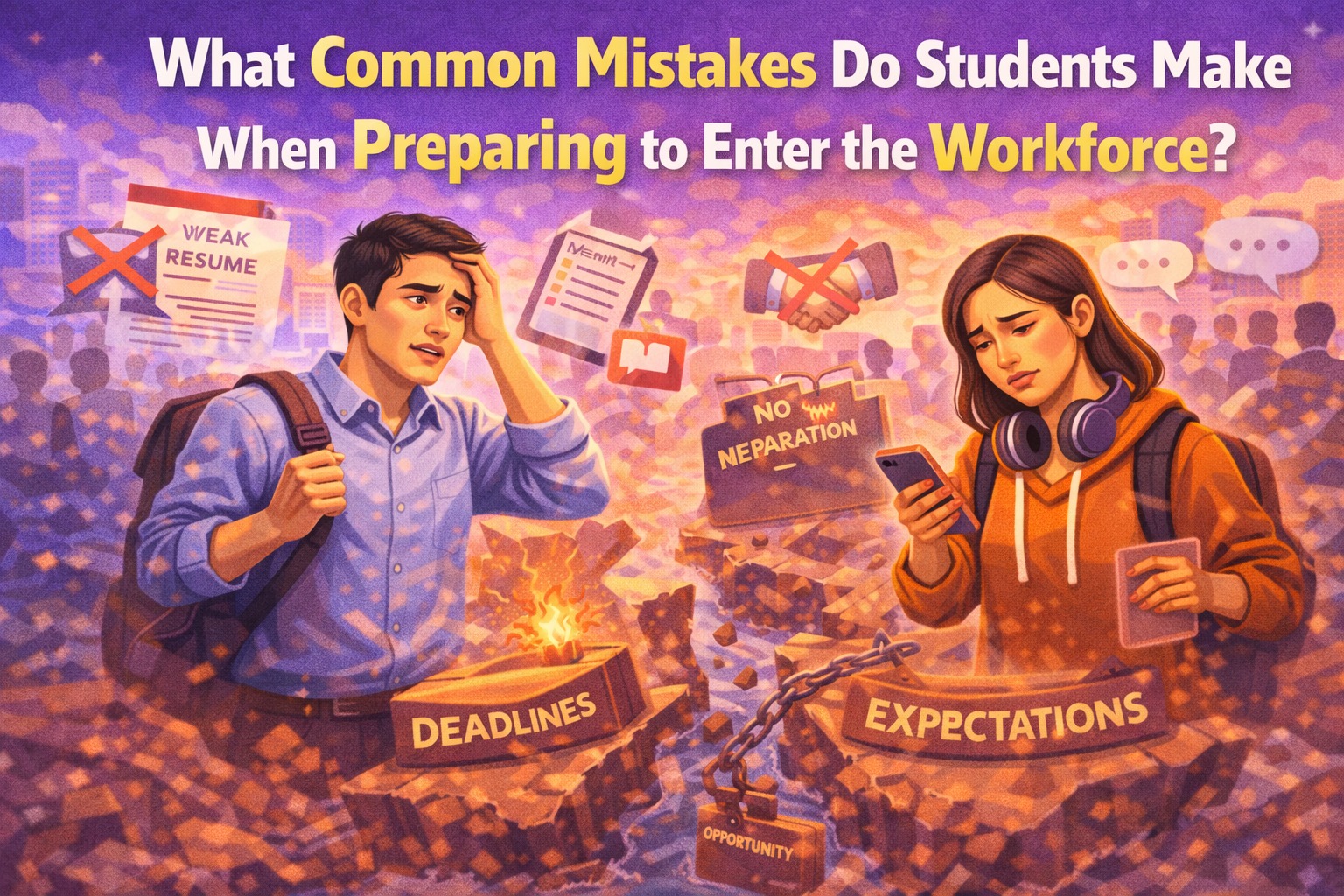
As graduation approaches, many students begin thinking seriously about their first steps into the workforce. However, not all students prepare effectively. Many common mistakes are often made unconsciously and only become apparent after graduation, when students face professional realities that differ greatly from their expectations.
Understanding these common missteps is an important step toward more mature and realistic career preparation.
FOCUSING TOO MUCH ON ACADEMIC GRADES
One of the most common mistakes students make is believing that academic grades alone determine job readiness. While a strong GPA is valuable, the workplace demands far more than academic achievements.
Employers also assess communication skills, teamwork, and problem-solving abilities—qualities that are not always reflected in academic transcripts.
NEGLECTING SOFT SKILL DEVELOPMENT
Many students spend most of their time completing assignments and preparing for exams while overlooking the importance of soft skills. Skills such as time management, leadership, and adaptability are essential in professional environments.
A lack of soft skills can make it difficult for new graduates to adjust, even if they perform well academically.
LACK OF PRACTICAL EXPERIENCE
Another common mistake is failing to take advantage of opportunities to gain practical experience. Internships, part-time jobs, and involvement in student organizations are often seen as optional or unimportant.
As a result, students may have limited understanding of real workplace conditions and feel unprepared when facing professional demands.
FAILING TO BUILD A PROFESSIONAL NETWORK
Many students underestimate the importance of building professional relationships while still in university. In reality, networking can open doors to job opportunities, industry insights, and professional recommendations.
Being inactive in networking can limit access to opportunities that are actually widely available.
NOT HAVING A CLEAR CAREER DIRECTION
Some students enter the workforce without a clear sense of career direction. This often leads to unfocused job applications and unnecessary confusion during the job search process.
Early career planning helps students identify which skills they need to develop and what types of experience they should pursue.
IGNORING MENTAL AND EMOTIONAL PREPAREDNESS
Preparing for the workforce involves more than technical competence; mental readiness is equally important. Work pressure, performance targets, and feedback from supervisors can be challenging for new graduates.
Students who are not mentally prepared may experience stress more easily and lose motivation during the early stages of their careers.
CONCLUSION
Mistakes in preparing for the workforce can significantly affect a student’s career journey. By recognizing and avoiding these common errors, students can improve their ability to adapt and grow in professional environments.
A balanced preparation that combines academic achievement, skills development, practical experience, networking, and mental resilience will serve as a strong foundation for entering the workforce with confidence.
About the Author
Gusti Ayu Tita P
Author — STEKOM University
An active author focused on academic issues, educational technology, and human resource development in the campus environment.