
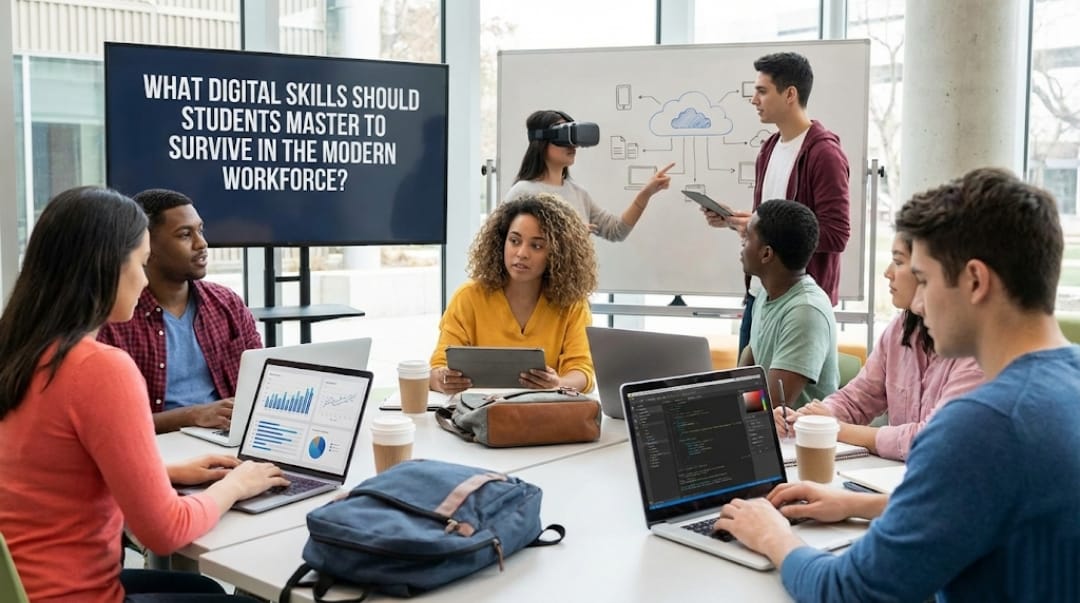
The modern workforce is evolving faster than ever. Technology influences how companies operate, communicate, and compete in global markets. For students preparing to enter this environment, academic knowledge alone is no longer enough. Employers increasingly expect graduates to demonstrate practical digital skills that align with industry needs.
So, what digital skills should students master to survive and thrive in the modern workforce? Below are the key competencies that can strengthen career readiness.
DIGITAL LITERACY AND TECHNOLOGY ADAPTABILITY
Digital literacy is the foundation of all other technical competencies. Students must understand how to use productivity software, online collaboration tools, and digital communication platforms effectively.
Beyond basic usage, adaptability is essential. Technology changes rapidly, and professionals who can quickly learn new tools have a competitive advantage. Being comfortable with updates, new platforms, and digital workflows prepares students for dynamic work environments.
Strong digital literacy also includes understanding online ethics, privacy awareness, and responsible technology use.
DATA ANALYTICS AND CRITICAL THINKING
Data driven decision making has become standard practice across industries. Even entry level roles often require interpreting reports, analyzing performance metrics, or drawing insights from data.
Students should develop basic data analytics skills such as working with spreadsheets, creating visualizations, and understanding key performance indicators. More importantly, they need critical thinking skills to interpret numbers accurately and apply findings to real situations.
Data literacy supports better problem solving and informed decision making.
DIGITAL COMMUNICATION AND ONLINE COLLABORATION
Remote and hybrid work models have made digital communication a core workplace skill. Students must learn to write professional emails, participate effectively in virtual meetings, and collaborate through cloud based platforms.
Clear communication in digital settings reduces misunderstandings and improves team productivity. Time management and accountability are also important when working in distributed teams.
Employers value graduates who can contribute confidently in online environments.
ARTIFICIAL INTELLIGENCE AWARENESS
Artificial Intelligence is increasingly integrated into business processes. While not every student needs to become a technical expert, understanding how AI tools function is beneficial.
Students can learn how to use AI for research, productivity, and data analysis. Awareness of AI limitations and ethical considerations is equally important. This balanced understanding prepares them to work alongside intelligent systems in the future.
AI awareness enhances efficiency and supports innovation.
DIGITAL MARKETING AND PERSONAL BRANDING
In a competitive job market, personal branding matters. Students who understand digital marketing principles can build a professional online presence that showcases their skills and achievements.
Knowledge of social media strategy, content creation, and basic search engine optimization can also open career opportunities in marketing, entrepreneurship, or freelancing.
Developing a positive digital footprint strengthens credibility in the eyes of potential employers.
CYBER SECURITY BASICS
As digital activity increases, so do cyber risks. Students should understand fundamental cyber security practices such as strong password management, data protection awareness, and recognizing phishing attempts.
Cyber security knowledge protects both personal and organizational data. Employers appreciate candidates who demonstrate responsible digital behavior.
This foundational awareness contributes to safer and more reliable work environments.
CONCLUSION
To succeed in the modern workforce, students must combine academic learning with practical digital skills. Digital literacy, data analytics, online communication, AI awareness, digital marketing, and cyber security basics are among the most important competencies to develop.
By investing in continuous learning and hands on experience, students can improve their employability and adapt to evolving industry demands. Mastering these digital skills today will help them navigate tomorrow’s professional landscape with greater confidence.
About the Author
Gusti Ayu Tita
Author — STEKOM University
An active author focused on academic issues, educational technology, and human resource development in the campus environment.



