
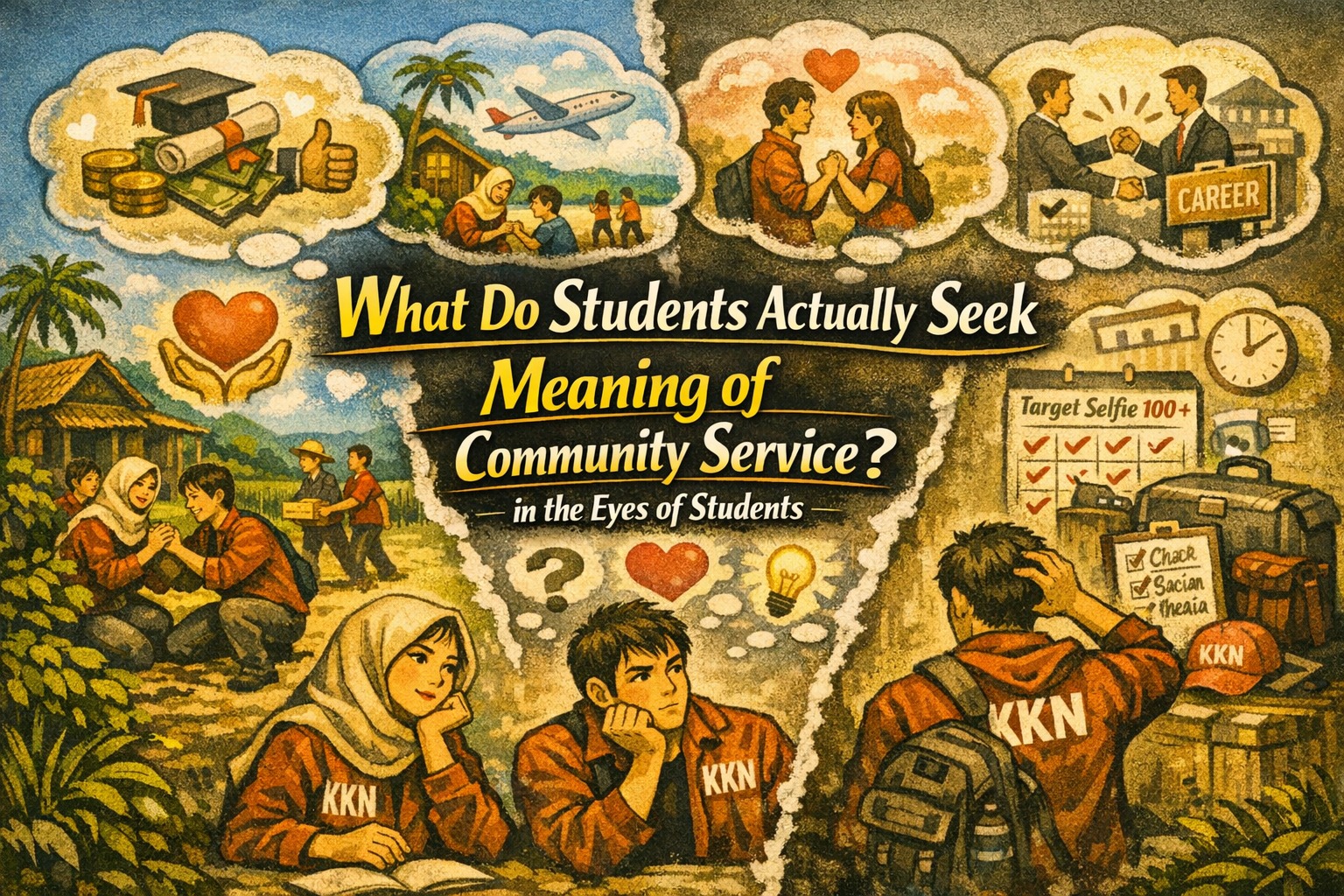
For many university students, KKN (Kuliah Kerja Nyata) is one of the most anticipated yet debated academic programs. Officially, it is designed as a form of community engagement and experiential learning. In reality, students join KKN with diverse expectations and motivations. This leads to an important question: what do students actually seek from the KKN program?
This article explores the real goals students pursue during KKN and how these expectations shape their overall experience.
ACADEMIC REQUIREMENTS AND GRADUATION GOALS
One of the most common reasons students participate in KKN is academic obligation. As a compulsory program tied to graduation, KKN is often viewed as a requirement that must be completed on time.
For many students, successfully passing KKN means earning credits, avoiding delays in graduation, and fulfilling institutional expectations. While this motivation is practical, it often becomes the dominant focus.
PRACTICAL EXPERIENCE BEYOND THE CLASSROOM
Beyond academic necessity, students also seek real-world experience. KKN offers exposure to social environments that differ significantly from campus life.
Students hope to apply theoretical knowledge in practical settings, improve communication skills, and understand how concepts work outside textbooks. This hands-on learning is one of the main attractions of the KKN program.
PERSONAL GROWTH AND SELF-DISCOVERY
Many students enter KKN expecting personal development. Living in new environments, working in teams, and facing unfamiliar challenges encourage independence and adaptability.
Through KKN, students often seek to discover their strengths, weaknesses, and values. These personal insights can be just as valuable as academic achievements.
SOCIAL CONTRIBUTION AND MEANINGFUL IMPACT
Despite criticism, a significant number of students genuinely want to contribute to society. They hope their presence and programs can offer positive change, even on a small scale.
For these students, KKN represents a chance to practice empathy, responsibility, and social awareness. The desire to feel useful and impactful remains a strong motivation.
SKILLS, NETWORKS, AND FUTURE BENEFITS
In a competitive academic and professional landscape, students also look for practical benefits. KKN is seen as an opportunity to develop soft skills, build networks, and gain experiences that strengthen future career prospects.
Teamwork, leadership, and problem-solving skills gained during KKN are often valued as long-term assets.
THE GAP BETWEEN EXPECTATION AND REALITY
While students seek various benefits, not all expectations are fulfilled. Limited time, unclear programs, or mismatched community needs can reduce satisfaction.
However, even unmet expectations often lead to important lessons about reality, compromise, and resilience—experiences that students may only appreciate later.
CONCLUSION
Students join the KKN program for many reasons, ranging from academic requirements to personal growth and social contribution. While motivations vary, most students seek experiences that extend beyond formal education.
Understanding what students actually seek from KKN can help institutions design programs that balance academic structure with meaningful learning. When expectations and reality align, KKN can become a transformative experience rather than just another requirement.
About the Author
Gusti Ayu Tita
Author — STEKOM University
An active author focused on academic issues, educational technology, and human resource development in the campus environment.



