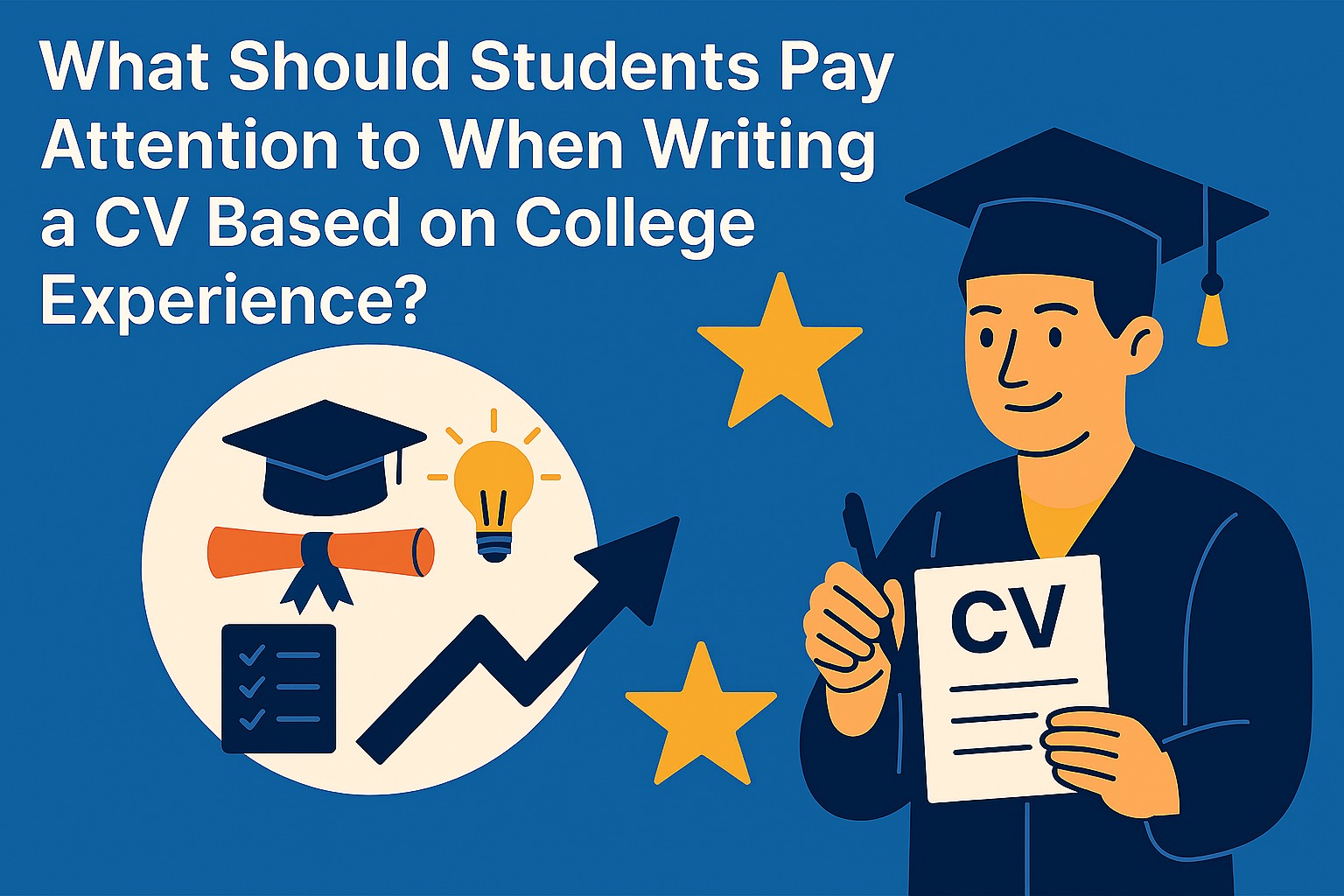
Creating a well-structured CV is an important first step for students who want to enter the workforce after graduation. For students, college experiences are one of the key assets that can be included in their CV. However, many students do not know how to effectively organize their CV based on their college experiences. This article will discuss the key points that students should consider when crafting their CV so that their college experiences become an attractive value proposition for employers.
THE IMPORTANCE OF SELECTING RELEVANT EXPERIENCES
The first step in writing a CV is selecting college experiences that are relevant to the job being sought. Not all experiences gained during college need to be included in a CV. Students should be selective about which experiences add value to the job they are applying for.
For example, if a student wants to apply for a job in marketing, experiences related to marketing organizations, internships at marketing companies, or marketing projects undertaken during college will be more relevant. On the other hand, experiences that are not directly related to the desired position can be minimized or adjusted to fit the context. By choosing relevant experiences, students can demonstrate that they have prepared themselves for the field they want to work in.
SHOWCASING THE REQUIRED SKILLS
When writing a CV based on college experience, it is essential to highlight the skills learned during study, both technical and soft skills. College experience is not just about academic grades, but also the practical skills acquired through activities such as campus organizations, internships, or group projects.
Skills like leadership, communication, time management, and teamwork are highly sought after in the professional world. Students should clearly write about these skills on their CV, especially those developed during their college experience. For example, if a student has served as the chairperson for a major event, it demonstrates managerial and leadership skills that are valuable to employers.
EXPLAINING ACHIEVEMENTS AND RESULTS
College experience will stand out more if it is accompanied by concrete achievements and results. Employers are typically more interested in outcomes than the process itself. Therefore, students should be able to explain the achievements they made while engaged in college activities, whether in the form of projects, research, or organizational activities.
For example, if a student was involved in research, they could include the research results, such as publications, conference presentations, or practical applications of the research. Similarly, for organizational activities, students could mention the number of participants involved, the budget managed, or awards received. Mentioning measurable results will provide concrete evidence of the student's contribution.
FOCUSING ON INDIVIDUAL CONTRIBUTION
When writing a CV, it is important to focus on individual contributions, not just listing tasks or roles within an activity. Employers want to know what the candidate has accomplished and how significant their contribution was to the success of a project or activity.
For instance, if a student was part of a team organizing a seminar, rather than just writing "Member of the seminar organizing team," it’s better to write, "Led the registration section, successfully managing over 200 seminar participants and reducing registration time by 30% through a new system." By highlighting individual contributions, students can show the added value they brought to the project or organization they were involved in.
MAINTAINING CLARITY AND ACCURATE FORMAT
A good CV should be clear, tidy, and easy to read. Students must ensure that the CV format they use is in line with professional standards. Use fonts that are easy to read, such as Arial or Times New Roman, with a font size that is comfortable (around 10-12 pt). Additionally, make sure that each section in the CV is clearly separated, such as academic experience, organizational experience, internships, and skills.
If any section is deemed unnecessary, it could be considered for removal. For example, if there is a long list of organizational experiences, it may not be necessary to include every extracurricular activity. Also, ensure that the information presented in the CV does not repeat or become overly verbose.
TAILORING THE CV TO THE COMPANY AND POSITION APPLIED FOR
Every job has different requirements, so students need to tailor their CV to the specific position they are applying for. If a student is applying for a job at a large company, they may need to highlight experience working in large teams or managing large projects. Conversely, if applying to a startup, experiences in taking initiative or working in a flexible environment may be more emphasized.
By tailoring the CV, students can demonstrate that they truly understand what the company and position require and have prepared their college experience to meet those needs.
CONCLUSION
Writing a CV based on college experience is an essential step for students who want to improve their chances of getting a job after graduation. By selecting relevant experiences, highlighting skills and achievements, and focusing on individual contributions, students can create a CV that is more appealing to employers. Additionally, maintaining a neat format and customizing the CV to fit the position applied for will further increase the likelihood of getting called for an interview. In this way, the college experiences students have can become a significant asset in the job market.
About the Author
Gusti Ayu Tita
Author — STEKOM University
An active author focused on academic issues, educational technology, and human resource development in the campus environment.