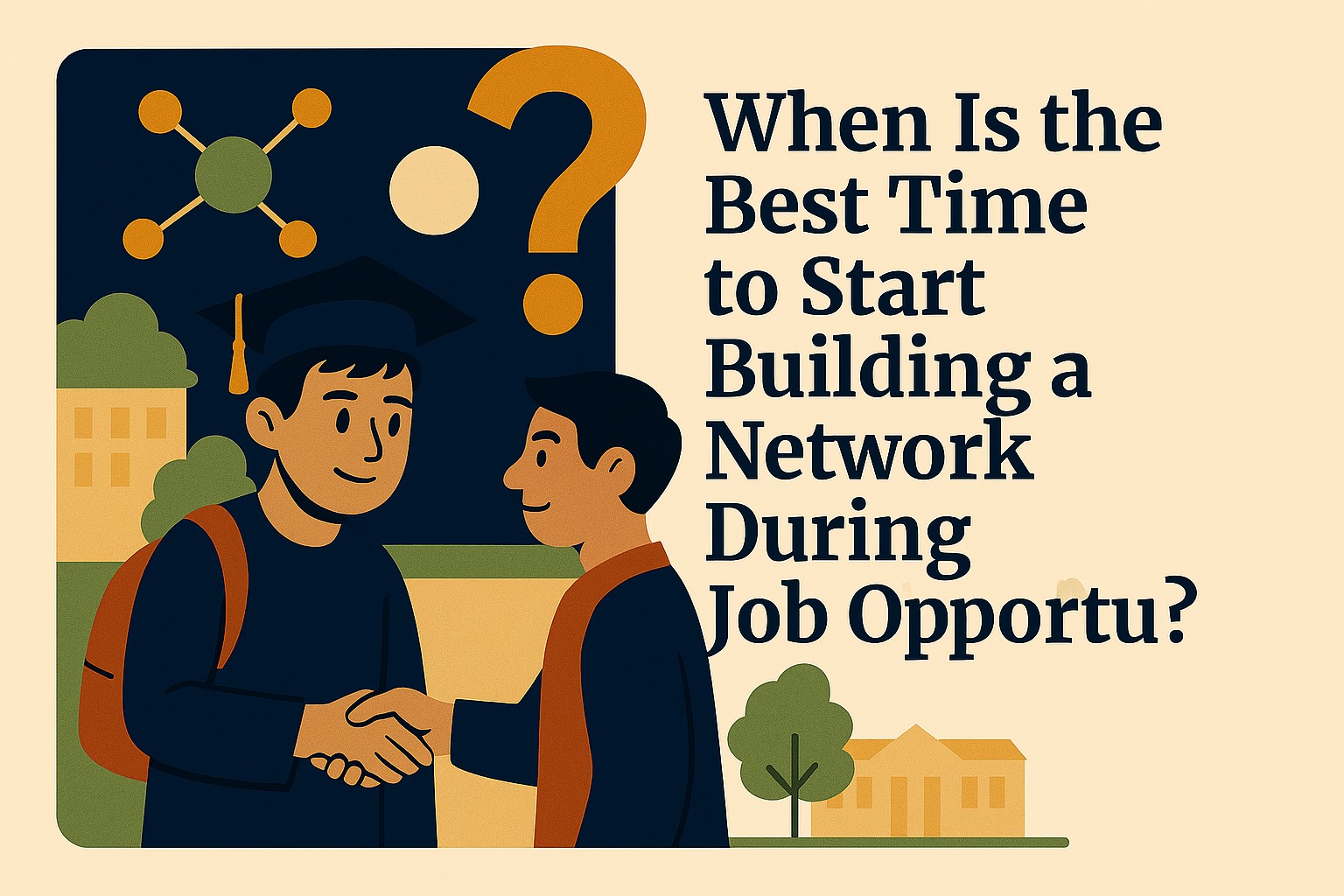
Networking is often seen as something that only becomes important close to graduation. In fact, the question “when is the best time to start building a network during college?” has a simple answer: as early as possible. Connections built from the beginning of college can become a strong foundation for self-development and future career growth.
In today’s competitive job market, students are not only expected to have strong academic results, but also relevant connections. This article discusses the best time to start networking and effective strategies to ensure the network truly creates impact.
WHY STARTING EARLY MATTERS
The first year of college is often seen as an adaptation phase. However, this is actually when students have a great opportunity to meet many people without heavy academic pressure. Meeting classmates, seniors, and lecturers can open doors for discussions, collaborations, and even recommendations in the future.
Connections formed early also tend to become stronger because they are built over a longer period. Trust does not happen instantly. The longer the interaction process, the higher the chance the relationship grows into a professional collaboration.
FIRST YEAR: A GOLDEN MOMENT TO BUILD THE FOUNDATION
Many students delay networking because they feel they lack experience. But networking is not about showing off achievements—it is about building genuine relationships. Joining campus organizations, student activity units, or interest-based communities is an effective first step.
In the first year, students are also more flexible to explore different activities. This is where they can discover environments that match their interests and potential. Relationships formed through shared interests are usually stronger and more long-lasting.
SECOND AND THIRD YEAR: EXPANDING AND STRENGTHENING CONNECTIONS
Entering the second and third year, students usually have a clearer idea of the field they want to pursue. At this stage, networking can be done more strategically, such as by attending industry seminars, joining internship programs, or participating in collaborative projects with lecturers.
In addition, building professional relationships through digital platforms becomes increasingly important. A credible and active professional profile can expand networks beyond the campus environment.
BEFORE GRADUATION: MAXIMIZING THE NETWORK YOU ALREADY HAVE
If networking only starts near graduation, the results may not be optimal. But if connections have been built early, the final stage of college becomes the perfect time to maximize them. Students can request recommendations from lecturers, discuss career opportunities with alumni, or access job information through existing connections.
Strong relationships often provide access to job opportunities that are not always widely advertised. This is one of the biggest advantages of maintaining a network from an early stage.
EFFECTIVE STRATEGIES FOR BUILDING A NETWORK DURING COLLEGE
To ensure networking is not just a formality, students can apply these strategies:
1. Build consistent and polite communication.
2. Show genuine interest and real contributions in activities.
3. Maintain academic reputation and professional ethics.
4. Use social media wisely to expand connections.
5. Maintain relationships, not only when you need help.
Networking is not simply exchanging contacts, but building supportive relationships. With the right approach, networks built during college can become valuable assets for a career journey.
CONCLUSION
When is the best time to start building a network during college? The answer is from the very first day as a student. The earlier relationships are built, the greater the opportunities to gain experience, insights, and professional chances in the future.
College is not only about achieving a high GPA, but also about expanding connections and strengthening character. With a combination of competence and a solid network, students will be better prepared to face the dynamic challenges of the professional world.
About the Author
Gusti Ayu Tita P
Author — STEKOM University
An active author focused on academic issues, educational technology, and human resource development in the campus environment.